Happy New Year dear readers! I hope you are looking toward 2026 with a sense of hope and purpose.
I came across a sentiment recently that reminded me to remain positive in the face of a world that feels overwhelmingly negative right now: Don’t let your inability to do everything stop you from doing something. We can all put something positive out into the world to make it a better place for others.
We start the new year with a focus on a woman who is definitely doing her part to help others at a time when they may be feeling especially disheartened, And, she is still making an impact, past the age when society generally deems us to be contributors.
Have you felt lately that you are past your due date? Has a recent disruption in your life changed your course? I heard recently that we are not late for anything – it’s a thought I will reflect on more in a future post. For now, enjoy Grace’s unique path.
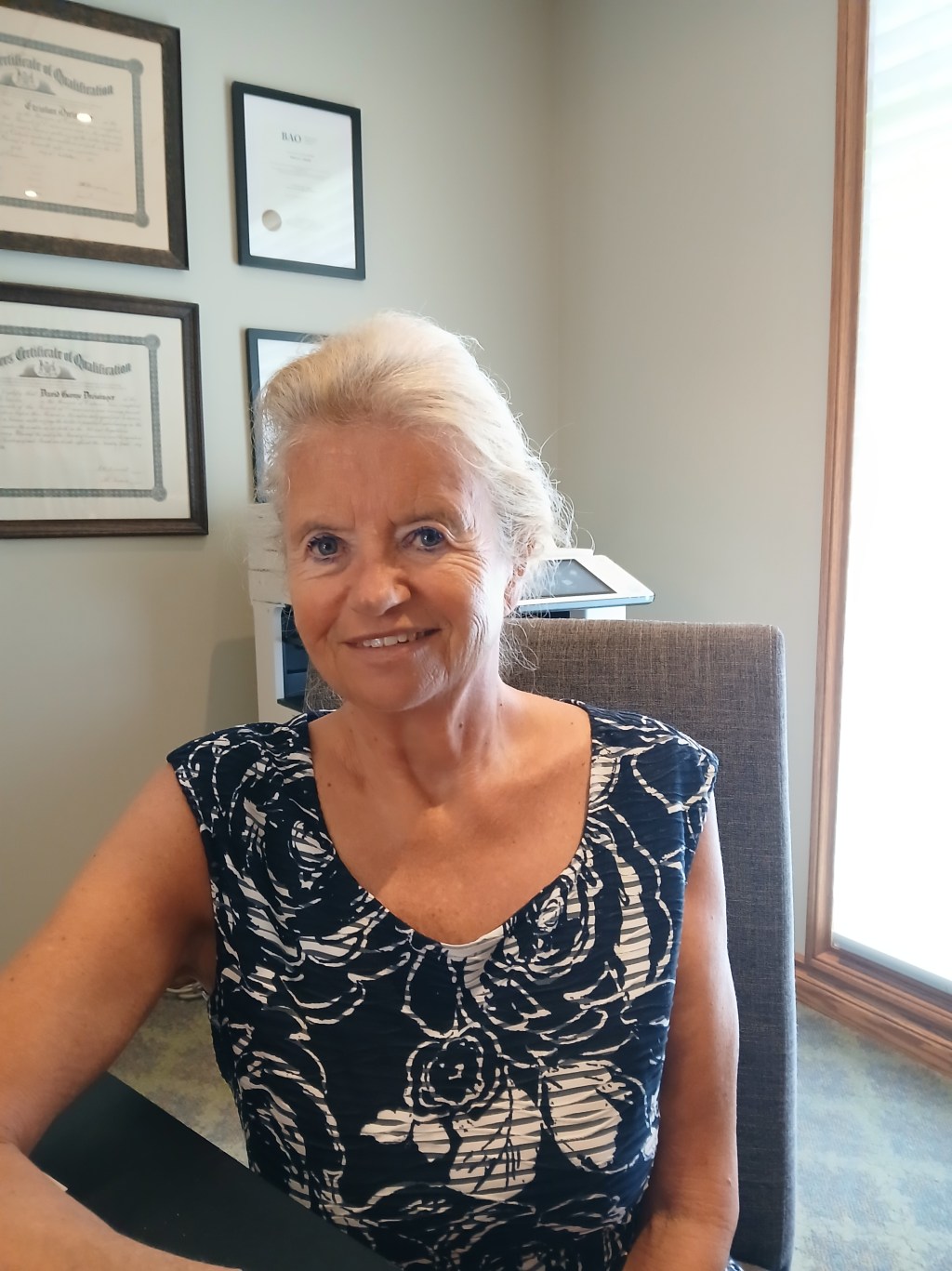
Grace Maher is diminutive in stature but her love of community is expansive, based on the special relationships she develops with families at what can be a very profound and difficult time in their lives.
And at 77, she has no plans of retiring from the job that for her, is a calling. “Every night as I go to sleep, I think, thank goodness I can get up and go to work in the morning.”
As a Funeral Director, Grace walks with husbands, wives, sons, daughters, mothers, fathers, and extended family members as they navigate the decisions following the death of a loved one. And she has done so with countless families from the Elmira area over the past 56 years!
It’s no wonder she has been honoured with a Lifetime Achievement Award from the Ontario Funeral Service Association. True to her introverted nature, I only learned of this award after contacting Laura Riley and Rebecca Steckly, owners of Dreisinger’s Funeral Home where Grace works. They had this to say about Grace:
“She is truly the heart of the funeral home, and her warmth and kindness radiates through to our staff, the families we care for, and to the community at large. We feel so blessed to have her as a mentor and leader to our team.”
Grace is the fourth generation of her family to work in the funeral business, in the same funeral home that bears her great-grandfather’s name. (Her sister Marion Roes has published a book on the history of the local funeral industry: Death as Life’s Work: Waterloo Region Undertakers and Funeral Businesses. It’s available at local libraries or from Marion at mlroes@sympatico.ca)
Their great-grandfather Chris Dreisinger purchased the business in 1905; he was followed into business by his son George and eventually turned the company over to his granddaughter Hazel Brown and grandson David Dreisinger. Hazel’s daughter, Grace, and David’s son, John, eventually entered the profession.
That’s the nuts and bolts of the family history, but like any historical recounting, there’s the story behind the details.
Grace recalls sitting on Grandma Dreisinger’s front porch and watching the funeral procession of cars on their way to the cemetery. “We would count the cars and I would watch my uncle leading the procession. I would think my mom and uncle had one special job.”
There was never any fear associated with the work her mother and uncle did. Instead, Grace was impacted by the way they spoke to the people who came to them recalling that when the phone rang in the house, she knew to remain quiet in case it was a death call.
Grace wanted to create the same connection with her community that she admired in her mother and uncle. Based on her astute memory for peoples’ names and her unflappable presence during a visitation, Grace has no doubt created her own unique niche in the family’s local history.
Current owners Laura and Rebecca emphasize Grace’s skills in their comments. “Grace has a natural ability to connect with people. She gives you her complete attention and is a wonderful listener; you walk away feeling truly seen and heard.”
Grace’s mother, Hazel Brown, was a strong role model – at a time when it wasn’t common for a mother to be working, much less in a business that would be viewed by others as at least outside the ordinary or possibly even with fears born of the unknown.
But Grace knew she wanted to do the same work as her mother, “and she couldn’t talk me out of it.” And like her mother, Grace went on to manage the tri-factor of career, marriage and motherhood. She and her husband Skip had two children.
I asked Grace if it is difficult when the death is someone that she knows as a friend, but she says that knowing the deceased helps. “It’s an honour, a wonderful opportunity to be given to be with the family when they have lost someone important.”
Grace began working at the funeral home in 1966 right out of high school, beginning the two-year Humber College course in 1967; you had to be 21 to be licensed which she was old enough to receive in 1969. Every year since, Grace has renewed her license which requires proof of continued education, many courses now offered online through the Ontario Funeral Service Association.
Technology has changed the funeral service and the skills a director requires. It became especially important when the global pandemic hit in 2020 to be able to live-stream services, and Grace notes, “we will never go back.”
There have been other changes over the years. There’s more cremations today and people are more willing to discuss and even ask for help with grief. The industry has responded to society’s needs, and Grace’s own connection with families over the years, and her own experience, has resulted in a better understanding of what a family goes through when grieving. Grace has experienced her own losses over the years, most recently and significantly her husband Skip in 2025, and her son Bryan (B.J.) in a motor vehicle accident at age 27 in 2017.
There are many decisions required when someone dies, but Grace notes that one of the changes she has seen lately is when people forgo holding either visitation or a service.
“We lose something when nothing is held.” Grace speaks of the grieving process and how the stories that are shared at a visitation can make a difference. She is aware of many times when visitors took time to tell the grieving family how the deceased was important to them – and how often these stories were previously unknown to the family. The stories bring comfort to the family, that their loved one will be remembered.
Grace exudes a calm and cheerful countenance. “It’s great to be alive,” she says in response to a question about how a lifetime of working in the death business has impacted her perspective on life. “I’m just so grateful I live in this community and am part of this community.”
I suspect there’s many in the community of Elmira who will be grateful in return and who will remember her kind support at a vulnerable time in their lives. Mom Hazel and Uncle David would also be proud.



 StillKim