Such a simple, every day occurrence, it is easy to miss the fact that such an act might mean freedom to someone else. I imagine it’s the same for most of my readers. We can leave our homes any time we want, and we can go where ever we please.
What a privilege to live in Canada.
It’s a sentiment I was reminded of recently when I attended a presentation by someone who should know.
Rahima Khushi is a Rohingya immigrant, born in a refugee camp in Bangladesh after her parents were driven from their home in Myanmar. For a detailed background on the Rohingya, check out the Rohingya Culture Centre.
The short version is that the Rohingya are a stateless people, refused citizenship in Myanmar and Bangladesh. Think of this: born in an encampment, behind barbed-wire fencing. No human rights, no human dignity. Khushi was not allowed to step outside the barbed-wire compound where she grew up, and she was not allowed to attend school or access health care. There was no work for her father and no dignity in their lives. Because they were Rohingya, a Muslim ethnic minority.
She attended school only by lying about who she was, living in constant fear of being discovered at school or on the streets. But she had been inspired to achieve a better life by the midwives she helped at thousands of births in the camp. She is now a student at Wilfrid Laurier University studying political science and building a life in Canada.
I asked Khushi (her preferred name) what she found different about life in Canada. Naively, I was thinking about the weather, the food, the transit system – any number of things. Her answer left me with goosebumps because of its sheer simplicity, and its depth of feeling.
“I can leave my home.”
She can leave her home, she said, adding that she can travel to other cities without being stopped multiple times to prove who she is and, “I can say I am Rohingya.”
It is freedom to say this is who I am.
It is freedom to travel without restrictions.
It is freedom to have access to an education.
It is freedom to have access to health care.
It is freedom to raise our family in the faith (or not) of our choosing.
It is freedom to find work and support our family with dignity.
It is freedom to celebrate and honour different cultural roots while appreciating what we have in common.
We take so much for granted in this country we call home. And it’s easy to lose sight of that; in fact we risk losing what is good about our life here in Canada when we are distracted by a neighbour to our south who encourages an “us versus them” mentality of hate and intolerance, that makes scapegoats of immigrants, of minorities and of marginalized groups; when we have disgruntled fellow Canadians who have bought into this identification of easy targets for everything that they perceive is wrong with their lives; and when we are caught up in the polarized politics created by extremists and a plethora of misinformation.
On this Canada Day (and moving forward), I call on ALL Canadians to declare their pride in the country we call home. We’re not perfect, but we are a place where an intelligent young woman, born into a life where incredible odds were stacked against her survival, can come to add positively to the diverse fabric of our country and remind us what true freedom looks like.
***
Kushi spoke at an event organized by HOPE, Hearts Open for Everyone, an organization whose Vision is to foster a multicultural rural community where everyone can be truly authentic and welcome. HOPE’s Mission is to create shared community experiences promoting compassion, togetherness and a deep sense of belonging. It is through HOPE that I was able to listen to a presentation by people in the Trans community and another presentation about early Black settlers in the Queen’s Bush area near Wellesley.
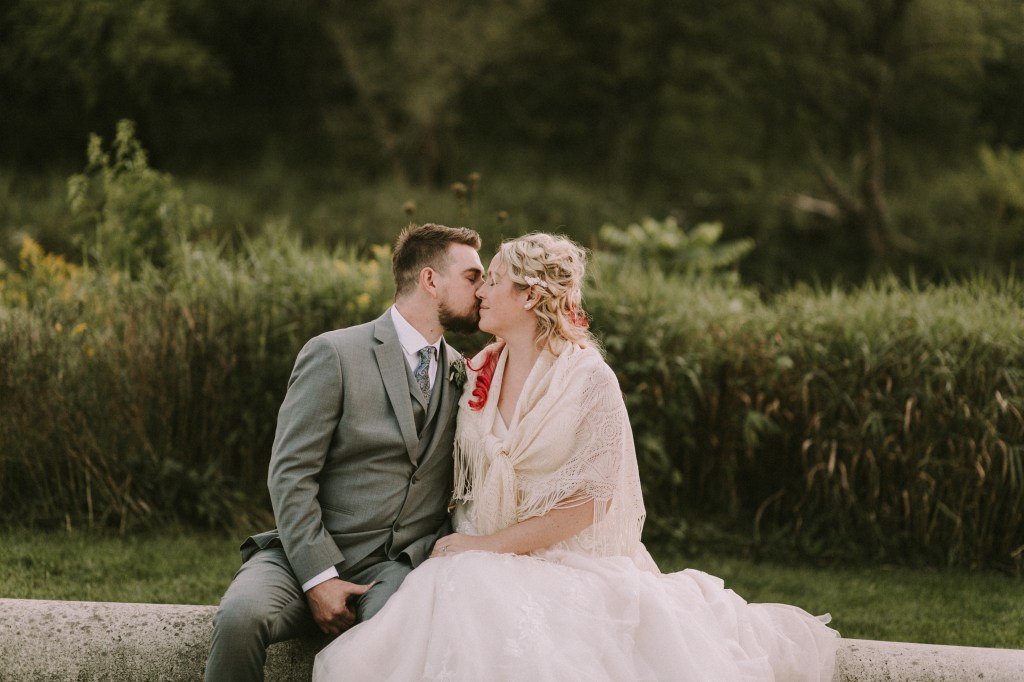
Summer is the time of weddings, of new beginnings, and my thoughts turn to the planning we did for our daughter’s wedding during COVID.
When I taught students that event planning was like walking on a tightrope – before a live audience – without a net – I had no idea that a COVID wedding was in my future! Read on.
***
“Outdoor gatherings are now limited to 50 people.” An employee at the salon, her cell phone out, read the just released government announcement.
I sat with wet hair dripping onto a plastic cape, ready to have it styled for our daughter’s wedding, scheduled to begin in just four hours: 92 guests expected for the meal. With a touch of hysteria in my voice, I smiled a bit too brightly: “I guess we will be illegal today.”
Perhaps I had learned to take my hands off the bar and raise my arms on the roller coaster of wedding planning during a world pandemic … or maybe I was just a bit numb from the ride. We had invited 97 guests, under the 100 allowed; five politely declined due to Covid-19 – three of these dropping off in the past two days as provincial numbers marched toward the dreaded second wave.
It was near the end of 2019 when Samara and Travis announced their intention to marry the following year. They had been engaged for four years – I had stopped looking in bridal shop windows!
They envisioned an outdoor ceremony in a natural setting. An available venue featured a stately older home with bridal salon, terrace, barns, horses grazing in the fields, an amphitheatre facing a river, mature trees, and a tent. Booked. Check. A big piece fell into place, and I breathed relief. This was really going to happen! A Save the Date card was mailed.
Little did we know a virus on the other side of the planet would find its way across an ocean to burst our blissful little bubble.
As 2020 dawned, dutiful bridesmaids, Lacey and Christine, kept Samara on task, and by the end of February, she chose a beautiful gown. My daughter looked like a bride – despite the masks we wore. By this time, news about the coronavirus rumbled louder and the roller coaster began to jostle us out of any innocence that this might not impact us.
On the morning of March 11, a global pandemic was announced, and I struggled to manage my growing fear.
At school, I was focused on preparing my college students for online learning; they got some real-time crisis management experience as they had to pivot plans for the fundraisers they had developed as part of their events class. One group, bless their hearts, wanted to go ahead on their own they were so committed to raising money for their cause. But it couldn’t happen. Everyone jumped through hoops to transition the final capstone project, including client meetings and final presentations to online. I was so proud of the students who were isolated, some in lonely rental accommodations, as they created plans for their clients. There was a lot of virtual hand-holding and encouragement.
Businesses began to shutter. We listened to daily government briefings asking Canadians to “go home and stay home.”
At home, choosing bridesmaid gowns felt like an act of defiance, or perhaps it was blind faith. Like my students, we also discovered much can be accomplished online. The girls selected long skirts in shades of wisteria that came out of a Texas-based retailer. It appeared that another box would soon be checked.
We reached the top of the emotional roller coaster with gowns for one bride, two moms, and three bridesmaids selected. We coasted, briefly, but a few hair-pin turns loomed ahead.
The message that the bridesmaid dress samples had been delivered to Christine’s mailbox in Niagara Falls, New York, prompted the girls to head south on a two and a half-hour drive, leaving at 6 a.m. They took antiseptic wipes for the package, gloves and masks for themselves, but their plans fell short.
Just shy of reaching the border, Christine screamed: “Let me out, now!” She’d forgotten her passport.
“We can’t let you out on the highway.”
“You have to. The border is just around the next bend. If they see me get out, they will stop you, and you won’t get across.
“I’ll be fine,” she shouted as she clambered out of the backseat.
Lacey and Samara crossed effortlessly; however, they were wide-eyed with panic in the line-up when a voice announced over the PA system: “The border is now closed to non-essential travel.” They had the package within 15 minutes and began their return. The Canadian border agent admonished them: “You will have to quarantine for two weeks.” They proceeded on their way and retrieved Christine without incident from the side of the highway.
I tried to tap down the anxiety building in the pit of my stomach. “We saw no one else, mom,” Samara assured me.
It was an effort to maintain a positive attitude as I feared for everyone’s health. One brother quietly voiced the opinion that the wedding should be cancelled and another, disabled, confirmed he would not attend. A third brother eventually replied yes to the ceremony but declined dinner. The border closing meant my American in-laws would not attend; this was my eldest brother’s family, and he had passed away four years previously. Their presence was important but pandemic fear was palpable.
Then, as cases rose, new rules: weddings restricted to 10 people. Samara and I walked around the park near her Kitchener home. In low spirits, she affirmed that if dinner included only immediate family, then that’s what it would be. They wanted to be married. I – bravely – pledged to make it a wonderful day, regardless. And she would wear “The Dress” regardless.
Fears abounded from all directions. My son and his wife worked from home, three children underfoot, offices and schools closed. Was it safe to break that bubble? The youngest needed attention as the effects of isolation became evident. This lively four-year old was still learning to manage her emotions – and she was a flower girl in the wedding. Would she be able to cope?
Then, with two months to go, infection numbers went down and 100 people could gather outdoors. It felt like a reprieve despite some significant changes at the venue. We could hold our wedding there, but they had no staff to erect the tent or to cook and serve a meal. Covid-19 had decimated their wedding season.
Suddenly we were chugging back up the roller coaster track: new caterer, staffing, decorations, family helpers and then the free fall down the other side. We moved ahead with blind speed and faith that we would hit the sweet spot before a second wave. Another booking ensured the venue’s tent would go up. Hallelujah, arms raised!
Masks for guests were sewn and stamped, “I masked up for Samara and Travis.” Wedding favours – hand sanitizer – were ordered, and an emailed invitation assured guests of protocols. Everyone would sit in their bubbles, both for ceremony and dinner. I even ordered disposable covers for the mic. I sewed zirconia jewels across the wisteria masks for the bridesmaids and made a special lace and zirconia mask for my daughter, the jewels coming from an old gown of my mother’s.
Three flower girls’ dresses, white with mauve ribbons, left Australia and arrived before the bridesmaids’ dresses (to a Canadian address), despite being ordered two months later. Small bumps and turns as the end of the ride appeared closer. One dress required extensive alterations while the others fit like a glove.
Two days before the wedding, a difficult call. Ryan had to back out of groomsman duties. With a newborn at home, he just could not risk Covid-19. The number of cases was rising again; we understood. A generous brother agreed to step in.
Enter technology. Ryan video-called another groomsman, Giles, who placed his mobile phone into his shirt pocket. Ryan, outside his Toronto home in his wedding suit, stood up with his friend virtually. The best man set up a live stream so absent guests could watch the ceremony which included perfectly behaved flower girls and junior groomsmen carrying the rings, preceding the bride.
September 19, 2020, 4:05 p.m.: Samara seemed to float down the aisle to the Beatles’ tune, “In My Life” her voluminous skirt sweeping the ground, sun shining on her unmasked radiant face, my husband barely holding it together at her side, while tears streamed down my cheeks. Usually stoic, our emotions overflowed.
Typical?
Perhaps, but it was much more. The roller-coaster planning process had challenged patience, nerves, and real fear, but it also affirmed something important: when love is at the centre, the ride is also a joy.
Have you caught the bug yet? The one where you disappear down rabbit holes searching for ancestors in your family tree?
It seems to become an area of intense interest once retirement provides the time – not just to research, but to reflect about the lives of those who may have impacted our own course.
Knowing your ancestors’ stories can have benefits that may surprise you. If one of your wishes is that your family is resilient in the face of an uncertain future, read on!
I felt compelled to write the story of my parents’ 54-year marriage and include the background that would explain who they were and what, or who, contributed to their story. I grew up with a lot of detail about my father’s family, thanks to his story-telling skills, but I didn’t have much to go on about my mother’s family.
Thanks to Ancestry.ca, a global pandemic and retirement I was able to complete Beneath the Wings of Love, which I published as a paperback on Amazon in 2021. This success followed years (I started this project in 1998)of drought when there was no writing, and then significant writing and re-writing – at one point I lost the entire project in a computer crash, but thankfully I had printed out hard copies for editing.
I remember wishing my mother had known more about her own background as I thought it would have made a positive difference in her self-esteem. Turns out I was right on that count, and I had underestimated how important the stories would be for my grandchildren.
Bruce Feiler wrote in the New York Sunday Times about a study conducted by psychologists Dr. Marshall Duke and Dr. Robyn Fivush that tested the hypothesis: children who know a lot more about their families tend to do better when they face challenges.
“The more children knew about their family’s history, the stronger their sense of control over their lives, the higher their self-esteem and the more successfully they believed their families functioned,” Feiler wrote of the study’s findings.
Then 9-11 happened, and although the families were not directly impacted by the horrific events of that day, the children in the study would have been impacted by news of planes hitting the towers. They were reassessed. Feiler quotes Dr. Duke, “the ones who knew more about their families proved to be more resilient, meaning they could moderate the effects of stress.”
Why? According to Dr. Duke, these children have a strong sense of an “intergenerational self” and know they belong to something bigger than themselves. Things like family traditions, family holidays, telling stories about the family, whether hardships met or positive tales, all contribute to a strong family narrative.
You don’t have to publish a book to contribute to the family narrative, but safe-keeping what you know in some format is clearly beneficial. If your children or grandchildren are not asking questions yet, we know there will come a time when they will wonder. So, take up a pen, or get on your computer and type what you know – now. At the very least, store the pages in a three-ring binder. Talk to relatives still living to get their stories and write them down, and add to the binder!
If you have adoption in your story, don’t avoid this. A family tree can be a tree of people who love me and the stories still contribute to the narrative of what your child knows about the family they call their own.
Sometimes the family history contributes to the history of the commercial development of an area. Such was the case when a former schoolmate of mine, Lynn Thorne and her cousin, Evanne Ketchabaw got together and created a road trip out of their shared Zurbrigg family history. The trip took family members, in their cars, through villages, along county roads, and by specific sites surrounding the Listowel (North Perth) area where four Zurbrigg siblings had moved in the early 1860s.
The family had many entrepreneurs so stops along the way highlighted the businesses as well as the homes and final resting places of multiple ancestors. The cousins wrote a script to accompany the journey so at specific stops, the history was read out loud for the 15 participants. After the event, everyone received a booklet, bound in a clear plastic cover; family details shared during the road trip were included along with photos from the day.
What an amazing, interactive way to share the family narrative.
Other family histories are relevant beyond the family because they are a history of national importance. Such is the case for Tracy Lee Johnson of Guelph.
I attended a fascinating presentation by Tracy, a 5th generation Black Canadian, who shared an historical look at an area called Queen’s Bush, one of the largest Black settlements in the area, near Wallenstein. Her ancestors travelled to the area in the 1830s via the underground railway and were early pioneers before this nation was even created. The year 1806 is the earliest date for which she has found a record of her family in the Niagara area.
Tracy’s story reinforces what the psychologists’ study showed. “Had I known the information about my family when I was younger, I would have held my head up higher. I would not have felt so uncomfortable in my own skin,” she told me.
There was reason for pride in her ancestors’ early contributions, yet our history books have largely ignored their story. When we think of pioneers, we tend to think white, and Little House on the Prairie, Tracy points out. She’s right.
As well as effective story-telling (Tracy is an actress), she also sings as part of her presentation. She presents in schools, helping to educate the broader community about Black history in this area. In fact, you can book Tracy, through her website, to share her amazing historical story with your group, club or organization.
If, like me or Tracy, you don’t know a lot about your background, tools such as Ancestry.ca help. This program allows you to build a family tree and each name on the tree links to a page of details where you can fill in the names of parents, siblings, and children. Links to census details and old newspapers are revealing. I was able to discover causes of death, adding detail not known before, and pointing to a possible inherited trait. I was finally able to fill in the blanks about my mother’s history. Even the painful knowledge of early ancestors who farmed on native land in the U.S. and had deadly run-ins with Native Americans (Shawnee) in the area.
As I worked on the memoir, I was not unaware of the privilege I enjoyed in being able to conduct this research. Especially as I uncovered these earliest settler stories, I brought 21st century eyes to the issue of European settlers believing they were bringing civilization to savages, ignoring the multiple generations of history lived by these Indigenous people. I thought of Indigenous children who were stolen from their parents by the Canadian government and then turned out of residential schools at age 18 with no understanding of how to cope on their own. They didn’t fit with their own community any longer, unable to speak the language and with no knowledge of their customs. They had no family history. And they were spurned by the predominately white settler community they lived in. They had both their past and their future stolen from them. The studies that connect resilience, happiness, and self-esteem to knowing your family narrative reinforce the horror of what was done and explain the generational damage that has resulted.
We must evolve as we learn, and then share our knowledge. So, if you are down a rabbit hole of family research, or if you have stories stored in your memory, start making notes to be shared. Share the good, the bad and the ugly. You will be doing your grandchildren and great-grandchildren a huge favour when they know the intergenerational narrative that is theirs to claim.
Tracy Johnson shared a newsletter that “honours the creativity, scholarship, and dreams of Black mamas, women and girls in Canada.” Tracy’s story is featured in the November 2025 issue. Check it out here: https://www.animawrites.com/newsletter
Beneath the Wings of Love, the memoir of my parents, is available on Amazon. If you are interested in the process of self-publishing, please connect with me. Beneath the Wings of Love is written under my pen name, Roberta Kim.
Happy New Year dear readers! I hope you are looking toward 2026 with a sense of hope and purpose.
I came across a sentiment recently that reminded me to remain positive in the face of a world that feels overwhelmingly negative right now: Don’t let your inability to do everything stop you from doing something. We can all put something positive out into the world to make it a better place for others.
We start the new year with a focus on a woman who is definitely doing her part to help others at a time when they may be feeling especially disheartened, And, she is still making an impact, past the age when society generally deems us to be contributors.
Have you felt lately that you are past your due date? Has a recent disruption in your life changed your course? I heard recently that we are not late for anything – it’s a thought I will reflect on more in a future post. For now, enjoy Grace’s unique path.
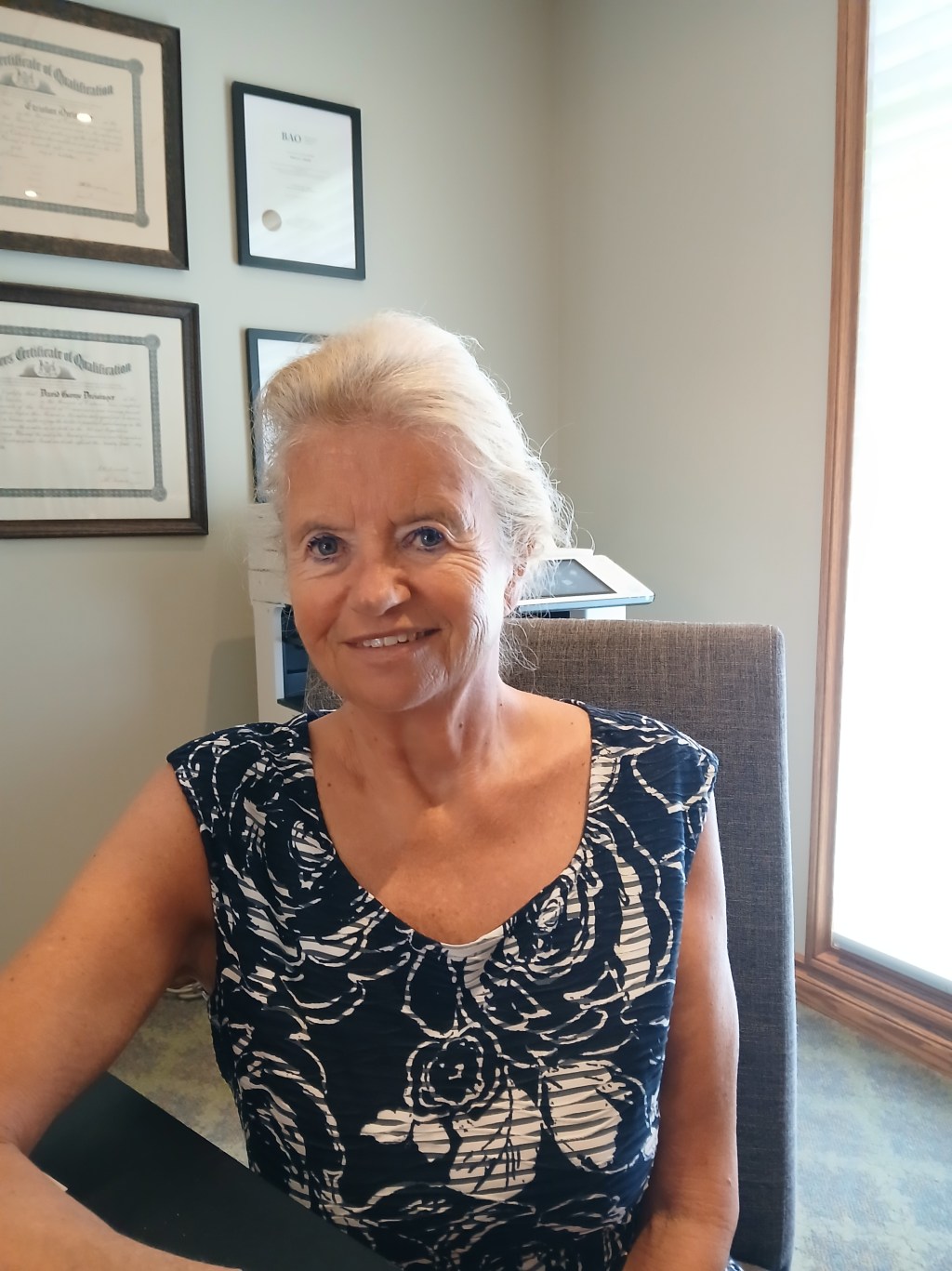
Grace Maher is diminutive in stature but her love of community is expansive, based on the special relationships she develops with families at what can be a very profound and difficult time in their lives.
And at 77, she has no plans of retiring from the job that for her, is a calling. “Every night as I go to sleep, I think, thank goodness I can get up and go to work in the morning.”
As a Funeral Director, Grace walks with husbands, wives, sons, daughters, mothers, fathers, and extended family members as they navigate the decisions following the death of a loved one. And she has done so with countless families from the Elmira area over the past 56 years!
It’s no wonder she has been honoured with a Lifetime Achievement Award from the Ontario Funeral Service Association. True to her introverted nature, I only learned of this award after contacting Laura Riley and Rebecca Steckly, owners of Dreisinger’s Funeral Home where Grace works. They had this to say about Grace:
“She is truly the heart of the funeral home, and her warmth and kindness radiates through to our staff, the families we care for, and to the community at large. We feel so blessed to have her as a mentor and leader to our team.”
Grace is the fourth generation of her family to work in the funeral business, in the same funeral home that bears her great-grandfather’s name. (Her sister Marion Roes has published a book on the history of the local funeral industry: Death as Life’s Work: Waterloo Region Undertakers and Funeral Businesses. It’s available at local libraries or from Marion at mlroes@sympatico.ca)
Their great-grandfather Chris Dreisinger purchased the business in 1905; he was followed into business by his son George and eventually turned the company over to his granddaughter Hazel Brown and grandson David Dreisinger. Hazel’s daughter, Grace, and David’s son, John, eventually entered the profession.
That’s the nuts and bolts of the family history, but like any historical recounting, there’s the story behind the details.
Grace recalls sitting on Grandma Dreisinger’s front porch and watching the funeral procession of cars on their way to the cemetery. “We would count the cars and I would watch my uncle leading the procession. I would think my mom and uncle had one special job.”
There was never any fear associated with the work her mother and uncle did. Instead, Grace was impacted by the way they spoke to the people who came to them recalling that when the phone rang in the house, she knew to remain quiet in case it was a death call.
Grace wanted to create the same connection with her community that she admired in her mother and uncle. Based on her astute memory for peoples’ names and her unflappable presence during a visitation, Grace has no doubt created her own unique niche in the family’s local history.
Current owners Laura and Rebecca emphasize Grace’s skills in their comments. “Grace has a natural ability to connect with people. She gives you her complete attention and is a wonderful listener; you walk away feeling truly seen and heard.”
Grace’s mother, Hazel Brown, was a strong role model – at a time when it wasn’t common for a mother to be working, much less in a business that would be viewed by others as at least outside the ordinary or possibly even with fears born of the unknown.
But Grace knew she wanted to do the same work as her mother, “and she couldn’t talk me out of it.” And like her mother, Grace went on to manage the tri-factor of career, marriage and motherhood. She and her husband Skip had two children.
I asked Grace if it is difficult when the death is someone that she knows as a friend, but she says that knowing the deceased helps. “It’s an honour, a wonderful opportunity to be given to be with the family when they have lost someone important.”
Grace began working at the funeral home in 1966 right out of high school, beginning the two-year Humber College course in 1967; you had to be 21 to be licensed which she was old enough to receive in 1969. Every year since, Grace has renewed her license which requires proof of continued education, many courses now offered online through the Ontario Funeral Service Association.
Technology has changed the funeral service and the skills a director requires. It became especially important when the global pandemic hit in 2020 to be able to live-stream services, and Grace notes, “we will never go back.”
There have been other changes over the years. There’s more cremations today and people are more willing to discuss and even ask for help with grief. The industry has responded to society’s needs, and Grace’s own connection with families over the years, and her own experience, has resulted in a better understanding of what a family goes through when grieving. Grace has experienced her own losses over the years, most recently and significantly her husband Skip in 2025, and her son Bryan (B.J.) in a motor vehicle accident at age 27 in 2017.
There are many decisions required when someone dies, but Grace notes that one of the changes she has seen lately is when people forgo holding either visitation or a service.
“We lose something when nothing is held.” Grace speaks of the grieving process and how the stories that are shared at a visitation can make a difference. She is aware of many times when visitors took time to tell the grieving family how the deceased was important to them – and how often these stories were previously unknown to the family. The stories bring comfort to the family, that their loved one will be remembered.
Grace exudes a calm and cheerful countenance. “It’s great to be alive,” she says in response to a question about how a lifetime of working in the death business has impacted her perspective on life. “I’m just so grateful I live in this community and am part of this community.”
I suspect there’s many in the community of Elmira who will be grateful in return and who will remember her kind support at a vulnerable time in their lives. Mom Hazel and Uncle David would also be proud.
Last month we were shopping to find her a pair of jeans with sparkles on the pockets for her to wear to the weekly seniors’ dances held in her community.
I wish I could bottle what she has! She is active, still drives, and keeps up with all family activities. She hasn’t always had the easiest life, and I am in awe of her tenacity.
A few years ago, when she was just 92, I was one of four – her daughter and three daughters-in-law, along with her sons chiming in, who helped her redecorate her home.
And if your sympathy on reading that sentence lies with my mother-in-law, you would be correct. Yet, she weathered us with a composure I can only admire.
As we all popped in to see the progress after new carpet and painting were completed, she heard the various voices chime in:
“Now you should…
put those pictures on this wall
change that table
install a new light
move this chair there
take that photo down
hide this blanket
buy a new one…” etc.
You get the idea!
This is a woman who spent a 70+year marriage doing only what her beloved husband desired. Meals reflected his tastes, holidays were spent to please him, and household purchases were dictated primarily by his tastes and budget priorities. Doing what pleased Ivan is how Dorothy happily lived her life.
Not that he wasn’t a generous man when it came to his wife. I still recall the Christmas close to their 25th wedding anniversary when she opened his gift to discover a new diamond ring and the emotional outpouring of her love in response. Usually there was a beautiful new outfit in her Christmas box that he would have taken time to select from a local lady’s wear shop.
I didn’t realize her tastes may have run in a different direction until after he passed away and she began cooking and ordering food that he never wanted. And then came the renovations, encouraged by her daughter, to update her two-bedroom senior’s unit. Soft grey walls, white trim and a grey carpet followed the installation of a new kitchen counter and backsplash. All elements complemented the modern, refreshing colour scheme.
The decorating instincts of all the women in the family kicked into high gear. New arrangements for family photos on some walls paved the way for new prints to provide a focus on other walls. Now she relaxes in her easy chair looking at a winter scene of an old shed nestled in the middle of towering evergreens. From her table, she can imagine sitting on the end of a dock with her feet cooling in blue lake water. Bedroom prints in soft blues and greys connect to new throw pillows on the bed and new towels in the ensuite.
But a close second to living her life for Ivan was doing what she believed would make her children happiest. When one son said “this” and another son said “that,” what’s a woman to do?
She smiled her way through it all, and frankly, I don’t think we’ll ever know if the final result is what she truly wants, or reflects a choice to make someone else happy.
But my mother-in-law is a wise woman. She has perfected that secret to a happy life by knowing: Happiness isn’t getting what you want, it’s wanting what you’ve got.
I humbly confess, it’s a lesson I still work at achieving!
As a follow up to my three posts about climate change, I have recently subscribed to a group, Seniors for Climate. The most recent information they have sent out pertains to their “Draw the Line” rally events across Canada.
Seniors for Climate recently hosted author John Vaillant who wrote Fire Weather about the Fort McMurray wildfire. I missed their presentation but heard John speak at a Literary Festival I attended in Knowlton, Quebec, and his message is powerful. It has inspired these Draw the Line events across the country.
There’s a rally in downtown Kitchener held by Waterloo Region Climate. Details follow:
Join us at the first ever Waterloo Region Climate Fest! We have great creative workshops, booths, performances, and demonstrations lined up. We will also have a group ride to kick off the event! Let’s come together and celebrate how our community is taking action and how we can take it further.
Seniors for Climate says: If you can’t join an event in person, you can still take part.
Post a message of support on social media with #DrawTheLine, call or email your MP, write a quick letter to the editor, or simply talk to a few friends and invite them to join Seniors for Climate. Every action helps grow our voice and our impact.If you can’t join an event in person, you can still take part.
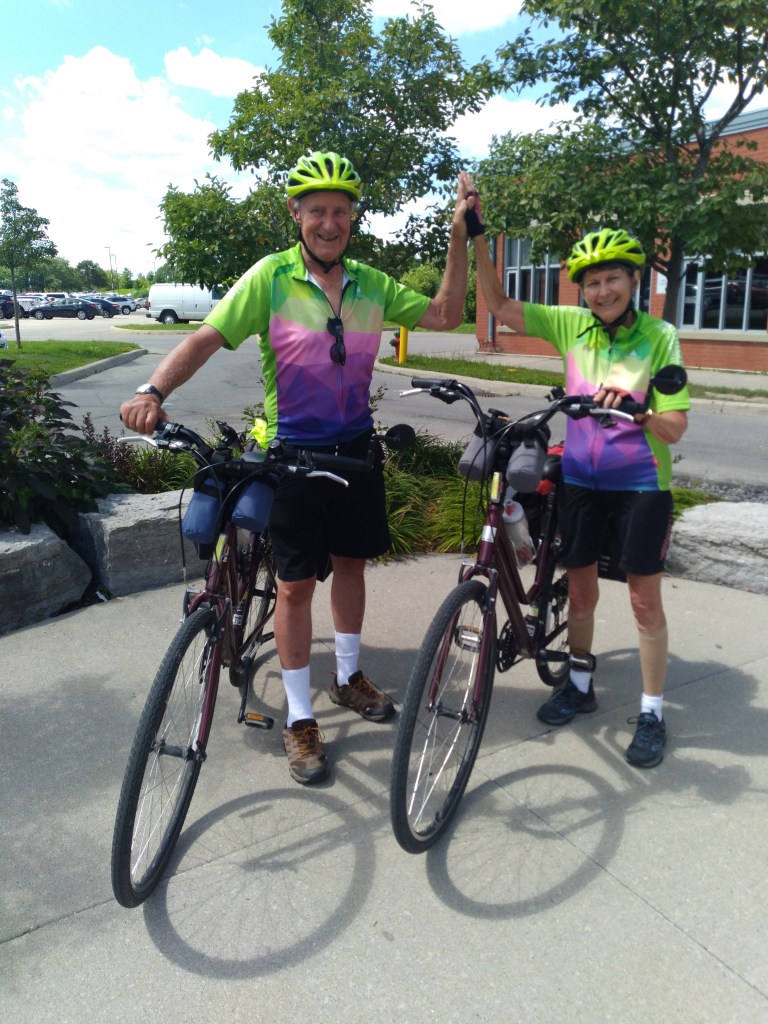
To know Darlene Vandermey is to know that she loves cycling. Besides the bicycle images on the wall of her home office, the bicycle clock in her living room, and the bicycle trainer in her basement, there’s the 2,000+ kilometres she biked around Ontario over the course of 2023 when a mild winter left open roads.
What you might not know is that 33 years ago, she was told she would never ride her bicycle again.
Her comeback story is inspirational.
The journey she took from failing health in her mid-40s to inspiring others on the bike trail in her mid-70s is one of faith, the tenacity of an ‘I’m never giving up’ attitude, a personal code for when things get tough, and the support of her family.
When Darlene married the love of her life Kees in 1969, the couple enjoyed Scottish country and square dancing. They were active in the communities where they lived and Kees served as a Presbyterian minister. They eventually welcomed three children and enjoyed family-focused camping trips that included, of course, cycling. As a Minister’s wife, Darlene was active in the life of the congregations they served, as well as with her own growing family.
The family had moved to Windsor, Canada’s most southern city next to the U.S. Border. The climate in Windsor reflects its more southern latitude – at best, it’s very mild, and then it gets very hot and humid. Unfortunately, it seemed to be a trigger for Darlene. First, it was allergies that flared and then came extreme tiredness and eventually pain and aches throughout her body. Daily living was a challenge.
“I couldn’t wait to get the kids out the door in the morning, and I would flop on the couch. Even my clarity of mind was going.”
Then came the devastating diagnoses at age 44 by a rheumatologist: fibromyalgia. Fibromyalgia happens when the sheath that covers the muscles becomes inflamed. Such a diagnosis required that 21 different pressure points on the body be identified, Darlene explains.
Just for a moment, imagine 21 pressure points of pain on your body and now imagine that on a 5’2” frame.
The doctor looked at this petite and seemingly frail woman, prescribed some medicine and told her she would never ride her bike again. Nor dance again.
The medication caused her to feel worse, and she called the doctor who told her, “take the medication or be in pain for the rest of your life.”
“I told my family, ‘I don’t like that diagnosis. I am going on a health journey,’ and that was the start of a five-year process.”
Darlene is petite and slim, but the health journey she embarked on next was outsized in its depth and breadth as she fought her way back to health.
What’s her secret, I wanted to know.
The strength she brought to the battle is certainly a testament to the strong women who raised her. Her mother was widowed at 41, when Darlene was just 7, and her grandmother, also a widow, came to live with them in Willowdale. Her mother “had to pull up her boot straps” and work to support the family and pay the mortgage. A level of tenacity her daughter inherited and would need later in life.
Darlene grew up in a home with love, her grandmother’s deep faith, and her mother’s steady pragmatism mixed with faith. Darlene never felt the struggles were on her shoulders. In fact, her mother even secretly set aside a small sum of money to pay for her daughter’s wedding for when the time came. When Darlene decided Kees was the one, her mother sat them both down to tell them she would never live with them. They were to move on with their lives and build their own home. She lived on her own until her death at age 87.
Darlene was very close to her mother, witnessing her strength in the aftermath of her father’s death. Darlene rides her bike with a tiny stuffed dog, Sally, that belonged to her mother, secured on the rear rack, the memento tagging along on multi-day trips around the province.
After the disappointing conversation with her doctor and the declaration to her family, Darlene tried several modalities, including chiropractic adjustments, massage therapy, and acupuncture. She would give each time to offer relief, but then move on to the next possible solution when it wasn’t enough. She tried various health products.
She made a decision that she needed to keep a positive attitude as each attempt didn’t provide the resolution she sought. At one point her back was out and she also suffered from sciatica. Along with pain and significant fatigue, she experienced daily migraines. The on-going effort would “grind me to a halt,” but she was determined to be the active and healthy wife and mother she had been.
“Part of what kept me going is that I knew God put me here for a purpose, and I wasn’t living my purpose.
“I also needed to do it for my family, to try and recover for them. All of our vacations had to revolve around me because I couldn’t sit very long in the car. I can say my kids suffered. They were going into their teen years with a mom who could not do much.”
Another transfer to the small, rural community of Elora took the family away from Windsor. “I interviewed a chiropractor who I saw for adjustments because of the sciatica and he gave me a power belt designed to maintain my hip after the adjustment. I wore it for a year and it worked.”
Exercise remained almost impossible because of continuing pain, but she kept up walking.
One day a church member told her about a barley grass powder that was supposed to reduce inflammation. A bit skeptical as she had tried many other products, she was leaving no stone unturned and tried it.
The first thing she noticed was a reduction in migraines. As a result, her lifestyle and diet became the focus of the journey.
Based on research, she began to eliminate foods that were inflammatory – wheat, milk, sugar, and pork. She eats lots of fruits and vegetables, chicken, and fish. And she tries to avoid processed food.
“Gradually, little by little, the pain began to subside.” It was a gradual transition, away from regular cycles of pain, but enough movement forward to keep her going.
Then the day came when the family was at its camper trailer and Darlene pulled her bike out of the shed. It had been stored out-of-sight where it would not be a reminder of what she had lost. On this day she rode the bike – albeit a short distance – but it was a reason to celebrate. And an affirmation of what she was doing.
“I’m over it,” she told Kees. “This is my sign that I’m going to get over it.”
Never one to look too long in the rear-view mirror – she notes rear-view mirrors are small while windshields are large to look forward – she was determined to learn more. She took nutritional courses through the Alive Academy of Canada and became a Nutritional Product Advisor and a Living Well Coach. “The icing on the cake,” she says, is the fact she had to write exams, something she would not have been able to accomplish while in the grip of fibromyalgia which also results in memory problems.
She started a home-based business, Joy! Health Naturally!, that she operated for 24 years, only recently retiring. In addition to the part-time work, she was music director for a junior choir, a senior choir and a cantata choir. Busy working mother and volunteer once again.
To this day she remains diligent in what she will and will not eat, and she continues to take the barley grass powder and other products; however, “I’m still of the opinion you can pour all the nutritional products you want into your body but if you’re not going to make lifestyle changes, you’re wasting your money.
“I have a passion for people with fibromyalgia because many are put on medication, and the medical profession will tell you, live with it.”
She does not. Darlene’s migraines and muscle aches have disappeared. As well as cycling, she and Kees returned to dancing, stopping only when the groups disbanded.
When asked how she was able to keep going after each attempt at a solution failed, she shared a thought process she uses when anything happens. It’s based on the word STOP.
S – Stop in your tracks if something happens or something is not working for you
T – Take a deep breath
O – Observe the situation; like you are outside of yourself so you can observe objectively, like you are looking at someone else
P – Pray, plan, and proceed
Darlene seems to be proof that one’s mindset has far-reaching consequences.
Seven years ago, Darlene and Kees joined a bike club and regularly travel on multi-day bike trips; they plan to cycle the P’tit Train du Nord in Quebec this fall.
Then, last year another ailment impacted her cycling and for 10 months she was once again fighting for a come back. Her glute muscles began to act up making it painful to sit. She went to physiotherapy and took her bike and herself for a fitting to see if changes to her bike would help. A new seat was recommended.
The physiotherapy treatment resulted in hitting a nerve and worse pain. Applying her STOP method, Darlene decided to change physiotherapists and she is now back on her bicycle, clocking more kilometres again.
When others are tempted to say, I have to stop doing what I love because I can’t anymore, Darlene says STOP and then moves forward with a plan to surmount the issue. She decided to purchase an electric bike (with an improved seat) at the end of 2024 so she can rely on the extra support on challenging hills and longer trips.
Her tenacity and her faith are remarkable, all the more so because they are housed in a tiny package that has mastered the skill of balancing a peaceful temperament with an inspirational strength of will.
***
Who is still inspiring you? Let me know and perhaps they could be featured here to inspire others!