• Freedom

    Freedom

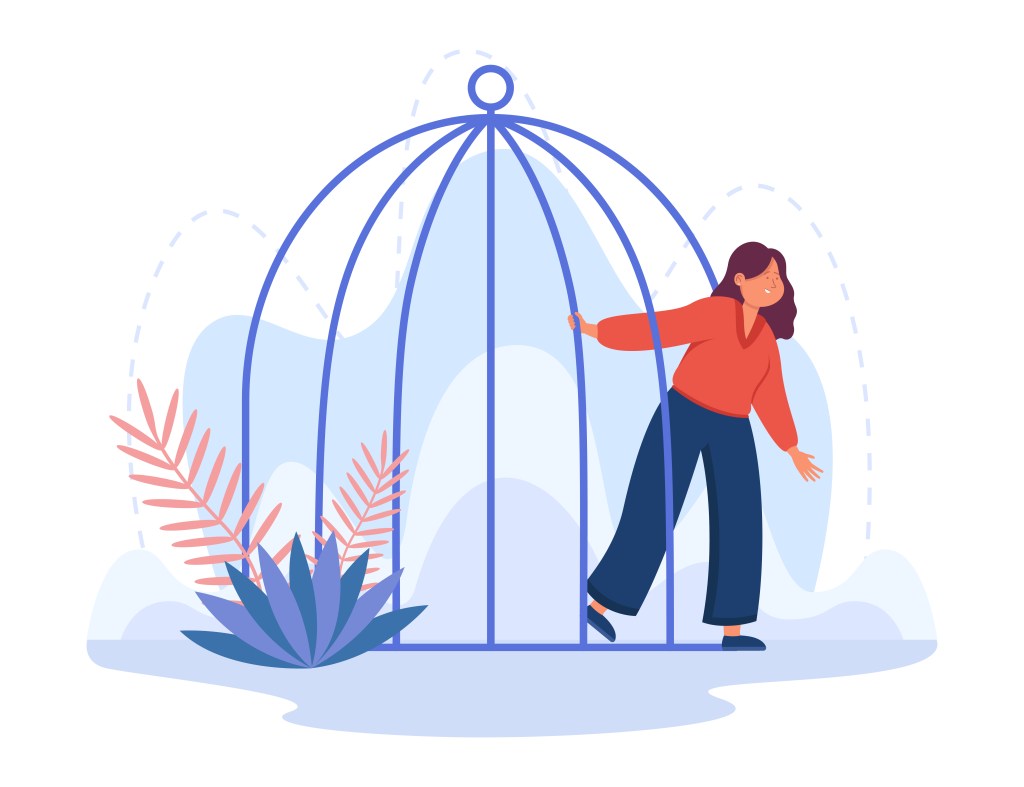
    “I can leave my home.”

    Such a simple, every day occurrence, it is easy to miss the fact that such an act might mean freedom to someone else. I imagine it’s the same for most of my readers. We can leave our homes any time we want, and we can go where ever we please.

    What a privilege to live in Canada.

    It’s a sentiment I was reminded of recently when I attended a presentation by someone who should know. 

    Rahima Khushi is a Rohingya immigrant, born in a refugee camp in Bangladesh after her parents were driven from their home in Myanmar. For a detailed background on the Rohingya, check out the Rohingya Culture Centre.

    The short version is that the Rohingya are a stateless people, refused citizenship in Myanmar and Bangladesh. Think of this: born in an encampment, behind barbed-wire fencing. No human rights, no human dignity. Khushi was not allowed to step outside the barbed-wire compound where she grew up, and she was not allowed to attend school or access health care. There was no work for her father and no dignity in their lives. Because they were Rohingya, a Muslim ethnic minority.

    She attended school only by lying about who she was, living in constant fear of being discovered at school or on the streets. But she had been inspired to achieve a better life by the midwives she helped at thousands of births in the camp. She is now a student at Wilfrid Laurier University studying political science and building a life in Canada. 

    I asked Khushi (her preferred name) what she found different about life in Canada. Naively, I was thinking about the weather, the food, the transit system – any number of things. Her answer left me with goosebumps because of its sheer simplicity, and its depth of feeling.

    “I can leave my home.”

    She can leave her home, she said, adding that she can travel to other cities without being stopped multiple times to prove who she is and, “I can say I am Rohingya.”

    It is freedom to say this is who I am. 

    It is freedom to travel without restrictions. 

    It is freedom to have access to an education. 

    It is freedom to have access to health care. 

    It is freedom to raise our family in the faith (or not) of our choosing. 

    It is freedom to find work and support our family with dignity. 

    It is freedom to celebrate and honour different cultural roots while appreciating what we have in common.

    We take so much for granted in this country we call home. And it’s easy to lose sight of that; in fact we risk losing what is good about our life here in Canada when we are distracted by a neighbour to our south who encourages an “us versus them” mentality of hate and intolerance, that makes scapegoats of immigrants, of minorities and of marginalized groups; when we have disgruntled fellow Canadians who have bought into this identification of easy targets for everything that they perceive is wrong with their lives; and when we are caught up in the polarized politics created by extremists and a plethora of misinformation.

    On this Canada Day (and moving forward), I call on ALL Canadians to declare their pride in the country we call home. We’re not perfect, but we are a place where an intelligent young woman, born into a life where incredible odds were stacked against her survival, can come to add positively to the diverse fabric of our country and remind us what true freedom looks like. 

    ***

    Kushi spoke at an event organized by HOPE, Hearts Open for Everyone, an organization whose Vision is to foster a multicultural rural community where everyone can be truly authentic and welcome. HOPE’s Mission is to create shared community experiences promoting compassion, togetherness and a deep sense of belonging. It is through HOPE that I was able to listen to a presentation by people in the Trans community and another presentation about early Black settlers in the Queen’s Bush area near Wellesley. 

    For more information about HOPE and their programs and resources, check them out at https://heartsopenforeveryone.ca/about/

    For more information about the Rohingya, check this out:
  • Oh Canada!

    Oh Canada!

    Canada Day! What does it mean to you?

    I’m a typical Canadian, which means my celebration is usually low key; however, given the state of the world these days, my latent patriotism is peaking through. Elbows up!

    But it’s a day that evokes both good and bad reflections as I think about its importance to me and to Canada. 

    July 1 actually has a sad, personal memory for me – it’s the date in 1994 when my beloved father passed away. He was a proud Canadian, served his time in the air force during World War II, and took an interest in the growth and development of his country over the years. As a product of his time, he was not taught about the tragedies that marked that development, and of which we are so aware of today. 

    Some might attribute that to being “woke,” but I suspect my father would have supported acknowledging this dual perspective, as we can only truly appreciate what we have when we consider all of the sacrifices and acknowledge the errors of the past.  This post is not intended to be a finger wagging exercise, nor a summary of all the ways in which we have failed each other, but I want to acknowledge a couple as I recall some happy personal July 1 celebrations. 

    Eleven years ago my husband and I enjoyed a train trip through the Canadian Rockies and it was breathtaking, in a way the mountains can be only when you see them in person. Travelling through them was a feeling like no other as I sat in wonder of this natural creation. 

    It was made particularly memorable when we slowed down at Craigellachie, in Eagle Pass, British Columbia, and if you recall your Canadian history, you will know this is the site of the last spike. On November 7, 1885, a ceremonial last spike was driven into the Canadian Pacific Railway at this location. The railway was a massive undertaking designed to connect this country like a ribbon of steel across prairies, farmland, and mountains. Sounds poetic, eh? 

    As it happened, the date our train travelled by this historic site was July 1, and one of the young waiters on board sang O’Canada as we passed through. It is probably the most memorable Canada Day I have ever experienced. The pride in my country ran deep. 

    But, I am not unaware of the dark side of this history, and the fact many lives, in particular those of Chinese labourers, were lost due to falling rocks, landslides, or avalanches. The Chinese men were purposely brought from China to do this dangerous work on the railway, and they were paid less than other workers. And subsequent to this, our government’s treatment of Chinese immigrants was shameful.

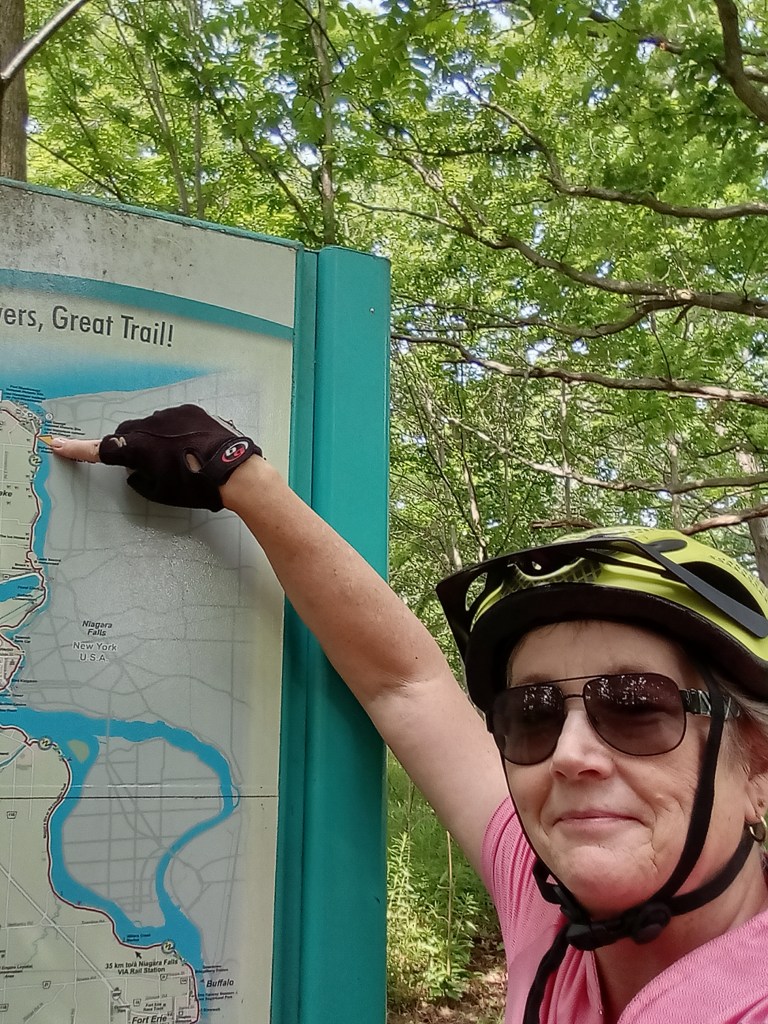
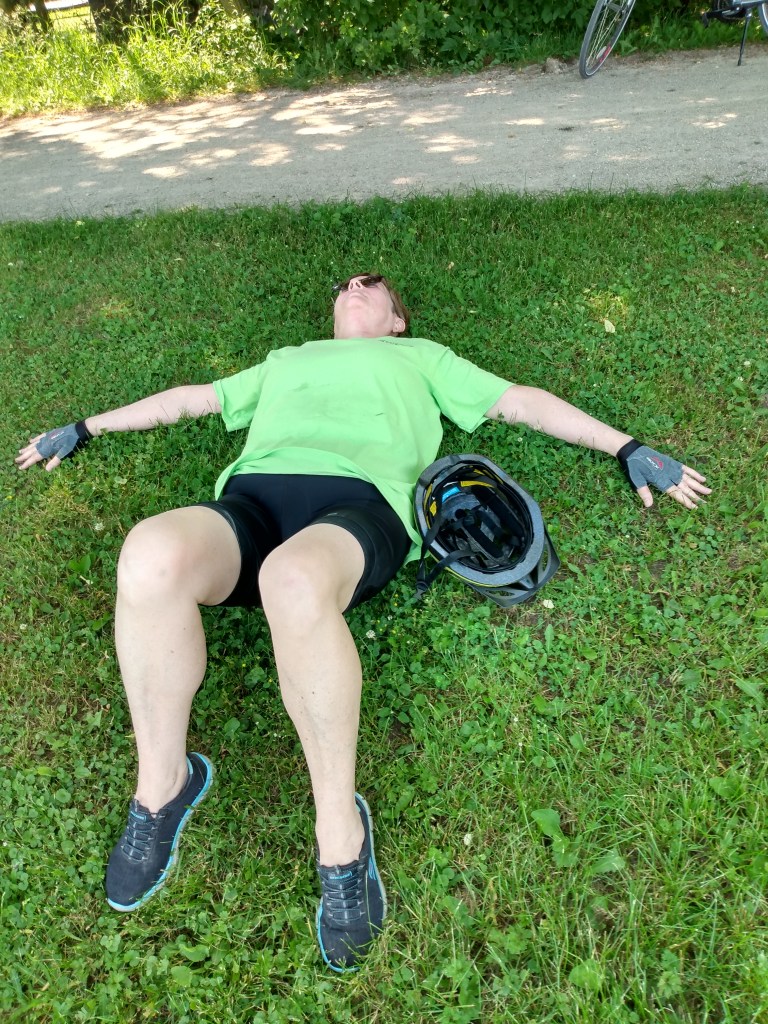
    This memorable trip spawned an idea to experience Canada Day in as many different places in Canada as I could. I have joined throngs of people in Ottawa, our nation’s capital. I thoroughly enjoyed an International Tattoo in Halifax, Nova Scotia; cooked a lobster dinner in Crow Head, Newfoundland and visited the Terry Fox Memorial in St. John; bicycled an approximately 34-kilometre ride on the Guelph to Goderich Rail Trail; and bicycled from Niagara on the Lake to Niagara Falls, Ontario. (and yes, that is me to the left cooling off after one of these rides!)

    I hope to add to the list of varying Canadian locales as I am able. Next on the list is to go north around Lake Superior and possibly into Manitoba! (by car, not bike!)

    I am also aware, as I celebrate what this great country has to offer, that there are others who don’t feel the same. In particular, the ancestors of the original inhabitants of this land who had their lives, their livelihoods, and even their children stolen in the name of colonial progress.

    Again, I will be considered “woke” by some, but after having the privilege to research and write my own family history, I was struck by the thought: what would this experience of looking back be like for someone whose past is either difficult, or even unobtainable because it was obliterated by colonist actions and attitudes. 

    Truth and Reconciliation, as I understand it, asks that we educate ourselves about this history. It does not ask that we don’t enjoy or celebrate what is good about our country, but that we do so while acknowledging and recognizing it can’t be the same for others. And by promising to do better in the future. We can’t erase the past, only recognize it and commit to doing better. I also sense a bit of a turning of the tide in that we may be starting to recognize that many of the Indigenous ways were better and we have much to learn as we move into a changing future. I hope to share more about this thought in a future post; in the meantime,  consider this article about Indigenous people taking climate action to everyone’s benefit.

    So, however you acknowledge this day, I hope we can agree that the land bordered by Pacific, Arctic and Atlantic oceans in its natural state is beautiful, worth celebrating, and worth preserving. 

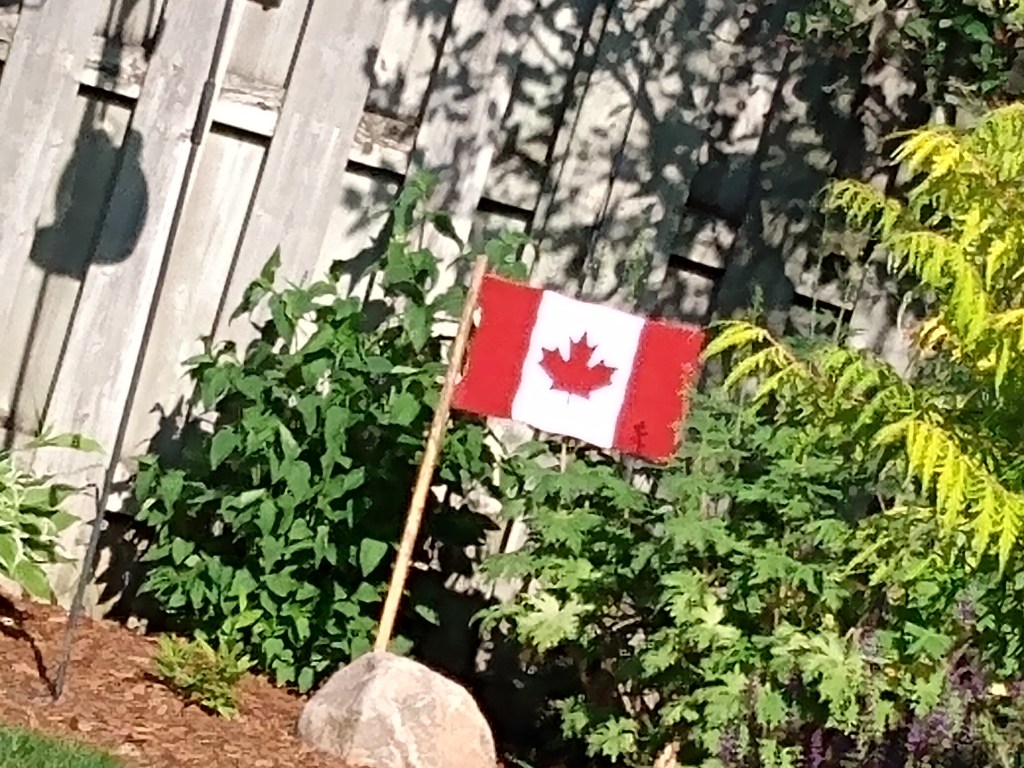
    It isn’t a perfect society, but its pretty damn good compared to many others. So I plan to wear my red and white with pride, and hope that as a society we continue on the path to make the necessary amends so we can be unashamedly proud of a true north, strong and free. 

    Here is a final link to a song I just heard that captures much about Canada and it may just make you smile and feel pride in who we are as Canadians. It’s published on YouTube with the request that it be shared wide and far. It was written by an 87-year old man! Read his inspiring story here!

    Canada Day 2025 – what does it mean to you? Please share!

    ***

    1. CBC, What Does Canada Day Mean to You, YouTube, June 27, 2025

    2. The Canadian Encyclopedia, The “Other” Last Spike, by James H. Marsh, last edited January 17, 2017. 

    https://www.thecanadianencyclopedia.ca/en/article/the-other-last-spike-feature

    3. Royal Nova Scotia Tattoo https://nstattoo.ca

    4. CityNews, Indigenous Perspectives on Canada Day, July, 2023 https://www.youtube.com/watch?v=lAbCj8j8uMk

    5. CBC News, What-On-Earth, What it looks like when Indigenous people take control of climate stewardship on their land

    https://www.cbc.ca/news/science/what-on-earth-land-back-climate-1.7571644

    6. YouTube, We Are Canadian! As One We Stand

    We Are Canadian! As One We Stand

    Lyrics: Ellis Pringle Craig

    Music: Carey Leonard Blackwell

    Vocals/guitar: Brant Garratt

    Arrangement, piano, organ, bass, drums: Bruce Ley

    Recorded, mixed & mastered: Bruce Ley Studios

    Producer: Leisa Way Video production: Ellis Pringle Craig (Royalty free photos)

    Song licensed by SOCAN

    7. We Are Canadian! As One We Stand, by Ellis Craig, published by 55 Plus Lifestyle Magazine.