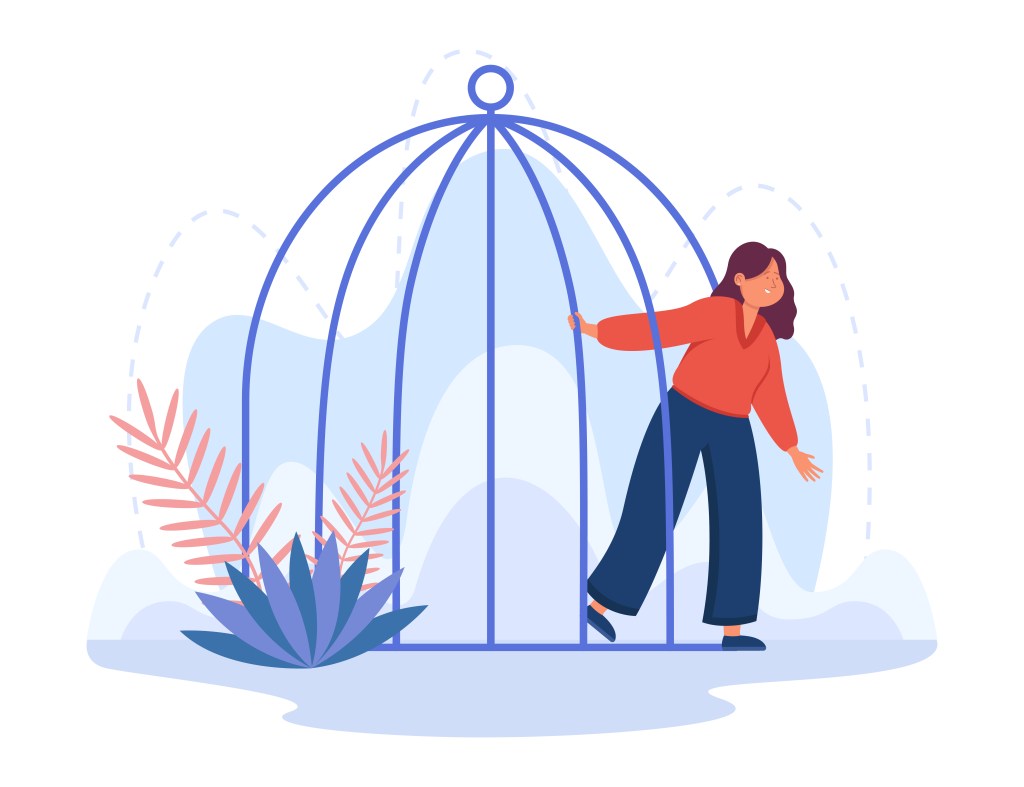
“I can leave my home.”
Such a simple, every day occurrence, it is easy to miss the fact that such an act might mean freedom to someone else. I imagine it’s the same for most of my readers. We can leave our homes any time we want, and we can go where ever we please.
What a privilege to live in Canada.
It’s a sentiment I was reminded of recently when I attended a presentation by someone who should know.
Rahima Khushi is a Rohingya immigrant, born in a refugee camp in Bangladesh after her parents were driven from their home in Myanmar. For a detailed background on the Rohingya, check out the Rohingya Culture Centre.
The short version is that the Rohingya are a stateless people, refused citizenship in Myanmar and Bangladesh. Think of this: born in an encampment, behind barbed-wire fencing. No human rights, no human dignity. Khushi was not allowed to step outside the barbed-wire compound where she grew up, and she was not allowed to attend school or access health care. There was no work for her father and no dignity in their lives. Because they were Rohingya, a Muslim ethnic minority.
She attended school only by lying about who she was, living in constant fear of being discovered at school or on the streets. But she had been inspired to achieve a better life by the midwives she helped at thousands of births in the camp. She is now a student at Wilfrid Laurier University studying political science and building a life in Canada.
I asked Khushi (her preferred name) what she found different about life in Canada. Naively, I was thinking about the weather, the food, the transit system – any number of things. Her answer left me with goosebumps because of its sheer simplicity, and its depth of feeling.
“I can leave my home.”
She can leave her home, she said, adding that she can travel to other cities without being stopped multiple times to prove who she is and, “I can say I am Rohingya.”
It is freedom to say this is who I am.
It is freedom to travel without restrictions.
It is freedom to have access to an education.
It is freedom to have access to health care.
It is freedom to raise our family in the faith (or not) of our choosing.
It is freedom to find work and support our family with dignity.
It is freedom to celebrate and honour different cultural roots while appreciating what we have in common.
We take so much for granted in this country we call home. And it’s easy to lose sight of that; in fact we risk losing what is good about our life here in Canada when we are distracted by a neighbour to our south who encourages an “us versus them” mentality of hate and intolerance, that makes scapegoats of immigrants, of minorities and of marginalized groups; when we have disgruntled fellow Canadians who have bought into this identification of easy targets for everything that they perceive is wrong with their lives; and when we are caught up in the polarized politics created by extremists and a plethora of misinformation.
On this Canada Day (and moving forward), I call on ALL Canadians to declare their pride in the country we call home. We’re not perfect, but we are a place where an intelligent young woman, born into a life where incredible odds were stacked against her survival, can come to add positively to the diverse fabric of our country and remind us what true freedom looks like.
***
Kushi spoke at an event organized by HOPE, Hearts Open for Everyone, an organization whose Vision is to foster a multicultural rural community where everyone can be truly authentic and welcome. HOPE’s Mission is to create shared community experiences promoting compassion, togetherness and a deep sense of belonging. It is through HOPE that I was able to listen to a presentation by people in the Trans community and another presentation about early Black settlers in the Queen’s Bush area near Wellesley.
For more information about HOPE and their programs and resources, check them out at https://heartsopenforeveryone.ca/about/
For more information about the Rohingya, check this out:
 StillKim