• Still inspiring: Darlene Vandermey

    Still inspiring: Darlene Vandermey

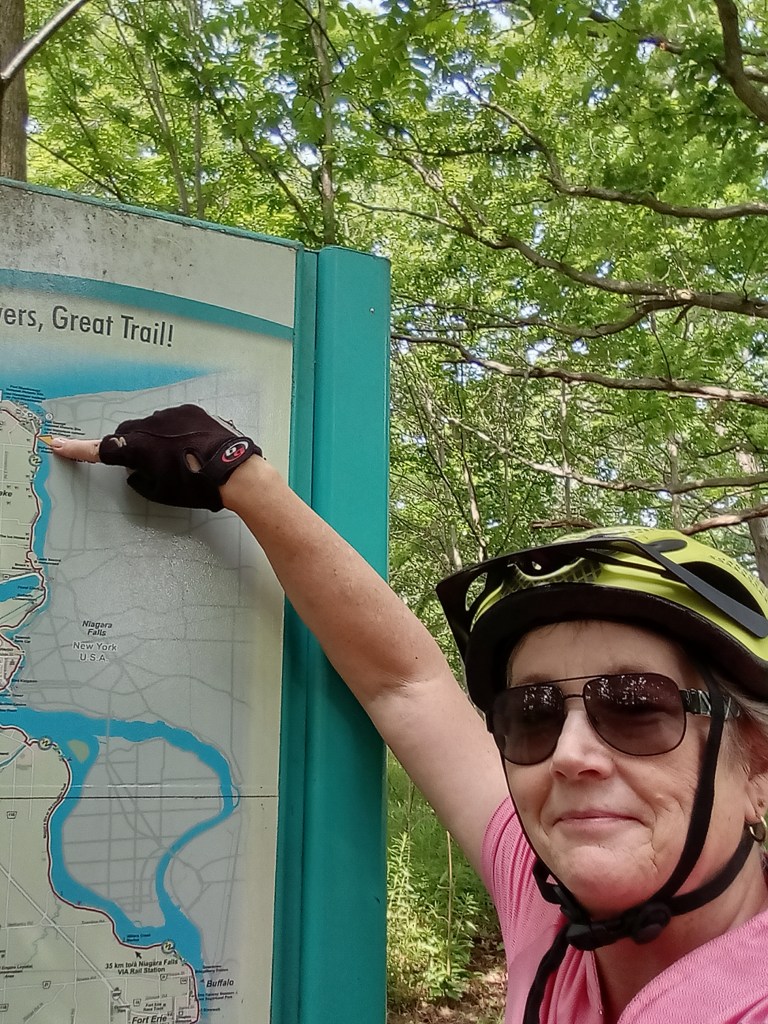
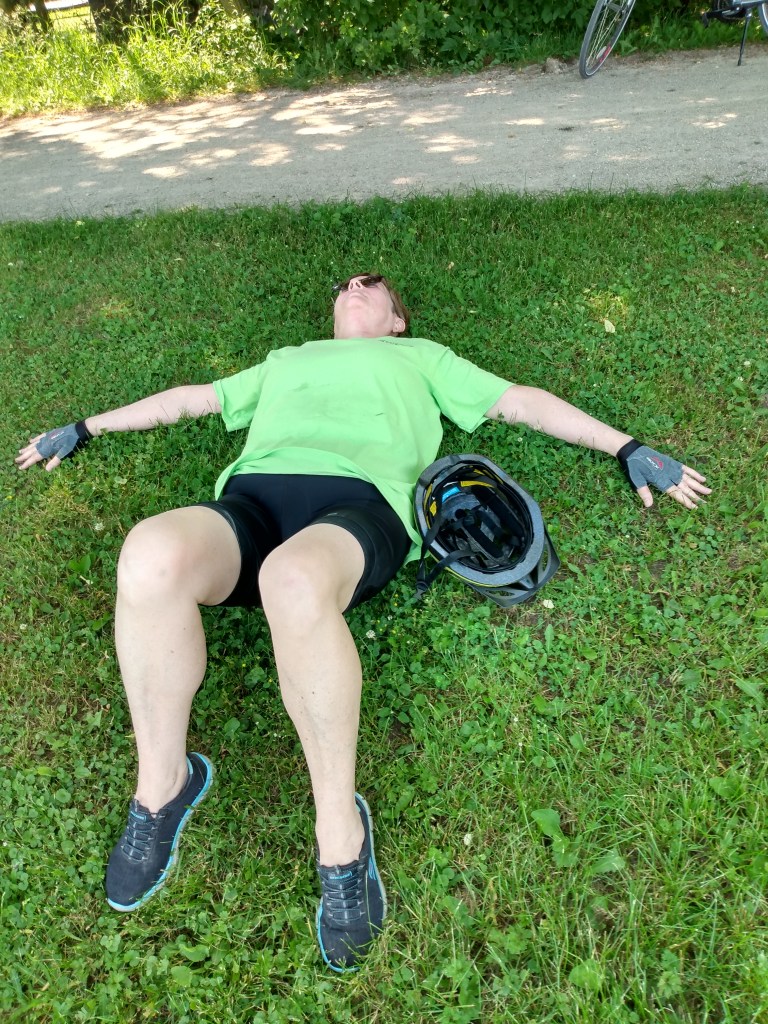
    To know Darlene Vandermey is to know that she loves cycling. Besides the bicycle images on the wall of her home office, the bicycle clock in her living room, and the bicycle trainer in her basement, there’s the 2,000+ kilometres she biked around Ontario over the course of 2023 when a mild winter left open roads.    

    What you might not know is that 33 years ago, she was told she would never ride her bicycle again. 

    Her comeback story is inspirational. 

    The journey she took from failing health in her mid-40s to  inspiring others on the bike trail in her mid-70s is one of faith, the tenacity of an ‘I’m never giving up’ attitude, a personal code for when things get tough, and the support of her family. 

    When Darlene married the love of her life Kees in 1969, the couple enjoyed Scottish country and square dancing. They were active in the communities where they lived and Kees served as a Presbyterian minister. They eventually welcomed three children and enjoyed family-focused camping trips that included, of course, cycling. As a Minister’s wife, Darlene was active in the life of the congregations they served, as well as with her own growing family. 

    The family had moved to Windsor, Canada’s most southern city next to the U.S. Border. The climate in Windsor reflects its more southern latitude – at best, it’s very mild, and then it gets very hot and humid. Unfortunately, it seemed to be a trigger for Darlene. First, it was allergies that flared and then came extreme tiredness and eventually pain and aches throughout her body. Daily living was a challenge.

     “I couldn’t wait to get the kids out the door in the morning, and I would flop on the couch. Even my clarity of mind was going.” 

    Then came the devastating diagnoses at age 44 by a rheumatologist: fibromyalgia. Fibromyalgia happens when the sheath that covers the muscles becomes inflamed. Such a diagnosis required that 21 different pressure points on the body be identified, Darlene explains.

    Just for a moment, imagine 21 pressure points of pain on your body and now imagine that on a 5’2” frame.  

    The doctor looked at this petite and seemingly frail woman, prescribed some medicine and told her she would never ride her bike again. Nor dance again. 

    The medication caused her to feel worse, and she called the doctor who told her, “take the medication or be in pain for the rest of your life.” 

    “I told my family, ‘I don’t like that diagnosis. I am going on a health journey,’ and that was the start of a five-year process.”

    Darlene is petite and slim, but the health journey she embarked on next was outsized in its depth and breadth as she fought her way back to health. 

    What’s her secret, I wanted to know. 

    The strength she brought to the battle is certainly a testament to the strong women who raised her.  Her mother was widowed at 41, when Darlene was just 7, and her grandmother, also a widow, came to live with them in Willowdale. Her mother “had to pull up her boot straps” and work to support the family and pay the mortgage. A level of tenacity her daughter inherited and would need later in life.

    Darlene grew up in a home with love, her grandmother’s deep faith, and her mother’s steady pragmatism mixed with faith. Darlene never felt the struggles were on her shoulders. In fact, her mother even secretly set aside a small sum of money to pay for her daughter’s wedding for when the time came. When Darlene decided Kees was the one, her mother sat them both down to tell them she would never live with them. They were to move on with their lives and build their own home. She lived on her own until her death at age 87. 

    Darlene was very close to her mother, witnessing her strength in the aftermath of her father’s death. Darlene rides her bike with a tiny stuffed dog, Sally, that belonged to her mother, secured on the rear rack, the memento tagging along on multi-day trips around the province. 

    After the disappointing conversation with her doctor and the declaration to her family,  Darlene tried several modalities, including chiropractic adjustments, massage therapy, and acupuncture. She would give each time to offer relief, but then move on to the next possible solution when it wasn’t enough. She tried various health products.

    She made a decision that she needed to keep a positive attitude as each attempt didn’t provide the resolution she sought. At one point her back was out and she also suffered from sciatica. Along with pain and significant fatigue, she experienced daily migraines. The on-going effort would “grind me to a halt,” but she was determined to be the active and healthy wife and mother she had been. 

    “Part of what kept me going is that I knew God put me here for a purpose, and I wasn’t living my purpose. 

    “I also needed to do it for my family, to try and recover for them. All of our vacations had to revolve around me because I couldn’t sit very long in the car. I can say my kids suffered. They were going into their teen years with a mom who could not do much.”  

    Another transfer to the small, rural community of Elora took the family away from Windsor.   “I interviewed a chiropractor who I saw for adjustments because of the sciatica and he gave me a power belt designed to maintain my hip after the adjustment. I wore it for a year and it worked.”

    Exercise remained almost impossible because of continuing pain, but she kept up walking.

    One day a church member told her about a barley grass powder that was supposed to reduce inflammation. A bit skeptical as she had tried many other products, she was leaving no stone unturned and tried it.

    The first thing she noticed was a reduction in migraines. As a result, her lifestyle and diet became the focus of the journey.

     Based on research, she began to eliminate foods that were inflammatory – wheat, milk, sugar, and pork. She eats lots of fruits and vegetables, chicken, and fish. And she tries to avoid processed food.

      “Gradually, little by little, the pain began to subside.” It was a gradual transition, away from regular cycles of pain, but enough movement forward to keep her going.

     Then the day came when the family was at its camper trailer and Darlene pulled her bike out of the shed. It had been stored out-of-sight where it would not be a reminder of what she had lost. On this day she rode the bike – albeit a short distance – but it was a reason to celebrate. And an affirmation of what she was doing. 

    “I’m over it,” she told Kees. “This is my sign that I’m going to get over it.”

    Never one to look too long in the rear-view mirror – she notes rear-view mirrors are small while windshields are large to look forward – she was determined to learn more. She took nutritional courses through the Alive Academy of Canada and became a Nutritional Product Advisor and a Living Well Coach. “The icing on the cake,” she says, is the fact she had to write exams, something she would not have been able to accomplish while in the grip of fibromyalgia which also results in memory problems. 

    She started a home-based business, Joy! Health Naturally!, that she operated for 24 years, only recently retiring. In addition to the part-time work, she was music director for a junior choir, a senior choir and a cantata choir. Busy working mother and volunteer once again. 

    To this day she remains diligent in what she will and will not eat, and she continues to take the barley grass powder and other products; however, “I’m still of the opinion you can pour all the nutritional products you want into your body but if you’re not going to make lifestyle changes, you’re wasting your money.

    “I have a passion for people with fibromyalgia because many are put on medication, and the medical profession will tell you, live with it.”

    She does not. Darlene’s migraines and muscle aches  have disappeared. As well as cycling, she and Kees returned to dancing, stopping only when the groups disbanded. 

    When asked how she was able to keep going after each attempt at a solution failed, she shared a thought process she uses when anything happens. It’s based on the word STOP. 

    S – Stop in your tracks if something happens or something is not working for you

    T – Take a deep breath

    O – Observe the situation; like you are outside of yourself so you can observe objectively, like you are looking at someone else

    P – Pray, plan, and proceed

    Darlene seems to be proof that one’s mindset has far-reaching consequences. 

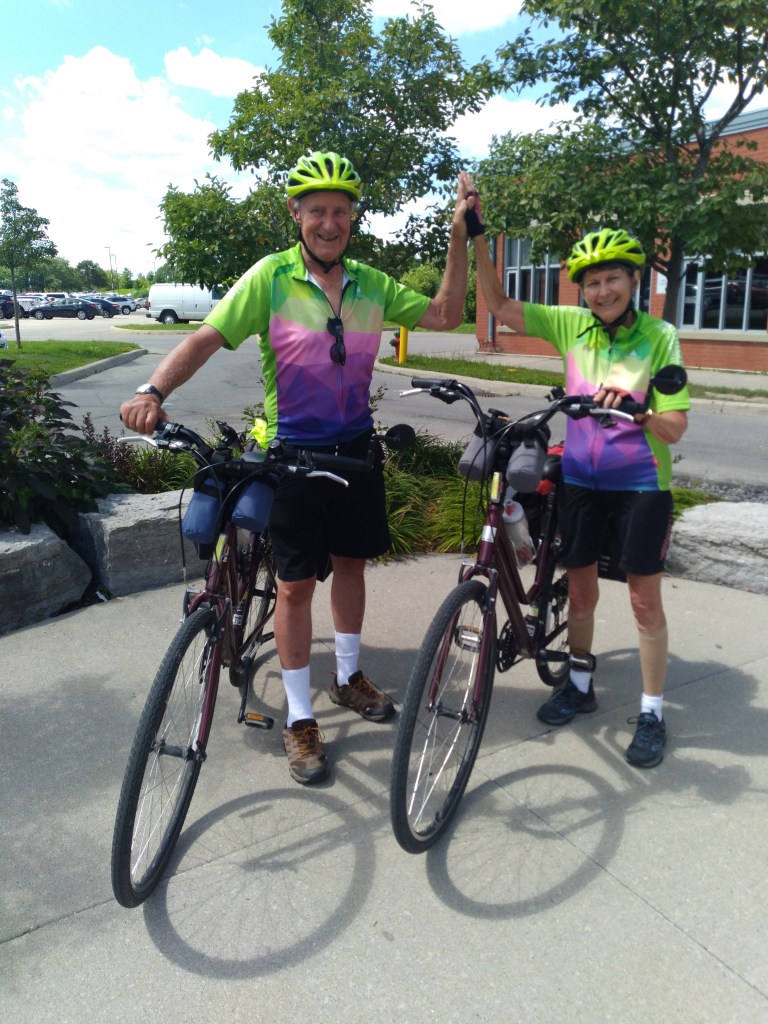
    Seven years ago, Darlene and Kees joined a bike club and regularly travel on multi-day bike trips; they plan to cycle the P’tit Train du Nord in Quebec this fall.  

    Then, last year another ailment impacted her cycling and for 10 months she was once again fighting for a come back. Her glute muscles began to act up making it painful to sit. She went to physiotherapy and took her bike and herself for a fitting to see if changes to her bike would help. A new seat was recommended.

    The physiotherapy treatment resulted in hitting a nerve and worse pain. Applying her STOP method, Darlene decided to change physiotherapists and she is now back on her bicycle, clocking more kilometres again.

    When others are tempted to say, I have to stop doing what I love because I can’t anymore, Darlene says STOP and then moves forward with a plan to surmount the issue. She decided to purchase an electric bike (with an improved seat) at the end of 2024 so she can rely on the extra support on challenging hills and longer trips. 

    Her tenacity and her faith are remarkable, all the more so because they are housed in a tiny package that has mastered the skill of balancing a peaceful temperament with an inspirational strength of will. 

    ***

    Who is still inspiring you? Let me know and perhaps they could be featured here to inspire others!

  • Making change

    Making change

    I’ve never been one to fear change; in fact, I thrived on it. Or so I thought. 

    Then my husband and I decided to move, something many people at our stage of life do. We moved from the 34-year old multi-level home we built in 1989 to a bungalow on a smaller lot.

    While I’d thought about moving for some time, it was theoretical. When it happened, it felt sudden. New home.  Different neighbourhood. Same town. So, not that big of a deal, right?

    I have often been unsympathetic with those who fight change. Get on with it, I would think. Yet in my new home I felt a level of anxiety that I was unable to explain. Even as I painted and papered and decorated – a past-time I love – to make the space truly ours, the unsettled feelings persisted.

    Research into life changes was revealing. It seems I underestimated the transition that this change in address sparked, and I was likely burying the emotions that accompanied it. 

    Some changes in life are truly minor, while others prompt a major transition in life. According to researcher and TedTalks presenter Bruce Feiler, selling our family home would have been a lifequake for us. “A massive burst of change that leads to a period of upheaval, transition and renewal,” Feiler explains the term.

    Such lifequakes can be a move, like ours, or can be precipitated by a change in career, health or finances; the death of a loved one; an unfulfilled goal; or a change in a significant relationship. He distinguishes between lifequake changes that we choose and lifequakes over which we have no control – such as a death or a world pandemic.  

    While how we experience these lifequakes will vary depending on many circumstances, Feiler suggests life transitions share three phases in common: 

    1. The long goodbye 

    2. The messy middle, and 

    3. The new beginning. 

    He emphasizes these are not necessarily experienced in a linear fashion. 

    I have begun to respect the psychological impact of our move and the source of my anxiety. We were saying goodbye to that chapter in our lives where we were in building mode – building a family, building our careers, building a home.

    Phase 2, or the messy middle, may have been the literal mess of drywall dust as we finished off a basement in our new home, but I think now my anxiety was indicative of this middle phase of our transition. Although I thought I thrived on change, my body was telling me something different about this particular change. For the first time, we had made a decision based on the fact we’re aging and the realization there’s fewer years ahead than behind us.

    Dealing with this has been a process and while the anxiety has all but disappeared, at times we continue the long goodbye, while at the same time try to embrace the new beginning of Phase 3 – that is living our lives cognizant of the fact we are in the final years of the journey.  Not to be too negative – my 94-year-old mother-in-law would tell me there’s a few left yet!

    Feiler says when you are in a transition you should start with the phase where you are at your best because that’s where your power lies. I’m best at new beginnings so my furious pace to paint, paper, and redecorate was the right approach for me. It also explains why I was the one to rip off the bandage, so to speak, and initiate the move.

    He also advises to accept your emotions and that for the vast majority of us, rituals can help. 

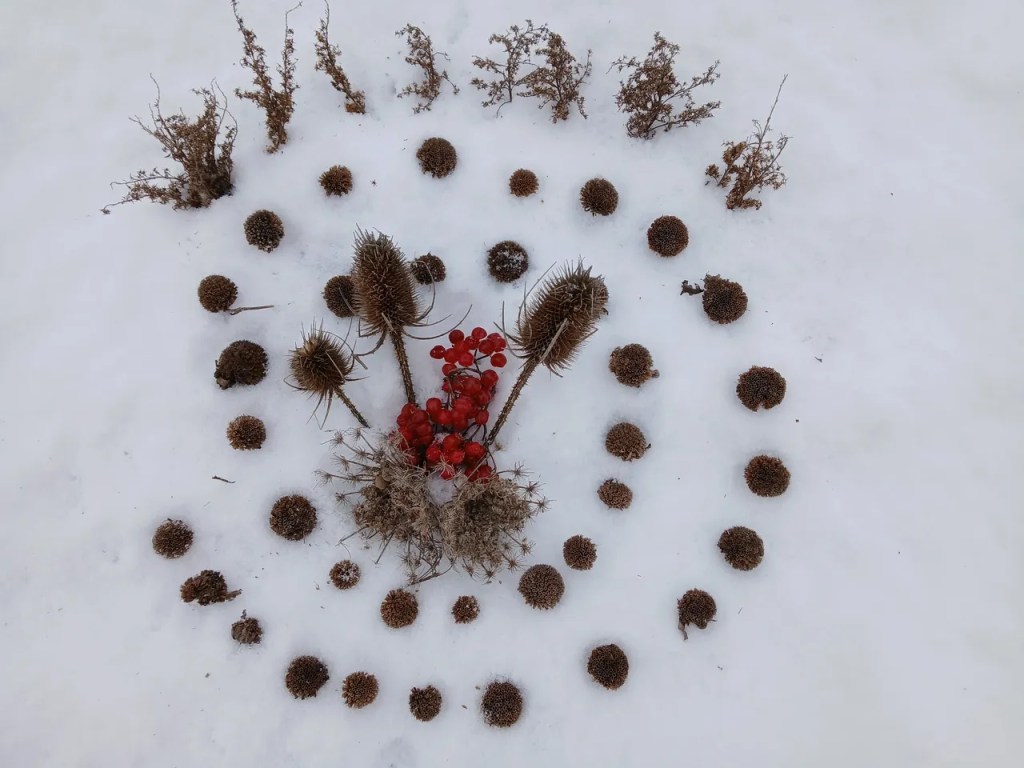
    In January I participated in a writing workshop called The Wisdom Years. I will share more of my learnings (like the three phases I noted above) from the course in future posts, but I’d like to explain our first assignment, which was to create a Morning Altar. 

    The task was to go into nature and create an altar out of whatever we might find – flowers, twigs, rocks etc. and get creative. We were to name the person or the thing that we were saying goodbye to and then, we were to walk away and allow nature to take over the altar, recognizing that nothing in life is permanent. Everything is always changing. 

    The assignment was not my cup of tea as I’m no artist, but I’m willing to give most things at least a try. 

    My finished altar is pictured with this post.

    Despite my initial hesitation, the impact of participating was surprisingly profound and contributed to easing the anxiety I was feeling. At first, I thought I did this to say goodbye to or let go of the life I have led. Goodbye to the building chapter of my life. 

    Starting with no real plan, what began to develop as I worked on this art was a labrynth. As you know, there is one path to walk forward in a labrynth and you can choose to return following the same path, unlike a maze that may have multiple ways in and out and dead ends. Labrynths can be spiritual and prayerful. A method for contemplating life.

    As I struggled to make meaning of the labrynth, my reflections resulted in the decision to dedicate the altar to the life I continue to lead.  Not to what I was leaving behind. 

    Although life can take many different routes, like a maze, we have only one life, and it moves forward. Like a labrynth leading to its centre.  That’s what I need to embrace, that I am still on the path and there are still new discoveries – and more changes – yet to come. 

    “No doubt the universe is unfolding as it should,” is how Desiderata’s author Max Ehrmann states it. He also counselled: “gracefully surrender(ing) the things of youth. Nurture strength of spirit to shield you…do not distress yourself with dark imaginings.” Perhaps it is the “dark imaginings” about an unknown future I am saying goodbye to. 

    I can walk back in the labrynth, but I should not dwell there, and I can continue into the future with the same level of excitement I have always had about life. Perhaps with more attention on nurturing a strength of spirit.  Because the centre, the end of the labrynth, promises riches and beauty and colour. 

    This new beginning at our new address has been a reminder that life does change and we are changing right along with it. We are still here and there’s still time to contribute to life, in our family and in our community. Friendships are precious and deserve our time and focus. 

    Feiler also suggests seeking the wisdom of others. So, how about you? How have you coped with the lifequakes that have come into your life? Are you best at goodbyes, do you thrive in the messy middle, or do new beginnings energize you? I invite you to comment below and share your wisdom with others.

    Feiler ends by saying we should not give up on the happy ending to the story of our life, even when the path we thought we were on has changed in some way. Words of hope for the journey… still ahead. 

    ***

    Listen to Bruce Feiler’s Ted Talks Daily Podcast with The Secret to Mastering Life’s Biggest Transitions, here: https://www.ted.com/talks/bruce_feiler_the_secret_to_mastering_life_s_biggest_transitions

    You can learn more about Morning Altars here: https://www.cbc.ca/player/play/video/1.6624979

    If a writing workshop on The Wisdom Years appeals, check it out here: https://thestoryguides.com/get-started/p/the-writing-salon-6c7bg

  • Welcome to my blog!

    Welcome to my blog!

    Welcome to Still Kim. It’s been a journey to get to this point and I am excited to be officially launched. 

    The concept of writing a blog began before I retired more than five years ago; those were the years I would dream about how I might spend my time when I had time to spend. Writing was always the goal. I joked with my students that I was going to be an “old folks influencer.”

    Cue: laughter.  

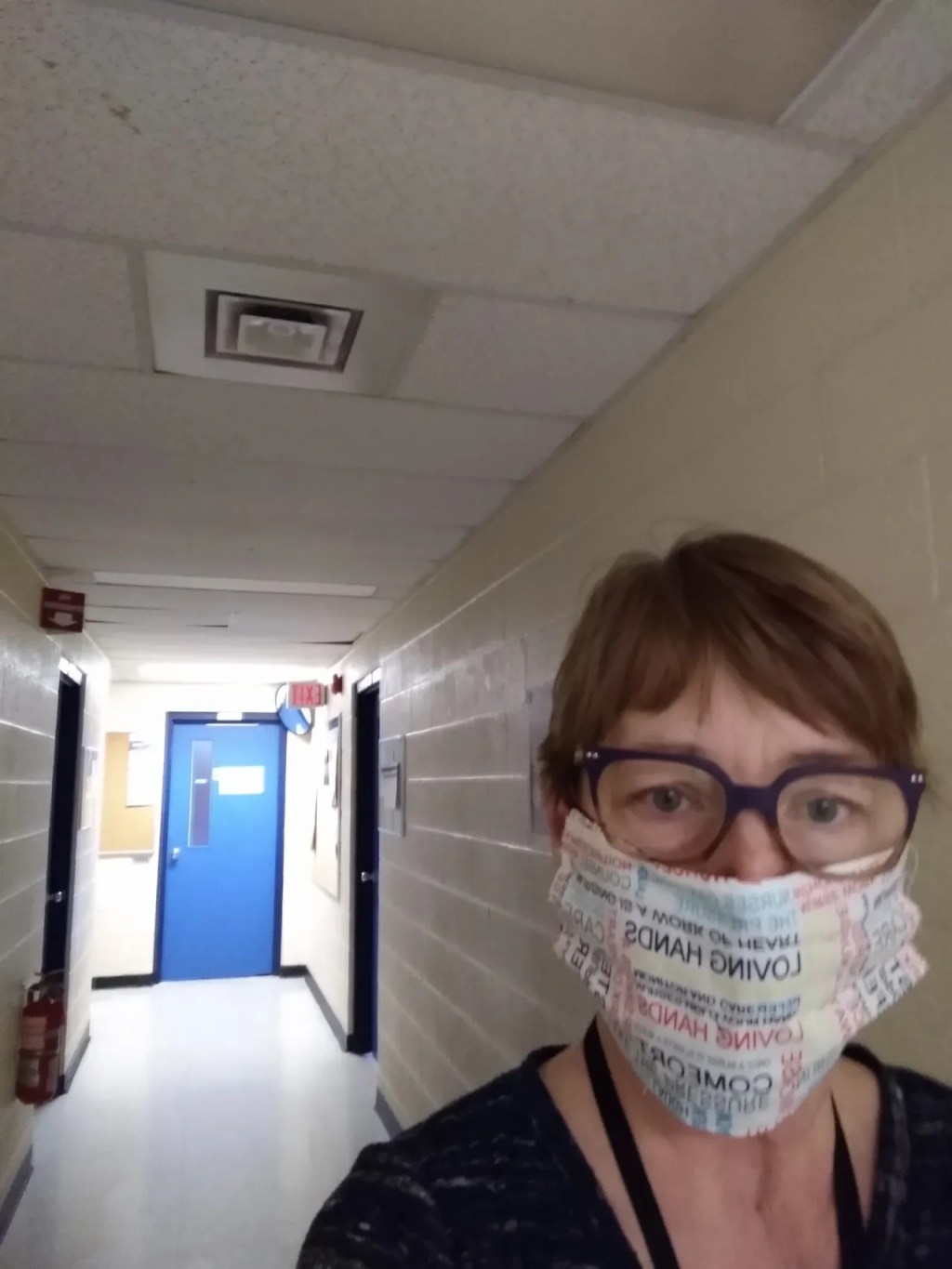
    Retirement came right on the heels of a world pandemic (not so funny); in fact my last semester was coaching students through their final capstone project, all of us online and isolated. My official last day at the college required me to make an appointment to get into my office, check with security at the door, and walk out masked through empty halls. 

    As the lockdown continued and we coasted through the waves of ‘now you can meet’ and ‘now you can’t’, I turned to my computer and found a great escape in my writing. I completed a years-long love project – a memoir of my parents’ 54-year marriage, The Wings of Love , publishing it on Amazon. I would get to the blog next. 

    And I did, by providing a colleague’s design class the opportunity to create a logo for Still Kim as an assignment. Eloise Marier designed the winning entry.

    Then another lifequake happened – we sold our home of 34 years and for about a year I was immersed in the transition, dismantling one home and preparing the other to feel like home.  

    Then, a winter vacation ended with a slip and fall resulting in a broken wrist. Minor quake but typing was a challenge!

    Writing took a back seat, to the point I feared I would not return. As I have always identified myself as a writer, the fear was real.

    Slowly, thanks to a six-week writing workshop, The Wisdom Years, and the sage advice of friends and fellow writers, I began to rediscover my love for expression via the written word. 

    The concept behind StillKim has remained – that at this stage of life I am still reflecting, still learning, still evolving. Time has given me grey hair and wrinkles, but it has also shaped the lens through which I view life. I just may have some wisdom to share and no doubt lots more to learn. 

    And I know there are many other women who will identify with that lens, and have their own stories to inspire others. I hope to connect with them and create a platform for those 60+ voices that are often ignored by society. 

    Is there a woman in your life who is an inspiration? Perhaps she would be willing to talk to me? Let me know by sending me a message from the Contact Page. (These messages go to my email and are not public). You can also leave a comment on a blog post in response. These are public.

    I hope you decide to subscribe to StillKim and come along for the ride.