Last month we were shopping to find her a pair of jeans with sparkles on the pockets for her to wear to the weekly seniors’ dances held in her community.
I wish I could bottle what she has! She is active, still drives, and keeps up with all family activities. She hasn’t always had the easiest life, and I am in awe of her tenacity.
A few years ago, when she was just 92, I was one of four – her daughter and three daughters-in-law, along with her sons chiming in, who helped her redecorate her home.
And if your sympathy on reading that sentence lies with my mother-in-law, you would be correct. Yet, she weathered us with a composure I can only admire.
As we all popped in to see the progress after new carpet and painting were completed, she heard the various voices chime in:
“Now you should…
put those pictures on this wall
change that table
install a new light
move this chair there
take that photo down
hide this blanket
buy a new one…” etc.
You get the idea!
This is a woman who spent a 70+year marriage doing only what her beloved husband desired. Meals reflected his tastes, holidays were spent to please him, and household purchases were dictated primarily by his tastes and budget priorities. Doing what pleased Ivan is how Dorothy happily lived her life.
Not that he wasn’t a generous man when it came to his wife. I still recall the Christmas close to their 25th wedding anniversary when she opened his gift to discover a new diamond ring and the emotional outpouring of her love in response. Usually there was a beautiful new outfit in her Christmas box that he would have taken time to select from a local lady’s wear shop.
I didn’t realize her tastes may have run in a different direction until after he passed away and she began cooking and ordering food that he never wanted. And then came the renovations, encouraged by her daughter, to update her two-bedroom senior’s unit. Soft grey walls, white trim and a grey carpet followed the installation of a new kitchen counter and backsplash. All elements complemented the modern, refreshing colour scheme.
The decorating instincts of all the women in the family kicked into high gear. New arrangements for family photos on some walls paved the way for new prints to provide a focus on other walls. Now she relaxes in her easy chair looking at a winter scene of an old shed nestled in the middle of towering evergreens. From her table, she can imagine sitting on the end of a dock with her feet cooling in blue lake water. Bedroom prints in soft blues and greys connect to new throw pillows on the bed and new towels in the ensuite.
But a close second to living her life for Ivan was doing what she believed would make her children happiest. When one son said “this” and another son said “that,” what’s a woman to do?
She smiled her way through it all, and frankly, I don’t think we’ll ever know if the final result is what she truly wants, or reflects a choice to make someone else happy.
But my mother-in-law is a wise woman. She has perfected that secret to a happy life by knowing: Happiness isn’t getting what you want, it’s wanting what you’ve got.
I humbly confess, it’s a lesson I still work at achieving!
Oh, blessed autumn: cooler breezes, still-warm sunshine, and fall colours. I can’t even mourn summer when we are offered the beautiful weather that September delivered. There’s no better time for getting on the saddle and pedalling away.
Riding a bike was my primary mode of transportation when I was a kid – I travelled all over town on my gold-coloured bike. No special brakes or gears, just girl power. Now I have rediscovered bicycling as a way to visit sites all around Ontario.
My husband and I recently upgraded our 21-speed bikes for the latest craze, e-bikes. They are game changers. We can go further without wearing out and those steep hills don’t stop us anymore.
We still get exercise, but what I most appreciate about this past-time is how it gets me outdoors and enjoying nature. Bicycle paths are abundant around Ontario, and I relish the scenery as I travel through parks, over rivers and creeks on bridges, or beside farm fields on rural trails. The Guelph to Goderich Rail Trail has an added bonus of being shaded by trees planted in memory of loved ones. I see familiar names on plaques as I pass and I remember them.
Fields of hay, corn, beans, and apples reveal the seasons as we travel by them in early spring, again in mid-summer, and finally at harvest time. Then, there’s the animals. Watching a young horse, also enjoying the fresh air, chase the sheep around an enclosed pen brings a smile while seeing a beautiful red fox leap across the trail a few short yards ahead brings a gasp of wonder. The groundhog that ran across the trail and thankfully passed under my pedals brought a shreak!
It feels good to get away from the concrete and ordered life of town or city.
Bicycling is also a bit of an escape from daily chores and gives me time to reflect. As I do, the neurons in my brain seem to make new connections as they sort memories, conversations, and recent readings.
The corn stalks beside the trail eventually create a wall that towers above me, and I think about the fact I was not raised on a farm. I’m a townie. My parents didn’t even maintain a garden. Food, as far as I knew, came from the grocery store and was canned, boxed or frozen. But I loved to visit my friend who did live on a farm, and I remember her father seemed to really appreciate it when I asked to go out to the barn. (I dearly wanted to see a calf being born but was not rewarded that wish!) Even as a self-absorbed teenager, I sensed the deep devotion her father had to his farm, the care of his animals, and the tending of his crops. This usually quiet man would become animated as he told me about the farm. Farming was his livelihood, but there was a connection to his way of life that went deeper than a job.
We were never allowed to have a pet at home, but I remember making a big deal of stepping on an ant one day. My dad, always one to poke a conscience, asked me why I had done that. The ant wasn’t doing anything to me, was going about its own business, and had a right to live, he said. Geesh, make a kid feel guilty about an ant? Seemingly simple memory, but the intended lesson has stuck. (So glad I missed that groundhog, and the chipmunks!)
I recall going to school in downtown Toronto, returning home most weekends via bus. As the bus got closer to rural landscapes and I could see farm silos and barns out the window, the knots in my stomach would begin to unravel.
I remember that when my kids were little, we would go out on “nature” walks and I would get them to look for and collect different shaped leaves, or rocks etc. I especially loved the smell of the earth in the spring and the smell and sound of rustling leaves in the fall. Our grandchildren have also enjoyed walks through local trails, in deeply wooded areas where the ground cover of pine needles absorb sound and it is quiet. We listen and identify sounds we may hear. On one occasion, I picked up a small twig of pine needles and suggested to my young granddaughter that it was a mouse broom and perhaps they were using it to clean their homes. A bit of fanciful nonsense that we shared. A year later we visited the same area and she was telling me she had found the mouse brooms!
These seemingly unconnected memories reinforce the idea I don’t have a history of living on the land, but I do feel some kind of connection to the land, or to nature. My inside voice has always suggested this connection was perhaps a bit fake or “put-on” because, as I say, I don’t have a history that I can connect to.
Or do I?
This tenuous connection was given some veracity recently as I began to read Braiding Sweetgrass, Indigenous Wisdom, Scientific Knowledge, and the Teachings of Plants by Robin Wall Kimmerer. In her preface, she explains that sweetgrass is “the sweet-smelling hair of Mother Earth.” Then, she adds a statement that has really stuck with me: “Breathe it in and you start to remember things you didn’t know you’d forgotten.”
I contemplate a crazy thought. Is it possible my sketchy connection to the land is based on a memory I have forgotten, a memory passed to me through my ancestral roots, or even further back in time to my place in the world as a human being? If we were created to play a part in the eco-system of earth, perhaps there’s a reason beneath my appreciation of the smells and sounds in nature or behind the unravelling knots in my stomach when I see a rural landscape.
Is it possible, I continue to reflect, that we are all connected to Mother Earth, but some of us have forgotten? That it is buried by generations of progress and development that pushed the connection down deep into our subconscious?
I hear many people reflect the sentiment that we have lost touch with the land; we have moved away from living on the land, of surviving only by what the earth can give us. Our modern, urban existence has changed our relationship with the land. I wonder again, have we suppressed a connection?
I have also understood that people who farm the land, and Indigenous peoples have different relationships with the earth. But I didn’t fully understand the Indigenous connection until reading Kimmerer’s book.
In Indigenous culture, the land is a gift. And to fully appreciate this, you must also understand how the Indigenous interpret the term “gift.” Their economy is based on a gift exchange, unlike ours which is based on a commodity exchange. As Kimmerer explains, if you pay for a pair of socks in a store, the exchange ends once you give the clerk your money. You now own the socks. That’s a commodity exchange. But if those socks were given to you as a gift, the gift creates an ongoing relationship between you and the gift giver. The gift comes with responsibilities and obligations, and a need to reciprocate.
The earth is a gift from the Creator and thus, in Indigenous culture, it can’t be bought and sold as a commodity. And when we accept the gifts of the earth, we are obligated to care for them. We are to reciprocate by returning the gift.
Kimmerer asks “How in our modern world, can we find our way to understand the earth as a gift again, to make our relations with the world sacred again? I know we cannot all become hunter-gatherers – the living world could not bear our weight – but even in a market economy, can we behave “as if” the living world were a gift?”
If we believed the world was a gift, how might we change our behaviour?
I certainly feel I have been blessed with a gift as I bicycle on trails around Ontario where you get a whole new perspective of the land, and the nature that inhabits it.
As I continue reading Kimmerer’s book, I look forward to further food for thought as she weaves her first-hand knowledge of Indigenous culture as a member of the Citizen Potawatomi Nation, with her professional training as a botanist and scientist. Perhaps October will offer more opportunity for bicycling and reflecting.
***
Kimmerer, Robin Wall, Braiding Sweetgrass, Indigenous Wisdom, Scientific Knowledge, and the Teachings of Plants, Milkweed Editions, Canada, 2013.
As a follow up to my three posts about climate change, I have recently subscribed to a group, Seniors for Climate. The most recent information they have sent out pertains to their “Draw the Line” rally events across Canada.
Seniors for Climate recently hosted author John Vaillant who wrote Fire Weather about the Fort McMurray wildfire. I missed their presentation but heard John speak at a Literary Festival I attended in Knowlton, Quebec, and his message is powerful. It has inspired these Draw the Line events across the country.
There’s a rally in downtown Kitchener held by Waterloo Region Climate. Details follow:
Join us at the first ever Waterloo Region Climate Fest! We have great creative workshops, booths, performances, and demonstrations lined up. We will also have a group ride to kick off the event! Let’s come together and celebrate how our community is taking action and how we can take it further.
Seniors for Climate says: If you can’t join an event in person, you can still take part.
Post a message of support on social media with #DrawTheLine, call or email your MP, write a quick letter to the editor, or simply talk to a few friends and invite them to join Seniors for Climate. Every action helps grow our voice and our impact.If you can’t join an event in person, you can still take part.
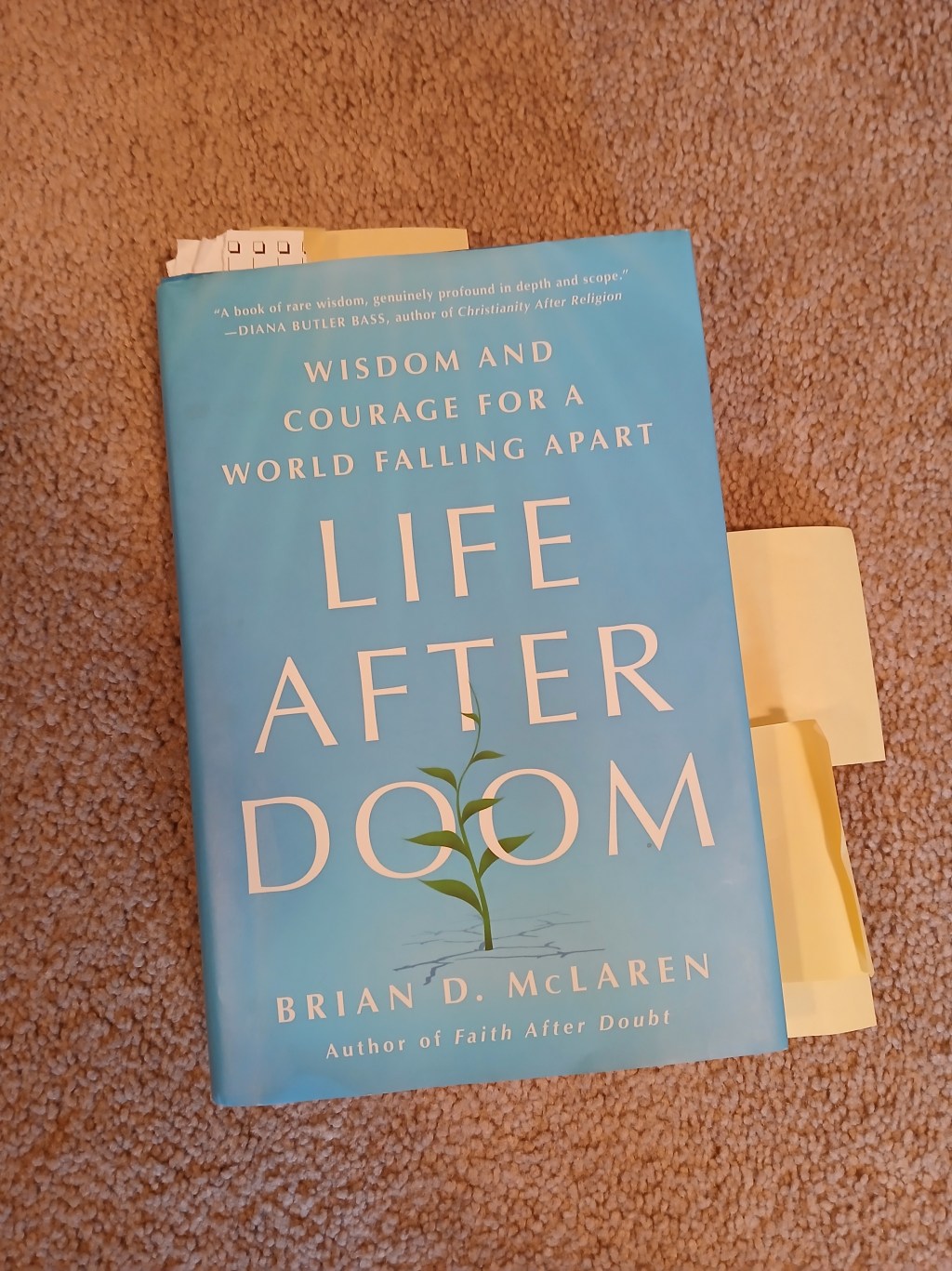
This post is the final and third in a series reviewing the book Life After Doom, Wisdom and Courage for a World Falling Apart by Brian D. McLaren.
***
Were you able to answer the question I posed at the end of my second post – to describe your preferred life situation if the world was ending?
Are you panicking and sequestering yourself with your supplies behind a barricade? Or, are you holding hands with your loved ones, sharing space and time with your family, neighbours, and/or with close friends? Perhaps you are sitting around a dining table, maybe at your cottage by the water, or possibly just in your own backyard enjoying nature.
Are you satisfied that you tried to do what was right by the Earth, and by your descendants?
Perhaps you are still trying to fight the ending, to find ways to preserve a world for the human race?
As I continued to read through the difficult chapters of McLaren’s book, I began to feel that although our world will undergo some profound changes, that perhaps there is a path forward, one of resilience in community if enough of us understand that what we can do, matters. And for that, we must hold onto one another.
In the final chapters of his book, McLaren asks us to “let come” (after we “let go” and “let be” in the first two sections) – that while we can’t guarantee what the future world will be, “we can commit to work for justice, peace, and compassion wherever we are in this world, as long as we live.”
Climate justice is a key part of this picture.
It won’t be easy, because we live in a world with people who are happy with the status quo, in part because it is so tied to our economic wealth. Remember, we are addicted to our cheap fossil fuels.
We can see the beginnings of what McLaren describes will be a “bumpy” ride. I can already identify with the seven different conditions he highlights in the book that we can expect to encounter as “the drama of overshoot continues to play out.”
Consider how susceptible we are to misinformation (1) in our social media curated lives. It’s more important than ever to be savvy consumers of the media we read and watch, always checking sources. Don’t fall prey to memes and comments that simply reinforce your opinion in an echo-chamber.
McLaren suggests that mean-spiritedness (2) will increase and we will need to develop the moral courage to speak up for the marginalized – the immigrant, the LGBTQAI+, the racially and culturally different, the poor. People are afraid that if someone else has rights, they will lose their own. That’s not how it works. This is what makes comedian Steve Carell’s commencement address about kindness to Northwestern University graduates so compelling (and funny!). A simple, timely message delivered in true comedic form.
Dishonesty (3) will abound and we will need to strengthen our character. As Michelle Obama famously said, “when they go low, we go high.” McLaren notes, “When others stoke fear and resentment, we (must) radiate courage and grace.”
Our world, our country, indeed even friendships have become fragmented (4). When others will be tempted to divide and conquer or become dependent upon “autocrats or cult leaders,” we must “develop the skills of interdependence.” There is strength in numbers, particularly diverse numbers, McLaren stresses. Don’t discount the scientists, the lived wisdom of Indigenous peoples, and the educated as you inform yourself.
It will become increasingly difficult to go high when others go low, and we may experience despair (5), but we need to develop the skill and “the courage to differ graciously,” even as we state our position.
My father was a fan of Alvin Toffler’s Future Shock and Dad used to tell us we would continue to see rapid change (6) in our lives. I wish I could chat with him now. I’m sure even he would not believe the speed of change we see today. We must be agile to adapt to the continued multiple changes in our lives. McLaren says “Some changes will feel like losses; others will bring surprising gains.”
Finally, we may begin to feel disconnected (7) from life as we witness the changes. McLaren notes we will need to nourish and “discover new depths of the human spirit,” whatever you call it, religion, spirituality, centredness, or contemplation.
It’s an understatement to say the world is undergoing tremendous change and no longer looks like the industrial-age era that brought in and provided prosperity in the century before this one. Well, prosperity for those of us who bought into the European, colonized definition.
People are afraid.
And fearful people are susceptible to messages of quick fixes, regardless the stripes of the tiger.
Find your people is the essence of one chapter. “It only takes two or three to build an island of sanity in a world falling apart,” McLaren writes.
But he isn’t talking about a cult. If you envision a future often seen in apocalyptic movies where someone amasses food and ammunition and then builds a wall to keep others out, that’s a sure-fire way to speed-up the ending.
Instead, he writes of connecting with others who care about our future: “we need people reaching out and building huddles of sanity and mutual kindness, preparing to share and support each other when turbulence comes and we’re all tempted to be sucked into collective stupidity.”
An excellent example of this connecting can be found on a recent episode of CBC’s What on Earth with Laura Lynch. The program features stories from around the world of people trying to fight climate change.
The recent episode that caught my attention featured listener Adrienne Crowder who took a free university course on climate change that the program had promoted.
Adrienne tells Laura that the course “fuelled my fire – realizing, ah, I am not alone. I’m not the only one trying to fight the world. There’s a whole group of people in their own little sectors doing their thing and when we band together, we become this beautiful mosaic of people doing great work which inspires all of us … and we feel good and when we feel good we do good…. It is so easy to get utterly overwhelmed and depressed if you feel like you are alone trying to combat climate change and big oil and whatever…But when you learn there are other people who are not only similarly concerned but who are actually doing some really cool things in their part of the world, that’s inspiring … it keeps me going.”
Western University offers this free course and you can register here or sign up to be notified when the next course runs. I’ve signed up to be notified for their September 2025 course offering. The University website describes the course “Connecting for Climate Change Action is a course that uses a storytelling approach to bring Western and Indigenous Sciences together to educate, encourage discussions, and motivate action on climate change. This innovative, experiential, online learning opportunity engages and stimulates learners to action to mitigate climate change.”
Do you know your neighbours? Do you maintain connections with former colleagues? Do you have a church or club or group that you meet with regularly? In any emergency, including the impending changes we are witnessing due to climate, we are better when we work together, not every person for themselves. If you have such a group, you might consider reading this book and discussing it together, or signing up to take the free course.
As adults who have lived a good piece of our lives already, we might be susceptible to thinking it’s too late or we know it all, but McLaren has a special message for us: “if you don’t keep maturing in wisdom, you will not remain at your current level of awesome. Like an egg that doesn’t hatch, your awesome level will, I’m sad to say this – decline along with civilization.”
In the face of the despair we may feel, it is important to realize that what we can do does matter.
McLaren introduces readers to musician Michael Franti who sings in one of his songs, ”There’s a billion different people doing a billion different things to make a billion places better today” and ”We can be part of the change.” The title of Franti’s song, “The World is so F*cked Up (But I Ain’t Never Giving Up On It) delivers a message worth listening to in an engaging tune. You will find yourself smiling and perhaps even singing along after listening to it. In fact, McLaren devotes one chapter to the importance of art, music and poets in our lives.
McLaren entreats the reader to light their own candle and to consider this is a great time to be alive. Borrowing the line from the song, he suggests if a billion of us do a billion things then maybe in the “dance of life,” there will be a way forward in a world that is going to look very different some day.
McLaren’s book does not outline a plan for everyone to follow, but he does have a lengthy list of suggestions for us to develop our own plans, based on our own areas of interests and strengths. One of these is the “plan to use your voice and exercise your right to not remain silent” and thus, I decided to use my blog to write about McLaren’s book and attempt to provide some sort of summary of what he has to offer to the discussion about climate change. I plan to use some of my future posts to celebrate some of the “billion things” that people are doing to make the world a more habitable place. I am giving thought to another, “Your plan to improve your diet for your own health and planetary health” because listening to Sidney Smith’s video has strengthened my resolve to eat locally and seasonally rather than supporting industrialized farming practices. Small steps. I continue to keep the book close and review its messages along with taking the university course. It’s part of my plan to keep learning about overshoot.
Will the kids be alright? It’s where I started my reflection and the question the title of this series asks. The answer: I don’t know, but I am committed to do what I can to contribute to a better future for my grandchildren choosing to believe that what I can do, will matter.
In the meantime, can you share the ways that you preserve our Earth? How do you contribute toward the billion different ways people make the world a better place for future generations? Please use the comment section below so we can all share with and learn from each other.
***
1. Life After Doom, Wisdom and Courage for a World Falling Apart, Brian D. McLaren, St. Martin’s Publishing Group, New York, 2024
This post is the second in a series of three reviewing the book Life After Doom, Wisdom and Courage for a World Falling Apart by Brian D. McLaren.
***
In the first section of his book, McLaren addresses our natural tendency to turn a blind eye to climate change. He also encourages us to take care of ourselves, particularly our mental health, in the process of waking up to reality. Then he invites the reader to “let be” – to reach a place of insight.
Our civilization has created much good: think of the surgeries that now save lives, the medicines that allow people to live fully, air conditioning in the summer heat, the eating of fresh fruits in the dead of winter, the air travel that allows us to explore our world – I could go on and on listing a multitude of ways our lives have been improved to the point we enjoy longer, healthier lives than ever before.
But, as McLaren outlines so well, there’s the human cost of all this progress. Children mining coltan for our smartphones, increasing asthma and cancer rates due to air pollution, and the ongoing over-heating of our world destroying homes, industries, and lives as wildfires rage like never before. This documentary on the fires in Los Angelos explains how our warming climate feeds fire.
Closer to home, think of Newfoundland and Labrador, and Halifax. Read this news coverage detailing the most recent devastation there.
We are in overshoot, McLaren explains. We take from the Earth more than we repair or return and we spew more pollution than the Earth can detoxify. And Earth is letting us know.
Intertwined with the causes of climate change is our current civilization’s economy which has become so complex it is also fragile and ultimately, not sustainable. Consider how our economy relies on infinite growth in a finite system.
We live in a complex civilization, and it is very difficult, even overwhelming, to decide what needs to happen or whether we can even avoid these crises. We are not the first civilization to face the ending. Consider the Roman Empire, the Mayans, or our own Indigenous of Turtle Island. In fact, McLaren devotes an entire chapter to what we can learn from our Indigenous peoples. Consider that the collapse of our civilization, which has been shaped by the domination of colonial exploitation, might be viewed as a liberation by some.
One of the many, many resources that McLaren recommends to his readers is Sid Smith’s How to Enjoy the End of the World series on You Tube. I listened to this and it gave me a whole new perspective on the use of energy in the creation of past cultures and the astronomical trajectory that led to our current complex civilization. While Chapters 1,2 and 3 are an academic review of the laws of energy and thermodynamics (I have forgotten my high school physics classes, sorry Mr. Finch), and what is actually meant by a “complex” society, I found them a fascinating base for understanding his later videos on energy in the creation and fall of civilizations. In particular, his final chapter at the time of my posting this blog is Chapter 5 and it clearly explains ecological overshoot. If you pursue this, be sure to listen to his Prologue: Why You Shouldn’t Let Collapse Get You Down, first and his next video entitled Whaddya Mean Collapse?
Back to the book, McLaren explains our addiction to cheap fossil fuels as something that we will find very difficult to eradicate. Even our industrialized food production relies on fossil fuels (which is explained very well in the above video series).
McLaren compares the process we need to follow to what Alcoholics Anonymous (AA) asks of its members. The first step for a member is to admit addiction and that life has become unmanageable. McLaren declares,”Our civilization is powerless over our cheap energy addiction; our civilization has become unmanageable and needs to be restored to sanity.”
It’s unmanageable because in overshoot we are caught in a vicious cycle; we need to remove resources from the Earth to support our economic growth and for food production, but that growth will “intensify and hasten ecological collapse.” Put another way, we use up farmland to build new industry (to provide jobs which give us the income to purchase food) which results in damage to water sources and precious eco-systems, and less farmland to grow our food.
Where and how do we get off this merry-go-round?
McLaren quotes the Serenity Prayer used by AA: “God, grant me the serenity to accept the things I cannot change, the courage to change the things I can, and the wisdom to know the difference.”
The wisdom to know the difference is an area of much debate when it comes to what will reduce the impacts of climate change. He cites the examples of renewable energy, such as solar and wind, or electric cars and heat pumps, but then notes “massive amounts of copper, aluminum, cobalt, graphite, and manganese, along with rare earth metals, especially lithium” will be needed which will require “huge quantities of fossil fuels to mine, transport, and process these raw materials.”
Many solutions result in more ecological damage to our Earth – in other words, more problems. In addition, these resources are primarily on Indigenous lands. How will they be treated? “Other resources lie beneath forests and other delicate ecosystems; again you wonder how many will be sacrificed for our climate emergency,” McLaren asks.
Something I have been repeating to myself a lot lately is McLaren’s Chapter 10 title, “Maybe It’s Good, Maybe It’s Not.” I have used it when reflecting on the minor irritations and celebrations in life but also when thinking about the big issues. There’s talk of an east-west pipeline across Canada which would require extensive use of land, including Indigenous land, and cause significant damage. That’s bad..isn’t it? It would reduce Ontario’s reliance on U.S. gas and also open the opportunity to export gas to countries that could then replace their use of coal, a fuel which causes tremendous harm to the environment. That’s good… isn’t it? An east-west electricity grid, supported by clean energy would benefit everyone…maybe/maybe not?
In a world that is increasingly polarized in its opinions, we could all use a good dose of maybe it’s good, maybe it’s not. As a former colleague used to say, it’s a pretty thin pancake that doesn’t have two sides.
And so, McLaren invites the reader to get beyond our bi-polar views, “this” is good and “that” is bad, and helps us to question what may be conventional wisdom for our current civilization. He asks instead, “Are profitable quarters and big returns for shareholders always good? Is a declining GDP always bad? Is growth in the number of billionaires always good?”
I recently published a memoir of my parents and included a lot of ancestral history. It’s a story of multiple generations working to improve their lives and it haunts me to think that my husband and I, and our children may be the last generations to experience that upward mobility. Will a decline in circumstances become the norm for future generations? Is that bad? Is that good? How can we prepare them? In order to get ahead, do we need to go back? How far back?
These questions may be more than academic in the face of the looming climate crisis. When we are prepared to question, to challenge what has been conventional wisdom, then perhaps we will open ourselves to the possibility of an alternate, more sustainable future.
There’s a lot of negativity in this reflection. I am writing about a book with the word “Doom” in its title and I am recommending you listen to a YouTube channel that suggests we enjoy the end of the world. McLaren takes this head on and leads the reader to what feels like an inevitable discussion about death. As a woman about to enter her 7th decade, I connected with the author’s description of life and death, that we must abandon our fear of death and instead realize we may have limited time here, and with that time we have a choice: keep destroying our precious environment or we can “leave our descendants with a habitable world and the skills and virtues to flourish in it.”
With five grandchildren, I know what my choice is.
Here’s a reflection for you to consider as I bring this post to a close: If you were facing the possible ending of the world, and you had a choice, how would you describe where you are, what you are doing, and who you are with?
Next week: Let Come
***
1. Life After Doom, Wisdom and Courage for a World Falling Apart, Brian D. McLaren, St. Martin’s Publishing Group, New York, 2024
2.Inside the LA Firestorm – The Real Story – Documentary, PBS Terra, YouTube, Accessed August 13, 2025.
3. CTV News, Thousands in St. John’s on evacuation notice as wildfires continue to spread, accessed August 13, 2025.
It’s September and the kids head back to school, or in the case of the two youngest grandchildren in our family, begin that journey. Time to think of their future.
I suspect that every generation has its worries about the generation to follow. Elders have long moaned about the failings of youth and have sounded the alarm for society. Even Socrates apparently got into the act, purportedly to have said, “The children now love luxury. They have bad manners, (and) contempt for authority.”
I also hear people speak of hope concerning the next generation, seeing instead a measure of brilliance and a spark much needed for a different future.
My concern isn’t so much about the kids (I fall under the category of having faith in them), but I am concerned about the world they are inheriting from us. Our environment, specifically.
Do you share any of these concerns? Do you feel, like I do at times, overwhelmed by the magnitude of the crisis of climate change? I tell myself that I have given up plastic bags, I drive a hybrid vehicle, I recycle what I can…and then I see pictures of melting ice in the north, emaciated polar bears, or towns devastated by out-of-control wildfires, and my sense of being part of the solution is diminished.
It was with this fear that I participated in a book study to explore author Brian D. McLaren’s Life After Doom, Wisdom and Courage for a World Falling Apart.
No mincing words here: it was a challenging read. McLaren’s writing style made the book approachable and readable; however, the content was not sugar-coated. I am glad I read it with others as part of a book study where we took time to discuss and reflect on the questions provided by the author at the end of each chapter. McLaren outlines, supported by heavily researched and resource-rich documentation, four possible future scenarios that make clear the choice of the word “Doom” in his book’s title.
He does not provide a plan to get us out of this scary future. Nor does he suggest, despite his faith background, including being a pastor, that God will make it alright if we just pray hard enough.
Don’t let McLaren’s pastor roots deter you from reading this book if you are not a church-goer. While he includes reflections in this area, they don’t get in the way of what he is telling the reader about our climate crisis. (If anything, they make clear for the faithful why we need to be engaged in this issue. If you are interested in one minister’s reflections, you can check out this series, “Sermons for a World Falling Apart” on the book at Gale Presbyterian Church in Elmira. )
What McLaren does is take you on a journey into the dark reality of what the changing climate is doing to our world, to our Earth, and to our responding behaviours, and then brings you into a place where you are inspired to work with others and essentially, to not give up.
I think it’s an important book, and thus I am sharing my understanding of what it is telling us over three separate blog posts (there’s a lot to uncover and I don’t touch on it all). I’ll post these weekly during September so the thread isn’t lost while you also have some time between each to absorb what McLaren is telling us.
Through the process of reading the book, sharing thoughts with others, and then delving a little deeper in preparation for writing my blog I learned a lot (including about the development of our complex civilization), I was challenged in my understanding of the issues and what might fix them, I felt some despair, and I felt some hope.
If we are still learning and evolving, as my blog envisions, then I believe we have an opportunity to play an essential role in our families and communities as we face an uncertain future. If for no other reason, I invite you to join this reflection for the sake of your children and grandchildren or any other young people you may know.
***
In the first section of chapters, readers are encouraged to “let go” – to let go of any illusions we may harbour that the crisis isn’t real.
Our world in its current state is unsustainable. In a nutshell, McLaren explains that the world “sucks out too many of the Earth’s resources for the Earth to replenish, and it pumps out too much waste for the Earth to detoxify.” He calls it a state of overshoot. Essentially we have lived like there’s no end to the resources, and we have largely ignored any damage our lifestyles may be inflicting on the Earth and its inhabitants.
McLaren illustrates where we are at by asking us to think about how a tree is chopped down. Even after several wacks of an axe into a strong trunk, the tree will remain standing. For a surprisingly long time. But at some point, a tipping point is reached and one little push, light chop or a strong wind will bring the tree crashing down. Some scientists believe we have reached Earth’s tipping point, that it cannot handle more waste or further removal of its resources, and there’s no stopping the fall. Others believe we have time, but it is running out fast.
Wanting to hide from this reality or denying that climate change exists is actually easy for our brains. As humans, we naturally resist what we don’t understand, or what we can’t imagine. Being concerned about the climate requires that we predict future disasters, and that’s a difficult ask. We may also feel overwhelmed and simply shut down. We may want to avoid what McLaren describes as a “path of descent.” Some of us say – not my problem, I’m too old, let the youth fix it. Some of us think (hope) the problem is exaggerated. Others think “someone” (maybe someone in that smart younger generation) who knows more …or has more money… or has more influence will magically fix it.
McLaren lists in an appendix, 16 different biases we may rely on when it comes to thinking about climate change. For some insight into how our human emotions and bias impact this issue, (and how such behaviours may be hard-wired into us) take 30 minutes to listen to this episode of The Agenda with Steve Paikin. There’s some similarity in what his expert guests have to say and what McLaren’s book tells us.
Despite the gloom, reading McLaren’s book did give me a measure of hope, although even that feeling is complicated as McLaren explains in one chapter. If I rely on that feeling of hope to the point I ignore what is happening across our planet, I won’t be engaged to be part of the solution. Likewise, McLaren states: “Just as hope can give you permission to return to your previously scheduled complacency, so can despair.”
So with a clarity that our future will be changed in foundational ways, along with a measure of complicated hope, McLaren invites us to wake up to a new reality which may be very difficult for many of us to accept.
Where are you on the matter of climate change? Do you think we should be engaged with this issue? Do you worry? Can you identify a bias you may hold concerning climate change?
Next week: Let It Be
***
1. The Literature Network Forums, accessed August. 13, 2025
I recall my father telling me, with a hint of surprise in his voice, that he had fewer years left than what he had lived already. It was a concept I could not (or did not want to) fathom in my young adulthood. But now, suddenly it seems, I get it. Some days better than others.
***
I have been doing a lot of thinking about resume virtues versus eulogy virtues lately. I was introduced to the concept in a writing workshop, The Wisdom Years, where we read an article by David Brooks, a cultural commentator for the New York Times and a Ted Talks presenter.
Brooks wrote that we have likely spent much of our lives focused on our resume virtues, those skills and values that framed our careers, and our efforts to earn a living. I identified with his reflections about this. To prospective employers, I listed the skills that I possessed which would support the company’s goals. Or, later in my career my focus was on developing my expertise so that clients would be willing to pay for my consultant services. I honed skills in areas such as punctuality, accuracy, technology, leadership, effective presentations… and even returned to school ( in my 50s) as I sought promotions, titles, and pay increases. Resume skills were an area I taught to students as a college professor.
On the other hand, eulogy virtues, according the Brooks, may not have been given the same amount of attention yet they may be more important. These are the parts of our personalities that are responsible for the relationships we developed and nurtured throughout life, not in return for a pay cheque. The idea created questions for me such as, have I been a compassionate friend who supported others through the thick and the thin of life? Have I shared my time and gifts in making the lives of others easier, more joyful, or meaningful? Are my exchanges with others designed to build them up? Am I present or mindful in my interactions?
As Maya Angelou expressed it: people may forget what you said or did, but “people will never forget how you made them feel.” How do people feel after interacting with you? Think of those people who make you feel better about yourself, or loved, after an encounter. What’s their magic sauce?
In the workshop we were encouraged to draft our own eulogy with the thought, how would I want to be remembered? And if we have not been drawing on those eulogy virtues, perhaps it is time to focus on them, to bring them to the forefront as we consider how we will spend these wisdom years, the time when for most of us, our careers and work lives are over.
It was a compelling exercise… and then I attended two funerals.
The first was for a 90+ year-old woman who had been a wife and mother, who worked outside the home and raised two sons. It was clear in the remarks from her grown grandchildren and her daughter-in-law that this woman had lived a eulogy life. Her job in a law office was worth about two lines in one of the presentations. The rest talked of how she made her children and grandchildren feel safe and loved because of her quiet, steadfast, and supportive presence in their lives, including air travel to attend a wedding in western Canada when in her 80s. It was a true testament and celebration of a life well-lived and appreciated for her love, compassion, and time and attention.
The second funeral was more challenging as it was for the 71-year-old husband of a long-standing, good friend. He had just fully retired 3 1/2 months prior and his death was sudden. This man was a veterinarian who brought compassion to the care he provided to both large and small animals over his career and yet, his work life was just a side-bar to the stories that were shared at his funeral by his close friends and his three children. It was clear that his humour and his caring heart made life better for others. He was a good friend who took the time to tell others how he felt about them; as one described it, he had empathy for others. He was the glue that brought everyone together. I know from personal experience that he sought to build bridges of understanding between people in a quiet, respectful manner. Grown men were unashamed as they shed tears because of this loss. His daughter told us she had received a message from him just days before his death in which he told her how proud he was of her. The kind of message we are told time and time again to send, send, send NOW! Don’t wait! The funeral was also a reminder to us all that we have a finite time, and I have no doubt that many of us asked ourselves on the way home, what are we doing with that time?
My reflections turned to my mother, who in her 60s told me she was still waiting for something, some “more” to life yet, and this “something more” remained elusive. She struggled to define it.
At this stage of life there does come a niggling thought that, surely there’s more to life. Talk to most people and they will express the thought that It all happened very quickly. Are we really this age, already?
Perhaps it is in the restlessness one feels after retirement when we have a new sense of time and freedom… when we ask, what now? When those work skills we so carefully developed in earlier years don’t seem so important anymore.
Perhaps it is because we are struck with the sobering thought that we have lived more years of our life than what we have left. How we invest our time now is more important than ever, and my friend’s funeral brought that fact home. And, I was humbled by the realization that my friend had shared his eulogy virtues throughout his life.
For some of us, perhaps now is the time to think about the virtues we might have ignored or set in the background as we built careers. When our time was limited by the competing demands of career, marriage, kids, family obligations etc. Now we have time to focus on those values that move beyond the trappings of stature or career. Perhaps now is the time to focus on what is really important: our relationships with family and friends.
In the Hindu faith, this time of life is referred to as the “vanaprastha” years, when the elder members leave the household duties to the younger and take on the role of advisor or guide. It can also be a time of spiritual journey, of introspection, a time to recognize we are not immortal.
My mother was clearly doing some introspection when she wondered, what now?, after successfully raising five kids. I hope she had others to talk with, others who would be able to recognize the reflection that was going on behind the words. Such sharing can enrich life when we meet others who truly see us.
How are you experiencing the “vanaprastha” time of your life? What do you think about the concept of resume versus eulogy virtues? How do you enhance your important relationships? Is there someone you need to connect with now?
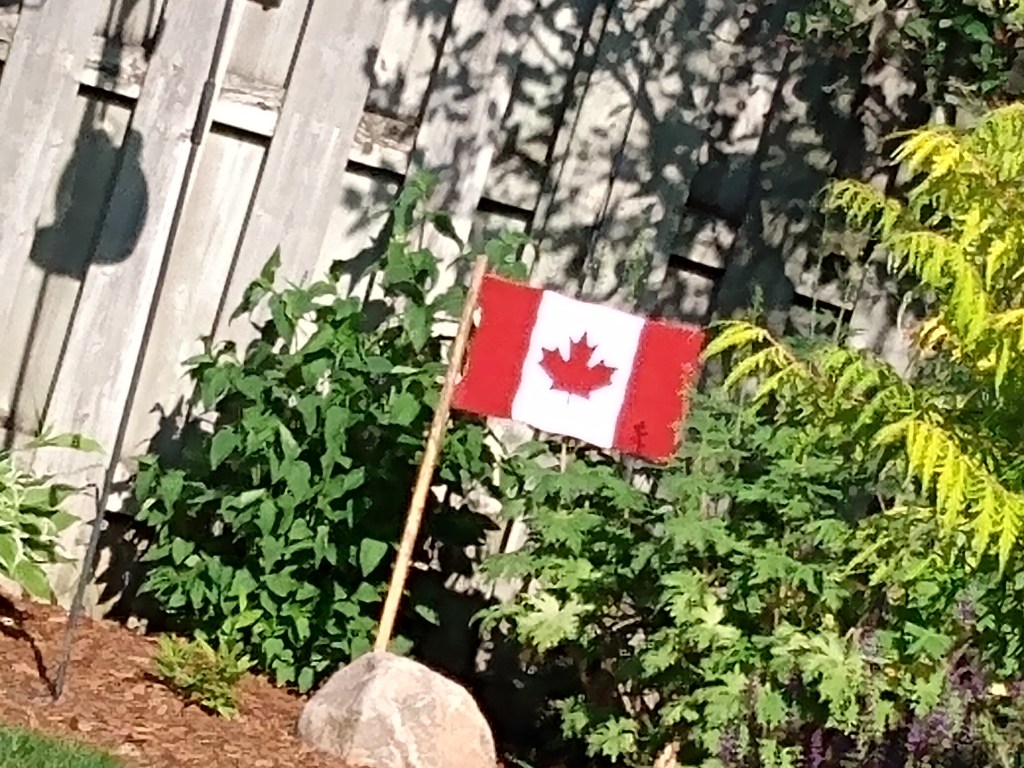
I’m a typical Canadian, which means my celebration is usually low key; however, given the state of the world these days, my latent patriotism is peaking through. Elbows up!
But it’s a day that evokes both good and bad reflections as I think about its importance to me and to Canada.
July 1 actually has a sad, personal memory for me – it’s the date in 1994 when my beloved father passed away. He was a proud Canadian, served his time in the air force during World War II, and took an interest in the growth and development of his country over the years. As a product of his time, he was not taught about the tragedies that marked that development, and of which we are so aware of today.
Some might attribute that to being “woke,” but I suspect my father would have supported acknowledging this dual perspective, as we can only truly appreciate what we have when we consider all of the sacrifices and acknowledge the errors of the past. This post is not intended to be a finger wagging exercise, nor a summary of all the ways in which we have failed each other, but I want to acknowledge a couple as I recall some happy personal July 1 celebrations.
Eleven years ago my husband and I enjoyed a train trip through the Canadian Rockies and it was breathtaking, in a way the mountains can be only when you see them in person. Travelling through them was a feeling like no other as I sat in wonder of this natural creation.
It was made particularly memorable when we slowed down at Craigellachie, in Eagle Pass, British Columbia, and if you recall your Canadian history, you will know this is the site of the last spike. On November 7, 1885, a ceremonial last spike was driven into the Canadian Pacific Railway at this location. The railway was a massive undertaking designed to connect this country like a ribbon of steel across prairies, farmland, and mountains. Sounds poetic, eh?
As it happened, the date our train travelled by this historic site was July 1, and one of the young waiters on board sang O’Canada as we passed through. It is probably the most memorable Canada Day I have ever experienced. The pride in my country ran deep.
But, I am not unaware of the dark side of this history, and the fact many lives, in particular those of Chinese labourers, were lost due to falling rocks, landslides, or avalanches. The Chinese men were purposely brought from China to do this dangerous work on the railway, and they were paid less than other workers. And subsequent to this, our government’s treatment of Chinese immigrants was shameful.
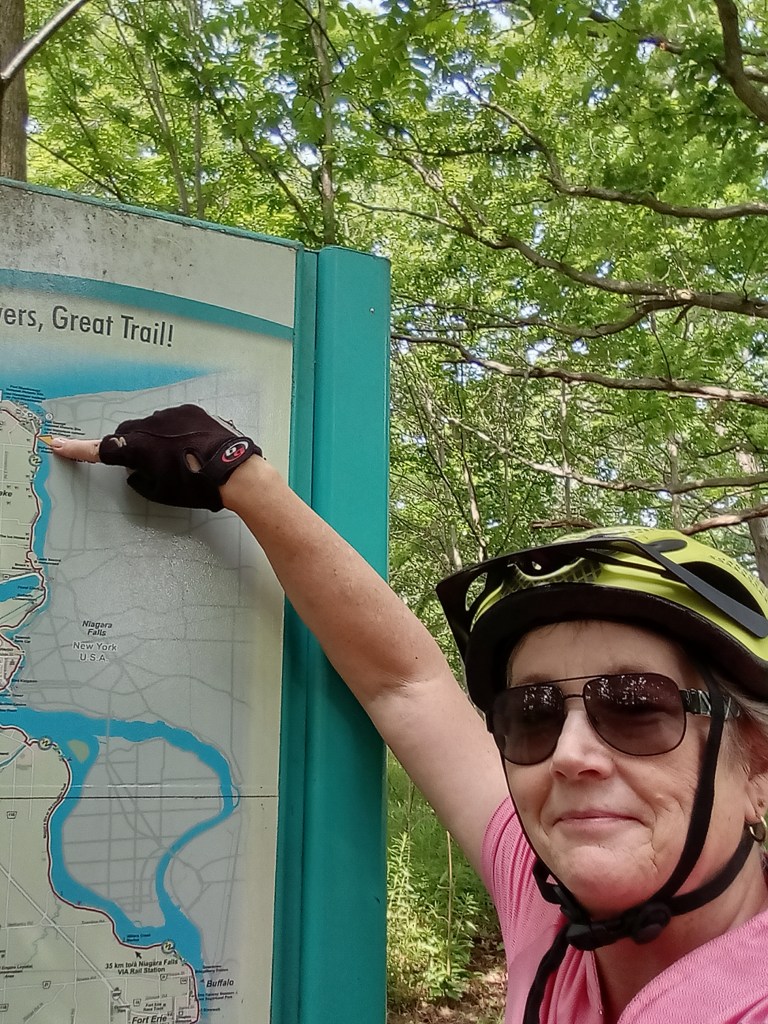
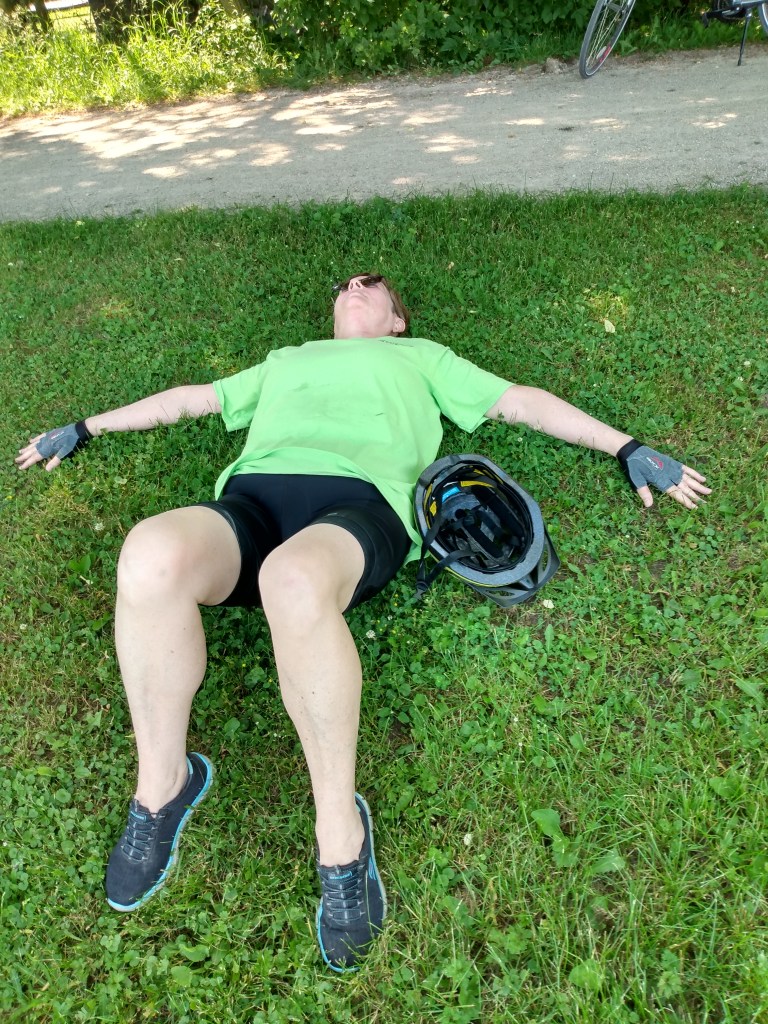
This memorable trip spawned an idea to experience Canada Day in as many different places in Canada as I could. I have joined throngs of people in Ottawa, our nation’s capital. I thoroughly enjoyed an International Tattoo in Halifax, Nova Scotia; cooked a lobster dinner in Crow Head, Newfoundland and visited the Terry Fox Memorial in St. John; bicycled an approximately 34-kilometre ride on the Guelph to Goderich Rail Trail; and bicycled from Niagara on the Lake to Niagara Falls, Ontario. (and yes, that is me to the left cooling off after one of these rides!)
I hope to add to the list of varying Canadian locales as I am able. Next on the list is to go north around Lake Superior and possibly into Manitoba! (by car, not bike!)
I am also aware, as I celebrate what this great country has to offer, that there are others who don’t feel the same. In particular, the ancestors of the original inhabitants of this land who had their lives, their livelihoods, and even their children stolen in the name of colonial progress.
Again, I will be considered “woke” by some, but after having the privilege to research and write my own family history, I was struck by the thought: what would this experience of looking back be like for someone whose past is either difficult, or even unobtainable because it was obliterated by colonist actions and attitudes.
Truth and Reconciliation, as I understand it, asks that we educate ourselves about this history. It does not ask that we don’t enjoy or celebrate what is good about our country, but that we do so while acknowledging and recognizing it can’t be the same for others. And by promising to do better in the future. We can’t erase the past, only recognize it and commit to doing better. I also sense a bit of a turning of the tide in that we may be starting to recognize that many of the Indigenous ways were better and we have much to learn as we move into a changing future. I hope to share more about this thought in a future post; in the meantime, consider this article about Indigenous people taking climate action to everyone’s benefit.
So, however you acknowledge this day, I hope we can agree that the land bordered by Pacific, Arctic and Atlantic oceans in its natural state is beautiful, worth celebrating, and worth preserving.
It isn’t a perfect society, but its pretty damn good compared to many others. So I plan to wear my red and white with pride, and hope that as a society we continue on the path to make the necessary amends so we can be unashamedly proud of a true north, strong and free.
Here is a final link to a song I just heard that captures much about Canada and it may just make you smile and feel pride in who we are as Canadians. It’s published on YouTube with the request that it be shared wide and far. It was written by an 87-year old man! Read his inspiring story here!
Canada Day 2025 – what does it mean to you? Please share!
***
1. CBC, What Does Canada Day Mean to You, YouTube, June 27, 2025
2. The Canadian Encyclopedia, The “Other” Last Spike, by James H. Marsh, last edited January 17, 2017.
To know Darlene Vandermey is to know that she loves cycling. Besides the bicycle images on the wall of her home office, the bicycle clock in her living room, and the bicycle trainer in her basement, there’s the 2,000+ kilometres she biked around Ontario over the course of 2023 when a mild winter left open roads.
What you might not know is that 33 years ago, she was told she would never ride her bicycle again.
Her comeback story is inspirational.
The journey she took from failing health in her mid-40s to inspiring others on the bike trail in her mid-70s is one of faith, the tenacity of an ‘I’m never giving up’ attitude, a personal code for when things get tough, and the support of her family.
When Darlene married the love of her life Kees in 1969, the couple enjoyed Scottish country and square dancing. They were active in the communities where they lived and Kees served as a Presbyterian minister. They eventually welcomed three children and enjoyed family-focused camping trips that included, of course, cycling. As a Minister’s wife, Darlene was active in the life of the congregations they served, as well as with her own growing family.
The family had moved to Windsor, Canada’s most southern city next to the U.S. Border. The climate in Windsor reflects its more southern latitude – at best, it’s very mild, and then it gets very hot and humid. Unfortunately, it seemed to be a trigger for Darlene. First, it was allergies that flared and then came extreme tiredness and eventually pain and aches throughout her body. Daily living was a challenge.
“I couldn’t wait to get the kids out the door in the morning, and I would flop on the couch. Even my clarity of mind was going.”
Then came the devastating diagnoses at age 44 by a rheumatologist: fibromyalgia. Fibromyalgia happens when the sheath that covers the muscles becomes inflamed. Such a diagnosis required that 21 different pressure points on the body be identified, Darlene explains.
Just for a moment, imagine 21 pressure points of pain on your body and now imagine that on a 5’2” frame.
The doctor looked at this petite and seemingly frail woman, prescribed some medicine and told her she would never ride her bike again. Nor dance again.
The medication caused her to feel worse, and she called the doctor who told her, “take the medication or be in pain for the rest of your life.”
“I told my family, ‘I don’t like that diagnosis. I am going on a health journey,’ and that was the start of a five-year process.”
Darlene is petite and slim, but the health journey she embarked on next was outsized in its depth and breadth as she fought her way back to health.
What’s her secret, I wanted to know.
The strength she brought to the battle is certainly a testament to the strong women who raised her. Her mother was widowed at 41, when Darlene was just 7, and her grandmother, also a widow, came to live with them in Willowdale. Her mother “had to pull up her boot straps” and work to support the family and pay the mortgage. A level of tenacity her daughter inherited and would need later in life.
Darlene grew up in a home with love, her grandmother’s deep faith, and her mother’s steady pragmatism mixed with faith. Darlene never felt the struggles were on her shoulders. In fact, her mother even secretly set aside a small sum of money to pay for her daughter’s wedding for when the time came. When Darlene decided Kees was the one, her mother sat them both down to tell them she would never live with them. They were to move on with their lives and build their own home. She lived on her own until her death at age 87.
Darlene was very close to her mother, witnessing her strength in the aftermath of her father’s death. Darlene rides her bike with a tiny stuffed dog, Sally, that belonged to her mother, secured on the rear rack, the memento tagging along on multi-day trips around the province.
After the disappointing conversation with her doctor and the declaration to her family, Darlene tried several modalities, including chiropractic adjustments, massage therapy, and acupuncture. She would give each time to offer relief, but then move on to the next possible solution when it wasn’t enough. She tried various health products.
She made a decision that she needed to keep a positive attitude as each attempt didn’t provide the resolution she sought. At one point her back was out and she also suffered from sciatica. Along with pain and significant fatigue, she experienced daily migraines. The on-going effort would “grind me to a halt,” but she was determined to be the active and healthy wife and mother she had been.
“Part of what kept me going is that I knew God put me here for a purpose, and I wasn’t living my purpose.
“I also needed to do it for my family, to try and recover for them. All of our vacations had to revolve around me because I couldn’t sit very long in the car. I can say my kids suffered. They were going into their teen years with a mom who could not do much.”
Another transfer to the small, rural community of Elora took the family away from Windsor. “I interviewed a chiropractor who I saw for adjustments because of the sciatica and he gave me a power belt designed to maintain my hip after the adjustment. I wore it for a year and it worked.”
Exercise remained almost impossible because of continuing pain, but she kept up walking.
One day a church member told her about a barley grass powder that was supposed to reduce inflammation. A bit skeptical as she had tried many other products, she was leaving no stone unturned and tried it.
The first thing she noticed was a reduction in migraines. As a result, her lifestyle and diet became the focus of the journey.
Based on research, she began to eliminate foods that were inflammatory – wheat, milk, sugar, and pork. She eats lots of fruits and vegetables, chicken, and fish. And she tries to avoid processed food.
“Gradually, little by little, the pain began to subside.” It was a gradual transition, away from regular cycles of pain, but enough movement forward to keep her going.
Then the day came when the family was at its camper trailer and Darlene pulled her bike out of the shed. It had been stored out-of-sight where it would not be a reminder of what she had lost. On this day she rode the bike – albeit a short distance – but it was a reason to celebrate. And an affirmation of what she was doing.
“I’m over it,” she told Kees. “This is my sign that I’m going to get over it.”
Never one to look too long in the rear-view mirror – she notes rear-view mirrors are small while windshields are large to look forward – she was determined to learn more. She took nutritional courses through the Alive Academy of Canada and became a Nutritional Product Advisor and a Living Well Coach. “The icing on the cake,” she says, is the fact she had to write exams, something she would not have been able to accomplish while in the grip of fibromyalgia which also results in memory problems.
She started a home-based business, Joy! Health Naturally!, that she operated for 24 years, only recently retiring. In addition to the part-time work, she was music director for a junior choir, a senior choir and a cantata choir. Busy working mother and volunteer once again.
To this day she remains diligent in what she will and will not eat, and she continues to take the barley grass powder and other products; however, “I’m still of the opinion you can pour all the nutritional products you want into your body but if you’re not going to make lifestyle changes, you’re wasting your money.
“I have a passion for people with fibromyalgia because many are put on medication, and the medical profession will tell you, live with it.”
She does not. Darlene’s migraines and muscle aches have disappeared. As well as cycling, she and Kees returned to dancing, stopping only when the groups disbanded.
When asked how she was able to keep going after each attempt at a solution failed, she shared a thought process she uses when anything happens. It’s based on the word STOP.
S – Stop in your tracks if something happens or something is not working for you
T – Take a deep breath
O – Observe the situation; like you are outside of yourself so you can observe objectively, like you are looking at someone else
P – Pray, plan, and proceed
Darlene seems to be proof that one’s mindset has far-reaching consequences.
Seven years ago, Darlene and Kees joined a bike club and regularly travel on multi-day bike trips; they plan to cycle the P’tit Train du Nord in Quebec this fall.
Then, last year another ailment impacted her cycling and for 10 months she was once again fighting for a come back. Her glute muscles began to act up making it painful to sit. She went to physiotherapy and took her bike and herself for a fitting to see if changes to her bike would help. A new seat was recommended.
The physiotherapy treatment resulted in hitting a nerve and worse pain. Applying her STOP method, Darlene decided to change physiotherapists and she is now back on her bicycle, clocking more kilometres again.
When others are tempted to say, I have to stop doing what I love because I can’t anymore, Darlene says STOP and then moves forward with a plan to surmount the issue. She decided to purchase an electric bike (with an improved seat) at the end of 2024 so she can rely on the extra support on challenging hills and longer trips.
Her tenacity and her faith are remarkable, all the more so because they are housed in a tiny package that has mastered the skill of balancing a peaceful temperament with an inspirational strength of will.
***
Who is still inspiring you? Let me know and perhaps they could be featured here to inspire others!
I’ve never been one to fear change; in fact, I thrived on it. Or so I thought.
Then my husband and I decided to move, something many people at our stage of life do. We moved from the 34-year old multi-level home we built in 1989 to a bungalow on a smaller lot.
While I’d thought about moving for some time, it was theoretical. When it happened, it felt sudden. New home. Different neighbourhood. Same town. So, not that big of a deal, right?
I have often been unsympathetic with those who fight change. Get on with it, I would think. Yet in my new home I felt a level of anxiety that I was unable to explain. Even as I painted and papered and decorated – a past-time I love – to make the space truly ours, the unsettled feelings persisted.
Research into life changes was revealing. It seems I underestimated the transition that this change in address sparked, and I was likely burying the emotions that accompanied it.
Some changes in life are truly minor, while others prompt a major transition in life. According to researcher and TedTalks presenter Bruce Feiler, selling our family home would have been a lifequake for us. “A massive burst of change that leads to a period of upheaval, transition and renewal,” Feiler explains the term.
Such lifequakes can be a move, like ours, or can be precipitated by a change in career, health or finances; the death of a loved one; an unfulfilled goal; or a change in a significant relationship. He distinguishes between lifequake changes that we choose and lifequakes over which we have no control – such as a death or a world pandemic.
While how we experience these lifequakes will vary depending on many circumstances, Feiler suggests life transitions share three phases in common:
1. The long goodbye
2. The messy middle, and
3. The new beginning.
He emphasizes these are not necessarily experienced in a linear fashion.
I have begun to respect the psychological impact of our move and the source of my anxiety. We were saying goodbye to that chapter in our lives where we were in building mode – building a family, building our careers, building a home.
Phase 2, or the messy middle, may have been the literal mess of drywall dust as we finished off a basement in our new home, but I think now my anxiety was indicative of this middle phase of our transition. Although I thought I thrived on change, my body was telling me something different about this particular change. For the first time, we had made a decision based on the fact we’re aging and the realization there’s fewer years ahead than behind us.
Dealing with this has been a process and while the anxiety has all but disappeared, at times we continue the long goodbye, while at the same time try to embrace the new beginning of Phase 3 – that is living our lives cognizant of the fact we are in the final years of the journey. Not to be too negative – my 94-year-old mother-in-law would tell me there’s a few left yet!
Feiler says when you are in a transition you should start with the phase where you are at your best because that’s where your power lies. I’m best at new beginnings so my furious pace to paint, paper, and redecorate was the right approach for me. It also explains why I was the one to rip off the bandage, so to speak, and initiate the move.
He also advises to accept your emotions and that for the vast majority of us, rituals can help.
In January I participated in a writing workshop called The Wisdom Years. I will share more of my learnings (like the three phases I noted above) from the course in future posts, but I’d like to explain our first assignment, which was to create a Morning Altar.
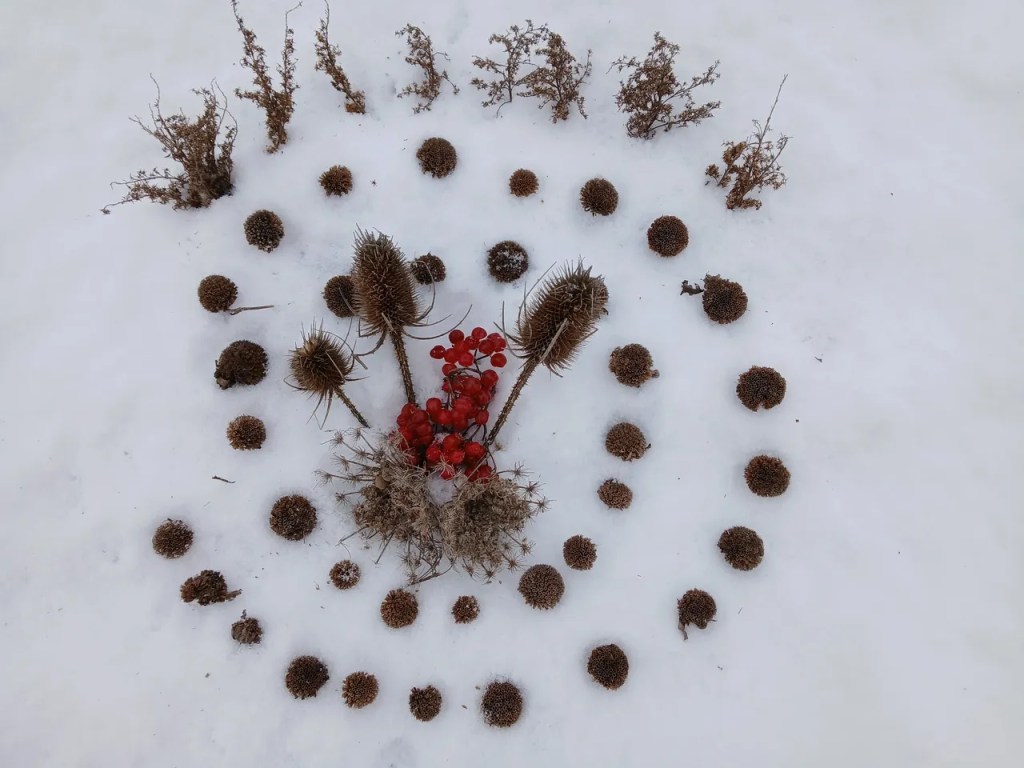
The task was to go into nature and create an altar out of whatever we might find – flowers, twigs, rocks etc. and get creative. We were to name the person or the thing that we were saying goodbye to and then, we were to walk away and allow nature to take over the altar, recognizing that nothing in life is permanent. Everything is always changing.
The assignment was not my cup of tea as I’m no artist, but I’m willing to give most things at least a try.
My finished altar is pictured with this post.
Despite my initial hesitation, the impact of participating was surprisingly profound and contributed to easing the anxiety I was feeling. At first, I thought I did this to say goodbye to or let go of the life I have led. Goodbye to the building chapter of my life.
Starting with no real plan, what began to develop as I worked on this art was a labrynth. As you know, there is one path to walk forward in a labrynth and you can choose to return following the same path, unlike a maze that may have multiple ways in and out and dead ends. Labrynths can be spiritual and prayerful. A method for contemplating life.
As I struggled to make meaning of the labrynth, my reflections resulted in the decision to dedicate the altar to the life I continue to lead. Not to what I was leaving behind.
Although life can take many different routes, like a maze, we have only one life, and it moves forward. Like a labrynth leading to its centre. That’s what I need to embrace, that I am still on the path and there are still new discoveries – and more changes – yet to come.
“No doubt the universe is unfolding as it should,” is how Desiderata’s author Max Ehrmann states it. He also counselled: “gracefully surrender(ing) the things of youth. Nurture strength of spirit to shield you…do not distress yourself with dark imaginings.” Perhaps it is the “dark imaginings” about an unknown future I am saying goodbye to.
I can walk back in the labrynth, but I should not dwell there, and I can continue into the future with the same level of excitement I have always had about life. Perhaps with more attention on nurturing a strength of spirit. Because the centre, the end of the labrynth, promises riches and beauty and colour.
This new beginning at our new address has been a reminder that life does change and we are changing right along with it. We are still here and there’s still time to contribute to life, in our family and in our community. Friendships are precious and deserve our time and focus.
Feiler also suggests seeking the wisdom of others. So, how about you? How have you coped with the lifequakes that have come into your life? Are you best at goodbyes, do you thrive in the messy middle, or do new beginnings energize you? I invite you to comment below and share your wisdom with others.
Feiler ends by saying we should not give up on the happy ending to the story of our life, even when the path we thought we were on has changed in some way. Words of hope for the journey… still ahead.






 StillKim