• Words that inspire

    Words that inspire

    “There’s a way to get there from here.”

    So said Sherry, a woman I worked with many years ago, whenever we were dealing with a problem in the office. It was always a positive spin on whatever the issue, and I took comfort in her cheerful comment. 

    It can be immensely helpful to remember there is a way to get there from here when the way is cloudy, or clogged with lots of ideas and opinions, or the solution is uncertain. It can be a beacon of light when the way seems dark and foreboding. When we become stuck and can’t see the way forward. Take a moment to breathe, deep breath in and long, steady breath out, and quiet your mind. The way to get there will become evident, even if it looks different than you imagined.

    I suspect many of you have similar memories of something someone in your life would share that shed a whole new perspective on what might have been a negative. 

    A work colleague used to tell our students, “It’s a pretty flat pancake that doesn’t have two sides,” when he was mentoring them through a difference of opinion with another person. I remind myself of this when I am in danger of forgetting that we live in echo-chambers these days, mistakenly believing everyone thinks the same as us. 

    It’s an idea that deserves more than a glancing thought when you consider that we live in a world that seems intent on pushing polar points of view, without any give or acknowledgement that there can be truth on both sides.

    My father loved to quote Desiderata, a poem written in 1927 by Max Ehrmann. “No doubt the universe is unfolding as it should” he would pronounce, whenever anything of significance (such as my engagement!) happened in the family. There was a measure of comfort in the words, that we were on the right track, that it would be okay. This poem was so significant in our family, this line is etched on our parents’ tombstone. I may not have liked what was unfolding, a life without them, but it helped me understand a truth. My father used to tell me that I would see him in the casket and now, as a parent myself, I understand the sentiment. My children will see me and that is the correct order of things – life unfolding as it should. I read the full poem at my older brother’s funeral service; he was the one who introduced us to the poem. 

    “Go placidly amid the noise and haste, and remember what peace there may be in silence.” I often recite these beginning lines of Ehrmann’s poem to myself, when I reflect on the world getting too loud, and I have been caught up in the whirlwind of maintaining my pace. A bicycle ride under a canopy of trees on a quiet rural trail is where I find I am reminded of this line.

    I also remind myself when negative thoughts crowd in that I am “a child of the universe no less than the trees and the stars; you have a right to be here.”  

    Max Ehrmann came from a well-to-do family, was a practicing attorney, and worked in the family business before leaving it all at the age of 41 to devote full time to writing. I admire that courage. In the Introduction to The Desiderata of Happiness, a collection of philosophical poems by the author of Desiderata, Robert L. Bell wrote that Ehrmann was “deeply concerned with social problems, (a man) who deplored the exploitation of labour in his early-twentieth-century life.” Also, “Contemporaries told of him lying in the grass contemplating the sky – an early ‘flower child.’”

    I like that. My heart beats to the tune of a hippie’s drum, a flower child, even if I don’t really carry off tye-dyed shirts, fringed vests, or flowers in my hair. The movement’s messages of love, peace, and living in community have always resonated with me.  

    The premise of my blog is that I am “still” here, even as I enter the years that can feel like the final chapters of life. Ehrmann wrote in his famous poem, “Take kindly the counsel of the years, gracefully surrendering the things of youth.” I know there is another viewpoint that we should fight the ravages of time, but I think Ehrmann is recommending we make friends with this chapter of life and don’t waste time pining for what is past. Enjoy the now. Peace.

    What phrases, quotes, or sayings help keep you on your path? I’d love to hear them. 

    ***

    If you are interested, here is a site that provides the full text of Desiderata: https://www.desiderata.com/desiderata.html

  • Canada Strong

    Canada Strong

    This post was intended to just be a reflection on the individual actions we can take when it feels there isn’t much one person can do in the face of all the chaos in the world. And the need to remain informed even when our inclination might be to turn it all off. But our country is having a moment.

    The news at the end of August blew up with Canada’s decision to walk away from the U.S. – Canada “trade negotiations.” That’s in quotes because I don’t believe they were ever a good-faith negotiation about tariffs for the U.S. Administration, but rather an elaborate plan to make a move on Canadian sovereignty.  

    I guess it was a shock to some Americans that we walked away (huge applause from me) from the table. I say some Americans because I know it isn’t all of them, but there’s also a good number who don’t think about us at all. Their view of the world map ends at the border. A border that their current top administrators think is an arbitrary line. Those people who don’t think or know about us are susceptible to the lies and misinformation being spewed now about Canada by the U.S. Administration.

    This has been a challenging post to write. An American psychie has been a part of my blood forever. My mother was born in Michigan; my parents lived in the U.S. at the time of my birth, and it was only because she wanted the same doctor who delivered my four older brothers that my mom flew to Toronto when my arrival was imminent.

    My parents made some very close friends during their years in Haddenfield, New Jersey, and trips to the U.S. were frequent in my youth. My eldest brother (after attending a U.S. university) married an American who became the older sister I always dreamed of. They relocated to the U.S. early in his career and raised a family of nieces and nephews I still love to this day. When I was on my way home after his funeral, the airport shuttle driver gave me a hug after learning I was there for a brother’s death. Her warm, southern twang of comfort still rings in my ears. Some of the warmest, kindest people I know speak in a variety of American accents! 

    Even with all this U.S. influence in my life, my Canadian elbows are strong. My father trained as a navigator with the RCAF in World War II, and I was raised knowing which country did what and when. I mourn every time I hear of a Canadian business being bought out by American interests. I recall being concerned about the access the original free trade agreement gave to the much larger economic entity to our south. Would they just try to take over? As Margaret Atwood said in a recent interview on the matter, “And here we are.”

    I’m proud to be Canadian and appreciate what makes us unique. I want to protect that. Not sorry. I also believe we will make it through this, not without some cuts and bruises, but we can do this.

    My eldest brother had a big personality. When I explain to Canadians that he had a very American personality, they know what I mean: loud, proud, and lots of bluster with a belief that what they do is bigger and better than anyone else; my brother embodied that persona and he did well in life because of it.

    But there’s a downside if the bluster blinds one to reality. The U.S. leadership is blinded by the delusion that they are superior, that they can do what they want, and that everyone will just go – be bullied – along. 

    In the so-called trade negotiations, they attempted to inject control over the trade that Canada may enter with other countries. They wanted full and sole veto power over any signed agreement with Canada. And they wanted us to tamper with our country’s requirement for two official languages. Direct attacks on our sovereignty. Full stop.

    Did they really think they would be successful? I think they did in a huge miscalculation because of their delusion.

    It was a breaking point, and it was also clear that the economic demands both throughout the discussions and in the 11th hour were untenable. Prime Minister Mark Carney noted in his address, “The cumulative effect of U.S. demands revealed the limits of their commitment to a true economic partnership.” Their signature would be in pencil, he said. 

    The word partnership is not understood by people who believe they are the biggest and the best. In their words, they don’t need us (Canada). And they can’t imagine that anyone else would not want to be one of them. 

    Perhaps you were not surprised by this outcome; I know I was anxious we would give too much away, given how the Gordie Howe bridge agreement was tampered with, and the recent request to put American liquor back on shelves, if a deal were reached. But I think now that we were witness to a classic case of give someone enough rope and they will hang themselves. Especially when they are blind to reality. 

    In hindsight, and my opinion –  it’s been a brilliant unfolding of strategy. I believe our Prime Minister knew, from the start, that these negotiations would be a farce. He knew the “jokes” about the 51st state were not jokes. They still are not funny.

    This economic war won’t be without serious ramifications, on both sides of the border. The U.S. Administration is hurting its own (and they are hurting – when you resort to renaming lakes and childish online memes, you’ve lost), but let’s focus on Canada. 

    Potential business failures for those unable to pivot. Jobs lost. These will impact families and children and towns and neighbourhoods across the country. Canada Strong is going to become a tougher rallying cry for some, yet we need to remain steadfast and support one another as the fallout hits. 

    While there’s a negative picture ahead, I take heart in the fact that despite comments to the contrary, the U.S. in fact does need Canada. As outlined by our Prime Minister, Canada supplies:

    * 99 per cent of the U.S. natural gas imports, 

    * 85 per cent of U.S. electricity imports, and 

    * 60 per cent of U.S. crude oil imports.

    In Carney’s own words: “I don’t think they want us to stop sending any of that energy.”

    The work our Prime Minister has been doing abroad is working in our favour. June 2026 was the fourth consecutive month that Canada held a trade surplus (we sold more to other countries than we purchased from others). This is Canada’s largest trade surplus in over four years, as reported by Trading Economics.

    Of course, there are more ways to measure how we are doing and this news does not eradicate the real hurt some businesses (and therefore real people and families) will suffer. We all know that the price of everything is up. I will be watching closely over the coming weeks as Canada implements its retaliation measures. And my family tells me that the impact the mid-term elections in the U.S. will have on the situation is something else we should all be monitoring. Based on my latest reading, we need to encourage all Americans who see what is happening to get out and vote.

    These actions are in the hands of others, and so I return to my original thought for this post: what can we as individuals do in the face of all this chaos? 

    #1 Buy Canadian

    Our collective action is having a real impact.  

    In 2025, U.S. spirits exports to Canada fell 85 per cent in the second quarter; a U.S. Travel Association report forecast a loss of $5.7 billion due to the decline primarily of Canadian visitors; and orange juice imports plummeted, according to CBC reporting

    Check out Canada List , a website that sorts products by category, ownership, manufacturing location, and more and then scores them 1 – 10 for how much the product or brand supports the Canadian economy. For instance, Heinz and French’s ketchup were each rated 6, for their Canadian ingredients but both are owned by a U.S. parent company.

    The list was reported in The Globe and Mail and is the work of Matthew Shane, an associate professor of psychology at Ontario Tech University.  

    I also came across a suggestion that when you find an American product on a shelf, return it to the shelf upside down and turn more of the same item upside down so the next shopper knows to skip that product! Small action of defiance, but perhaps it sends a message to the grocer as well. 

    Remember locally – Home Depot is American, Home Hardware is Canadian. Tim’s has American ownership while Coffee Time, Balzac’s, Second Cup, and Robin’s are all Canadian. 

    A podcaster I follow is also promoting small Canadian business across Canada and just recently published a list of Canadian social media to replace American sites.

    Listen also to an interview with him on CBC’s The Current. He explains really well how the little things we do can make a difference. 

    # 2 Remain informed and media savvy

    The media you choose to read, watch, and follow will matter as you try to stay informed. It is easy to be both disheartened and agitated by the many outrage platforms online.  Even in this time when we clearly need to pull together, there are actors out there who perpetuate misinformation and misleading details.  If you find the posts ramp up your blood pressure rather than inform and educate with researched documentation, consider unfollowing them. Recognize the power of AI to create something that looks real. 

    There are some thoughtful contributors in the online space, some who have valuable insights and background context to offer.  Here are some, but if you know of others, please share. 

    Arlene Dickieson

    Andrew Coyne

    The Headline Lab

    The National Observer

    Tod Maffin

    When I see information on my feed that causes a reaction, I tend to do a couple things. One is to check the comments, which can often provide a variety of views. Then, I wait to see if the traditional media I respect pick the story up.

    I can’t stress this enough – love it or hate it, a free media is a cornerstone of a democratic society. Once the media are owned by those with vested interests, the values that underpin professional journalism can be eroded.  

    Social media has delivered a gut punch to traditional media and we are seeing the results when local radio stations are shuttered or newspapers are a shadow of their former selves.  Good journalism needs our support. (It’s why I maintain a subscription.)  

    Media ownership is important to know because that can be reflected in the writing.

    Who owns what media in Canada? 

    Postmedia Network, which is majority-controlled (66%) by an American hedge fund based in New Jersey, owns the following (plus a host of other publications across Canada): National Post, Financial Post, Canoe.com, Vancouver Sun, Edmonton Journal, Calgary Herald, Calgary Sun, Regina Leader-Post, Saskatoon Star Phoenix, London Free Press, Toronto Sun, Ottawa Citizen, Windsor Star, Montreal Gazette, The Chronicle Herald (in Halifax), The Telegram (in St. John’s Newfoundland & Labrador).

    The Globe and Mail, generally accepted to be the most respected newspaper in Canada, is owned by The Woodbridge Company Limited, the Canadian private investment arm of the Thomson family. Woodbridge holds majority ownership. It leans centre-right to right-wing politically, and has also supported Liberals. 

    The Toronto Star is owned by Canadian Jordan Bitove who took full control of the Canadian parent company Torstar Corporation in 2022. It leans centre-left to progressive. 

    Also owned by Torstar: Waterloo Region Record and the Hamilton Spectator. 

    CTV Television Network- owned by Bell Media, a subsidiary of BCE (Bell Canada Enterprises), Canada’s largest private broadcaster. 

    CBC – is a Crown corporation owned by the government of Canada, on behalf of all Canadians. Its operations are overseen by the Canadian Radio-television and Telecommunications Commission. (CRTC) as are all other broadcasters and telecommunication providers. CBC leans centre and left but I have also heard them challenge left-leaning politicians. It is funded by our tax dollars and most democratic countries have a tax sponsored broadcaster. If it were closed, we would miss a broadcaster that covers our country the way only CBC does. 

    CNN – is owned by Warner Bros. Discovery, a global mass media and entertainment company in the United States. (And I learned recently, employs a Canadian as a fact checker!)

    Fox News, The Wall Street Journal and The Times  – are owned by the Murdoch’s, a family of Australian-American media tycoons.

    The Washington Post is owned by Jeff Bezos (the founder of Amazon). 

    All media will have some bias – be an intelligent reader and understand the bias while reading from a diverse source. 

    #3 Vote

    If you think it can’t happen here, then we are on a very slippery slope to losing our democracy. Don’t let polls fool you into thinking the decision is made – it can’t be made until YOUR vote is in and counted. Elections can be won/lost on a single vote. 

    Inform yourself. Don’t let apathy interfere with your civic responsibility. Municipal, provincial, and federal politics need your attention and your vote!

    ***

    You may have other ideas about how to take individual action that can make a difference. If so, please share! 

    ***

    Links

    Trading Economics, https://tradingeconomics.com/canada/balance-of-trade

    CBC, https://www.cbc.ca/news/canada/boycotts-buy-canada-2025-9.7026211

    Canada List, https://thecanadalist.ca/?fbclid=IwY2xjawT5bPpwZG9mAWV4dG4DYWVtAjEwAGJyaWQRMWhOSWhuQUx3N2xRZGFMSkVzcnRjBmFwcF9pZBAyMjIwMzkxNzg4MjAwODkyAAEeRY09q4Dpp93SIub2eP69yGTn-IZEodwljdIh3PZXK6P-j2g692sXSI8zRk8_aem_CVAZGoWLd2Mcd2_lhvuvMg 

    Tod Maffin’s Unplug list of Canadian sites, https://unplug.todmaffin.com. 

    Todd Maffin CBC The Current interview, https://overcast.fm/+AAAAc7UdMAU?fbclid=IwY2xjawUFSHpwZG9mAWV4dG4DYWVtAjExAGJyaWQRMTA3NWI1Szlnb0hoUzR4QmdzcnRjBmFwcF9pZBAyMjIwMzkxNzg4MjAwODkyAAEeFa4pSHwlTjzWWRJB2nJBHTMbTsxAcQWiMmEtLf_-Rx-rgCUtGEspThlv9Sg_aem_Sd0sbTRbf9q3xM9lUmHk5A

  • Age is just a number, until…

    Age is just a number, until…

    For those of us of a certain age, when advertising for the Canadian National Exhibition begins in August, we know summer is almost over. A once-familliar tune, “Let’s Go to the Ex” still goes through my mind at this time of year.

    It has featured in many of my memories, as a child, as a teenager with friends, with dates, and then this particular memory when I took my then-teenage daughter on a bit of a memory jaunt to the CNE. 

    ***

    “Mom, you should!” My daughter Samara tugged on my arm, her big smile encouraging me on.

    I looked over at the man standing in the growing shadows of evening and considered. Could I fool him?

    “Oh, I don’t know,” I protested just enough to play along.

    “Yes. You have to do this.” Samara supplied the encouragement.

    We were at the Canadian National Exhibition on a mother-daughter get-away, after I told her how this iconic late summer event in Toronto was a highlight of my youth. My mother would take us when we were children. One year I won at bingo, but she refused to hold my choice of prize – a budgie in a cage – while we went on the rides. Oddly, the hair dryer was something she could manage.  She used that hair dryer with its bright pink plastic helmet and flexible hose leading to the case for years!

    Now my teenage daughter was cajoling me to test the CNE carny’s ability to guess my age. Could I win at this game?

    I was often told that I appeared younger than my age, and I always paid homage to my mother’s genes.  I recall my parents coming home from dances and dad would boast about how people could never guess mom’s age.  But as I got older, my kids grew tired of me coming home and announcing another conquest, “Guess how old they thought I was?”

    Now Samara wanted to put me to the test.

    I paid the fee and the carny worker/professional age detective looked at me. Really looked at me. I tried to guess what he was thinking as I pulled my stomach in and tried to pull up my flabby chin. If he guesses too much older, does he fear insulting a customer for the price of a small stuffy? Does he have a quota to fill, so many to get right or wrong, and what’s his average today?  I teased him a bit – how good are you at this, and he boasted that he was pretty good at guessing ages.  He wrote his guess on a piece of paper and showed it to me – 46.

    Now I have been vocal in my disapproval of a society that views a grey-haired George Clooney as a head lining sex object but forces the likes of Nicole Kidman or Robin Wright to carve out their own leading lady roles on streaming services like Netflix. I rail against the double standard – until someone thinks I am younger. I was 52 the year that Samara and I attended the CNE.

    I have danced with the concept of age my entire life. 

    As the last born of five children, I was always “the youngest.” I started grade one when I was five (no kindergarten and a birthday in January) and most of my classmates were already six. So, even throughout my school career, I was usually “the youngest.”

    Of course, looking younger wasn’t what I wanted when I was young. I held tightly onto the two months I had in age over my best friend when I was 10-years old! Of course, now she has the revenge of telling she is younger. That’s what happens in a friendship that spans 60 years!  

    But, looking older was my goal for a number of years. 

    In my mid-20s, fresh in my new career, I told my dad that I was going to start calling people I met in a professional context by their first names despite my upbringing to refer to people as Mr. or Mrs. as a sign of respect for my elders. “It puts me at a disadvantage,” I complained. Unacknowledged in the conversation was an irony that I was asking my father for his permission – which he gave, telling me, “You do what you think is right, honey.”

    In my 30s and 40s, I continued to do what I could to present myself as older – shoulder pads in corporate suits with silk blouses became my armour. I tended to be quieter, measuring my words and reactions carefully.  (I had an older brother who told me I could get away with someone thinking I was older until I began to speak!!) Professionally, I was like a sponge absorbing what I could to learn my craft investing in conferences and workshops along the way.

    Then, I entered teaching in my 50th year, and I was suddenly faced with hundreds of young people who clearly saw me as older. It was a bit of an eye-opener to realize they saw me as older and to realize I was indeed older. Even my own 20-something children had to assure me: “Mom, you’ll be fine. Remember, you know more than them.”

    Now, for the first time in my life, I was focused on not adding years to my looks. Over the next 14 years, I continued covering the grey roots in my hair … the students didn’t need to know I was older than they already thought or suspected.  And then, just as I began to think my appearance and age finally matched, a colleague nearly fell off his chair after working with me for a few years when the subject came up and I told him my age. He had thought I was younger than him, not older. 

    Ha! I still had it. But how much longer could I continue to fool people?

    My mother coloured her hair until my father died, when she was in her 75th year. A female colleague who had grey hair when I met her the first time showed up one day with her hair dyed a lovely brown. I didn’t recognize the younger woman. So, choosing grey was a decision fraught with fear. Would it make me look old?

    Older had been a positive attribute for so many years, but old, that’s something else.

    As it happened, the decision was taken out of my hands. I now have what I have named COVID-19 grey.

    Au naturel!

    I decided to keep it. There’s a sense of freedom that comes with it, but in all honesty I continue to struggle with the idea.  Intellectually, I love the Japanese idea of Wabi Sabi, that there is beauty in the imperfections that come with age… until I see my own imperfections.

    Wisdom?  Working on that one. Still. 

    Do you find yourself more accepting of the imperfections as we age (or what we perceive to be imperfections, I should say)! Share your wisdom here!  What’s your relationship with age and ageing?

    ***

    Let’s go to the Ex – https://www.youtube.com/watch?v=bgs7j4GGeww

  • Freedom

    Freedom

    “I can leave my home.”

    Such a simple, every day occurrence, it is easy to miss the fact that such an act might mean freedom to someone else. I imagine it’s the same for most of my readers. We can leave our homes any time we want, and we can go where ever we please.

    What a privilege to live in Canada.

    It’s a sentiment I was reminded of recently when I attended a presentation by someone who should know. 

    Rahima Khushi is a Rohingya immigrant, born in a refugee camp in Bangladesh after her parents were driven from their home in Myanmar. For a detailed background on the Rohingya, check out the Rohingya Culture Centre.

    The short version is that the Rohingya are a stateless people, refused citizenship in Myanmar and Bangladesh. Think of this: born in an encampment, behind barbed-wire fencing. No human rights, no human dignity. Khushi was not allowed to step outside the barbed-wire compound where she grew up, and she was not allowed to attend school or access health care. There was no work for her father and no dignity in their lives. Because they were Rohingya, a Muslim ethnic minority.

    She attended school only by lying about who she was, living in constant fear of being discovered at school or on the streets. But she had been inspired to achieve a better life by the midwives she helped at thousands of births in the camp. She is now a student at Wilfrid Laurier University studying political science and building a life in Canada. 

    I asked Khushi (her preferred name) what she found different about life in Canada. Naively, I was thinking about the weather, the food, the transit system – any number of things. Her answer left me with goosebumps because of its sheer simplicity, and its depth of feeling.

    “I can leave my home.”

    She can leave her home, she said, adding that she can travel to other cities without being stopped multiple times to prove who she is and, “I can say I am Rohingya.”

    It is freedom to say this is who I am. 

    It is freedom to travel without restrictions. 

    It is freedom to have access to an education. 

    It is freedom to have access to health care. 

    It is freedom to raise our family in the faith (or not) of our choosing. 

    It is freedom to find work and support our family with dignity. 

    It is freedom to celebrate and honour different cultural roots while appreciating what we have in common.

    We take so much for granted in this country we call home. And it’s easy to lose sight of that; in fact we risk losing what is good about our life here in Canada when we are distracted by a neighbour to our south who encourages an “us versus them” mentality of hate and intolerance, that makes scapegoats of immigrants, of minorities and of marginalized groups; when we have disgruntled fellow Canadians who have bought into this identification of easy targets for everything that they perceive is wrong with their lives; and when we are caught up in the polarized politics created by extremists and a plethora of misinformation.

    On this Canada Day (and moving forward), I call on ALL Canadians to declare their pride in the country we call home. We’re not perfect, but we are a place where an intelligent young woman, born into a life where incredible odds were stacked against her survival, can come to add positively to the diverse fabric of our country and remind us what true freedom looks like. 

    ***

    Kushi spoke at an event organized by HOPE, Hearts Open for Everyone, an organization whose Vision is to foster a multicultural rural community where everyone can be truly authentic and welcome. HOPE’s Mission is to create shared community experiences promoting compassion, togetherness and a deep sense of belonging. It is through HOPE that I was able to listen to a presentation by people in the Trans community and another presentation about early Black settlers in the Queen’s Bush area near Wellesley. 

    For more information about HOPE and their programs and resources, check them out at https://heartsopenforeveryone.ca/about/

    For more information about the Rohingya, check this out:

  • Finding joy

    Finding joy

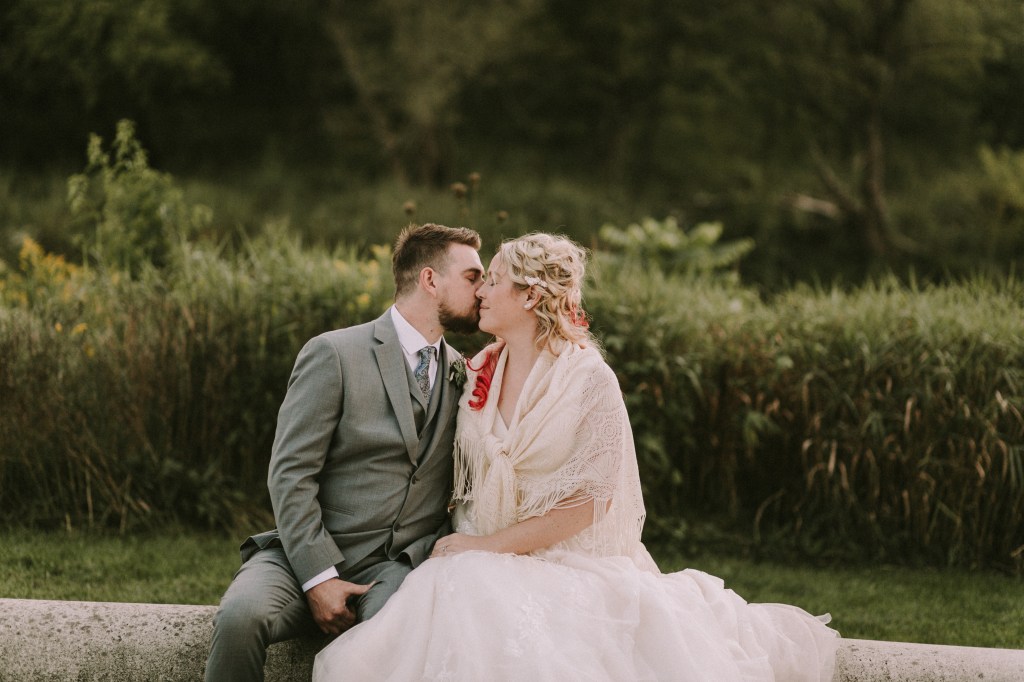
    Summer is the time of weddings, of new beginnings, and my thoughts turn to the planning we did for our daughter’s wedding during COVID. 

    When I taught students that event planning was like walking on a tightrope – before a live audience – without a net – I had no idea that a COVID wedding was in my future! Read on.

    ***

    “Outdoor gatherings are now limited to 50 people.”   An employee at the salon, her cell phone out, read the just released government announcement.

    I sat with wet hair dripping onto a plastic cape, ready to have it styled for our daughter’s wedding, scheduled to begin in just four hours: 92 guests expected for the meal.  With a touch of hysteria in my voice, I smiled a bit too brightly: “I guess we will be illegal today.”

    Perhaps I had learned to take my hands off the bar and raise my arms on the roller coaster of wedding planning during a world pandemic … or maybe I was just a bit numb from the ride.  We had invited 97 guests, under the 100 allowed; five politely declined due to Covid-19 – three of these dropping off in the past two days as provincial numbers marched toward the dreaded second wave.

    It was near the end of 2019 when Samara and Travis announced their intention to marry the following year.  They had been engaged for four years – I had stopped looking in bridal shop windows!

    They envisioned an outdoor ceremony in a natural setting. An available venue featured a stately older home with bridal salon, terrace, barns, horses grazing in the fields, an amphitheatre facing a river, mature trees, and a tent.  Booked. Check. A big piece fell into place, and I breathed relief. This was really going to happen! A Save the Date card was mailed.

    Little did we know a virus on the other side of the planet would find its way across an ocean to burst our blissful little bubble.

    As 2020 dawned, dutiful bridesmaids, Lacey and Christine, kept Samara on task, and by the end of February, she chose a beautiful gown. My daughter looked like a bride – despite the masks we wore.  By this time, news about the coronavirus rumbled louder and the roller coaster began to jostle us out of any innocence that this might not impact us.

    On the morning of March 11, a global pandemic was announced, and I struggled to manage my growing fear. 

    At school, I was focused on preparing my college students for online learning; they got some real-time crisis management experience as they had to pivot plans for the fundraisers they had developed as part of their events class. One group, bless their hearts, wanted to go ahead on their own they were so committed to raising money for their cause. But it couldn’t happen. Everyone jumped through hoops to transition the final capstone project, including client meetings and final presentations to online. I was so proud of the students who were isolated, some in lonely rental accommodations, as they created plans for their clients. There was a lot of virtual hand-holding and encouragement.

    Businesses began to shutter. We listened to daily government briefings asking Canadians to “go home and stay home.” 

    At home, choosing bridesmaid gowns felt like an act of defiance, or perhaps it was blind faith. Like my students, we also discovered much can be accomplished online. The girls selected long skirts in shades of wisteria that came out of a Texas-based retailer.  It appeared that another box would soon be checked.

    We reached the top of the emotional roller coaster with gowns for one bride, two moms, and three bridesmaids selected. We coasted, briefly, but a few hair-pin turns loomed ahead.

    The message that the bridesmaid dress samples had been delivered to Christine’s mailbox in Niagara Falls, New York, prompted the girls to head south on a two and a half-hour drive, leaving at 6 a.m. They took antiseptic wipes for the package, gloves and masks for themselves, but their plans fell short.

    Just shy of reaching the border, Christine screamed: “Let me out, now!” She’d forgotten her passport.

    “We can’t let you out on the highway.”

    “You have to. The border is just around the next bend. If they see me get out, they will stop you, and you won’t get across.

    “I’ll be fine,” she shouted as she clambered out of the backseat.

    Lacey and Samara crossed effortlessly; however, they were wide-eyed with panic in the line-up when a voice announced over the PA system: “The border is now closed to non-essential travel.” They had the package within 15 minutes and began their return. The Canadian border agent admonished them: “You will have to quarantine for two weeks.”  They proceeded on their way and retrieved Christine without incident from the side of the highway.

    I tried to tap down the anxiety building in the pit of my stomach. “We saw no one else, mom,” Samara assured me.

    It was an effort to maintain a positive attitude as I feared for everyone’s health. One brother quietly voiced the opinion that the wedding should be cancelled and another, disabled, confirmed he would not attend.  A third brother eventually replied yes to the ceremony but declined dinner.  The border closing meant my American in-laws would not attend; this was my eldest brother’s family, and he had passed away four years previously. Their presence was important but pandemic fear was palpable.

    Then, as cases rose, new rules: weddings restricted to 10 people. Samara and I walked around the park near her Kitchener home. In low spirits, she affirmed that if dinner included only immediate family, then that’s what it would be. They wanted to be married. I – bravely – pledged to make it a wonderful day, regardless. And she would wear “The Dress” regardless.

    Fears abounded from all directions. My son and his wife worked from home, three children underfoot, offices and schools closed. Was it safe to break that bubble? The youngest needed attention as the effects of isolation became evident.  This lively four-year old was still learning to manage her emotions – and she was a flower girl in the wedding. Would she be able to cope?

    Then, with two months to go, infection numbers went down and 100 people could gather outdoors. It felt like a reprieve despite some significant changes at the venue. We could hold our wedding there, but they had no staff to erect the tent or to cook and serve a meal. Covid-19 had decimated their wedding season.

    Suddenly we were chugging back up the roller coaster track: new caterer, staffing, decorations, family helpers and then the free fall down the other side. We moved ahead with blind speed and faith that we would hit the sweet spot before a second wave. Another booking ensured the venue’s tent would go up.  Hallelujah, arms raised!

    Masks for guests were sewn and stamped, “I masked up for Samara and Travis.”  Wedding favours – hand sanitizer – were ordered, and an emailed invitation assured guests of protocols. Everyone would sit in their bubbles, both for ceremony and dinner. I even ordered disposable covers for the mic. I sewed zirconia jewels across the wisteria masks for the bridesmaids and made a special lace and zirconia mask for my daughter, the jewels coming from an old gown of my mother’s.

    Three flower girls’ dresses, white with mauve ribbons, left Australia and arrived before the bridesmaids’ dresses (to a Canadian address), despite being ordered two months later.  Small bumps and turns as the end of the ride appeared closer.  One dress required extensive alterations while the others fit like a glove.

    Two days before the wedding, a difficult call. Ryan had to back out of groomsman duties. With a newborn at home, he just could not risk Covid-19. The number of cases was rising again; we understood. A generous brother agreed to step in.

    Enter technology. Ryan video-called another groomsman, Giles, who placed his mobile phone into his shirt pocket. Ryan, outside his Toronto home in his wedding suit, stood up with his friend virtually. The best man set up a live stream so absent guests could watch the ceremony which included perfectly behaved flower girls and junior groomsmen carrying the rings, preceding the bride.

    September 19, 2020, 4:05 p.m.: Samara seemed to float down the aisle to the Beatles’ tune, “In My Life” her voluminous skirt sweeping the ground, sun shining on her unmasked radiant face, my husband barely holding it together at her side, while tears streamed down my cheeks.  Usually stoic, our emotions overflowed.

    Typical?

    Perhaps, but it was much more.  The roller-coaster planning process had challenged patience, nerves, and real fear, but it also affirmed something important: when love is at the centre, the ride is also a joy.

    ***

    And this tune still gets me every time:

    In My Life, You Tube, https://www.youtube.com/watch?v=YBcdt6DsLQA

  • Of light and bells

    Of light and bells

    As I waited patiently (or make that impatiently) for spring to arrive this past month, I spent much time reflecting. In between cleaning out cupboards, I was immersed in unpacking a piece of Leonard Cohen’s poetry after being reminded about it during a sermon. (My minister’s sermons frequently get me pondering!) For me, that’s a combination of daydreaming and writing and sometimes it results in a new blog post.

    Cohen wrote:

    “Ring the bells that still can ring

    Forget your perfect offering

    There is a crack, a crack in everything

    That’s how the light gets in.”

    Take a moment to listen to this celebrated Canadian poet sing his “Anthem” and let his words seep into your conscience. Like me, you may spend a lot of time connecting what it means to your own life.

    At first listening, I focused on the phrasing that it is through the cracks that the light gets in. 

    The idea of light getting in through the cracks in our world challenges conventional thought, and perhaps offers hope. Is better possible through the broken? I sure hope so.

    It reminded me of wabi-sabi, a Japanese philosophy rooted in Buddhist teaching that is about finding beauty within the imperfections of life. (Cohen was a practicing Buddhist.)  I was introduced to wabi-sabi during an online writing course, The Wisdom Years. When you view life, and in particular this later stage of life, through wabi-sabi, it is in sharp contrast to western ideals of youth and beauty. In fact, wabi-sabi recognizes that nothing lasts, that nothing is finished, and that nothing is perfect. We continually change and evolve and there is no arrival or end point. There’s an old saying that someone has “arrived” once they achieve a certain status in life, but that’s a false perception which wabi-sabi philosophy eschews.

    Cohen says forget your perfect offering.  One of those phrases that is perhaps easier to say than accomplish. Like many women, I grew up with the false images of feminine perfection portrayed in the media. Today’s AI generated images add a whole new level of deception. 

    It takes lots of time and some hard-earned wisdom to accept that the “cracks” or our imperfections are not only okay, but can be sources of light.  Aging should be a cure for any notion that perfection exists. We know by now that errors can shed light in a way that perfection never will. Even so, the idea that imperfection itself can be beautiful, or a source of light, is an idea I am still learning to accept.

    As the month progressed and my reflecting evolved, it occurred to me that the concepts of wabi-sabi and light getting in through the cracks might be a good way to address the broken relationships in our world.

    I thought about how as we get older, we sometimes lose patience. We’ve either heard all the excuses, or we feel – let’s admit it – a bit entitled. As in, we shouldn’t have to put up with “less than” at this point in our lives. How often have you heard yourself say things like “that’s unacceptable” or “I expect better,” and while there may be some actions that invite such a response, are there other times when we may be hasty in our judgment? 

    When we approach life with an expectation that someone else should measure up to some perfect elevated ideal, it will lead us to be unforgiving, not to mention disappointed. It’s true of our personal relationships, but also I am thinking about our social media curated world where people delight in showing up the errors of someone else’s behaviour.  Often without even knowing all of the details, people are quick to point and blame, or shame. 

    Perhaps if we both look for and become a light through the cracks, a different outcome is possible. 

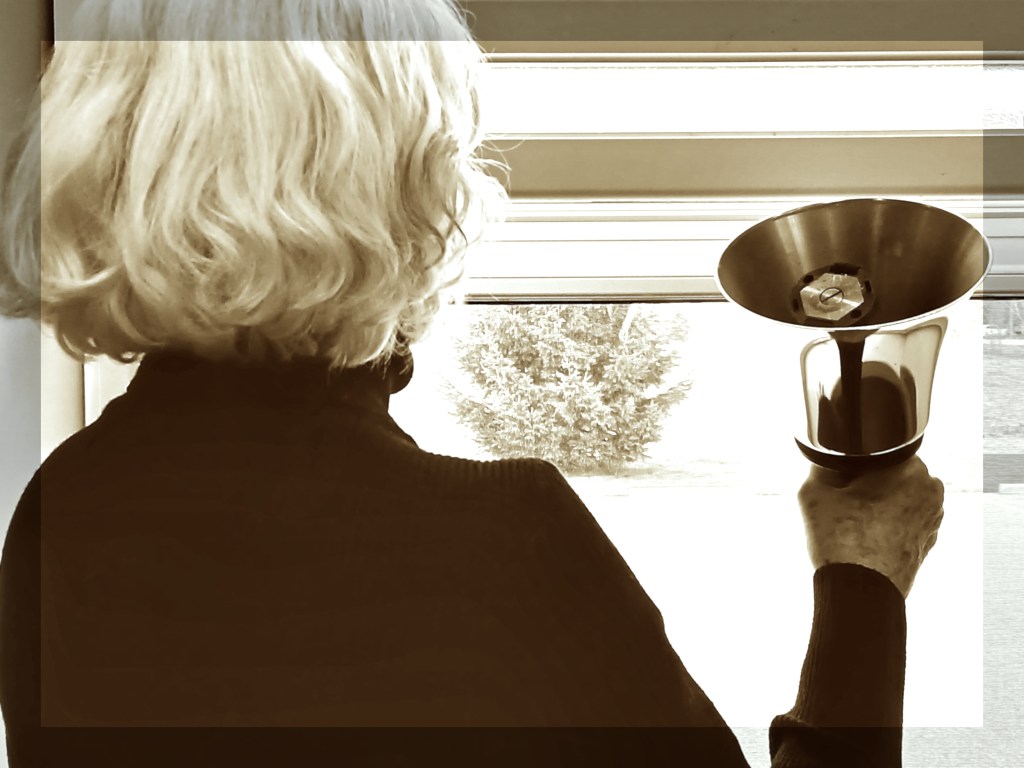
    As I tossed these thoughts around, I would return to listen to Cohen’s “Anthem.” I found myself caught up in the repeating phrase “Ring, Ring, Ring, Ring” by his back up singers, and then Cohen’s deep melodious voice and the first line, “Ring the bells that still can ring.” There is much symbolism in the ringing of bells, a quick internet search reveals. It can be spiritual, representative of the divine; it can be a symbol of good health; they can represent freedom from bondage; and they can reflect joy and happiness, the start or the end of something significant. 

    Finally, in Cohen’s piece, I heard a call, a call to get up, to use our voices and to ring the bells that still (there’s that word still) can be rung. In other words, I heard don’t let age or despair or a need for perfection stop you from ringing those bells. The world will keep changing and evolving. As Cohen says, the birds will sing in the morning and wars will be fought and governments will falter.  But we can look for – and be –  the light through the cracks, to be an offering, imperfect as it may be, of hope or better in a world that seems dark and full of chaos. It’s a message that seems to fit the times we find ourselves in. Rest in peace, Mr. Cohen, and thank you. 

  • Pink or blue?

    Pink or blue?

    There’s a lot going on in the world right now, but I am going to use my space this month to share a perspective about an issue that impacts a very small group of people, and yet it has attracted a huge amount of negative attention based on inaccurate information and fear of the unknown. 

    When I was young and naive, I recall laughing at a joke that asked, how do you tell the difference between boys and girls with the answer, you look under the blanket, and the punch line: girls have pink booties and boys have blue booties. 

    But, like other things from the past, the joke needs to be retired because I know better today. It falls short on what it means to be human – it was never totally accurate by the way. But now people are speaking up and the rest of us are learning. I’d like to share the evolving I have done as I learned more about this topic.

    My first inkling there was more to be understood came when I read in my university textbook that some people are born intersex – having both male and female traits.

    About 1.7% of people are born intersex – the same frequency as people born with red hair. (How many people do you know with red hair? One, two, more? That’s how many intersex people exist in your sphere.)

    Sometimes the traits are visible, and at other times the evidence isn’t known until puberty. It would take an ultrasound, for instance, to see a uterus, vagina, or testicles that have not descended. 

    Fast forward a few years and I hear a radio interview with a person who was born obviously intersex. The doctor made a decision at their birth to remove one set of genitals and leave the other, deciding what sex the baby would be and sending the parents home to raise them with those expectations. The child grew up feeling that their gender identification (what they believed about themselves) did not match their sex as determined by the genitals that the Doctor left intact.  

    I was intrigued and perplexed. It seemed there may be more to our gender identification than just our genitals – or how we are raised. 

    As I continued to listen with an open mind to what others were saying, I began to also understand there are some people who are not intersex, but who do not identify in any way with the biological sex they presented at birth.

    That had to sit for a while. I have a curious nature – how could this be, I wondered? Our binary world of male/female or he said/she said is very ingrained because that explains the majority of us.

    My childhood had been defined by the fact I had four older brothers and no sisters. I was often frustrated by what the boys could do that I could not, and I spurned things I deemed “too girly,” but I never wanted to be a boy. I knew I was a girl – my internal sense of being/my gender identity was female.

    I learned it is different for others. Some girls don’t just want to do what the boys do, they believe to their very core that they are male.  And some boys believe to their very core they are female. They were speaking of a misalignment between their genitals which indicated a particular biological sex at birth and the deep belief they were not that gender – had never been that gender. Their gender identity did not match their biological sex: the definition of gender dysphoria. They didn’t just suddenly feel this – it is something they had struggled with over time and didn’t necessarily understand themselves.

    My initial reaction was I couldn’t imagine the agony of feeling like you are trapped in the wrong body.  So I made an effort to learn more.

    I confess to confusion as it seemed to throw so much of what we understand about gender, sex, and social roles into the deep end of the ocean.  Suddenly, matters such as bathroom use in public spaces, team creation, change rooms, and department store arrangements are no longer benign but loaded questions. 

    Questions around the use of bathrooms in public spaces created a conundrum for me. How far do I go in believing or supporting this phenomenon?

    So, here is what I have learned to date by reading and also attending presentations by transgender people:  

    At a presentation by a transman (one I had a chance to attend through my church) he addressed something I had noticed, that it seems like there’s a lot of people suddenly deciding they are mis-gendered. Is it a “trend” without real substance, as some claim?

    He asked us to consider how our society used to believe left-handed people were evil, and then we evolved and learned that some of us are just born that way.

    When it became safe to declare oneself as a lefty, starting in the 1900s, many people came out of that “closet.” There was a growing upward trajectory in the number of people who said they were left-handed. Then, around 1960, the number settled.

    The same situation exists for gender dysphoria, he said. It will peak, and then it will settle statistically. There are more left-handed people in the world than trans, but it is the acceptance of being different which allows people to self-declare that this comparison highlights.

    I still needed more information, so get ready next for a short biology lesson.

    My simple understanding of biological sex taught me that XY chromosome makes a boy and XX makes a female. But that’s not the full truth. A person may have XXY, or XO, or XYY, or even XXX.  

    In addition, it is the SRY gene located on the Y chromosome that initiates the formation of testes triggering male anatomical structures. Its absence results in a female. However, the SRY gene can be missing or damaged or found on an X chromosome resulting in a person with XY being female and XX being male.  (It is this gene that the International Olympic committee has just announced it will test for in all female athletes – and I don’t know enough about this specific subject to comment. Just that there is also political pressure involved in this issue and much more biology for us all to understand. I’ll keep listening and learning.)

    According to the excerpt of an article in Science Direct, “Contrary to the belief that biological sex is strictly binary, the genetic, molecular, and cellular mechanisms that control development of sex-specific tissues and organs can and do result in outcomes that are not strictly male or female. In other words, the mechanisms at play in sex determination suggest that biological sex is not binary, but instead bimodal.”

    Thus, the fact some people say they are non-binary, meaning they don’t identify as either male or female, makes sense. And there is more to being male or female than what the X or Y chromosomes may suggest. 

    Our gender identity, as I understand from reading multiple sources, is derived from a combination of chromosomes; hormones, including early hormonal activity in the brain during gestation; and genes, all of which interact with social influences after birth. 

    So is how one feels about their gender biological (nature-driven) or is it social (how we are raised)? If we throw enough pink dolls and skirts at a girl, will it make her more female? Conversely, if we toughen up the effeminate boy, will it make him more male?

    PubMed Central is an archive of biomedical and life sciences journal literature at the U.S. National Institute of Health’s National Library of Medicine. A peer-reviewed article accepted for publication found on this site says: “existing empirical evidence makes it clear that there is a significant biological contribution to the development of an individual’s sexual identity and sexual orientation.” So more nature and less nurture. 

    People are said to transition, but the fact is they believe they have always been the gender they are transitioning to, that transitioning is simply matching their exterior to who they know they are inside.  Their sexual identity.

    There is more to this subject, (being transgender does not necessarily mean a person is homosexual, for instance), but it’s more than I can possibly cover in an already long blog post. And I am not a scientist, but I do trust those who have the education and qualifications to reach a deeper understanding of the human condition. This subject will continue to be studied, but I have concluded that there can in fact be a disconnect between biological sex as determined by one’s genitals and gender identity as determined by how one feels about who they are. Those feelings can come as early as age 3 or 4, based on my reading. Surgery, if it is desired, can not be performed until the person is an adult. 

    According to Government of Canada census data, since 2021, people have the option to qualify the sex question by choosing “at birth” and a new question about gender was added. 

    The 2021 census indicates of the nearly 30.5 million people in Canada, aged 15 and over, living in a private household in May of 2021, 100,815 were transgender (59,460) or non-binary (41,355) accounting for 0.33% of the population in this age group. That means 1 in 300 people in Canada is transgender or non-binary. (Likely higher given that many trans youth are kicked out of their homes by parents who don’t understand.)

    Regardless, it’s a relatively small number so why should we change our jokes, our bathrooms, our pronouns – for such a small number of people? The fact that suicide among youth who experience this reality is higher than average is enough for me. But consider: 

    • It’s kind of like the ramps we see everywhere for those people who use a wheelchair – it doesn’t hurt everyone else to have this access available for the smaller number of us who need them.
    • A bathroom stall with full walls and a door makes the toilet private and available for everyone, regardless of what’s in their pants. Handwashing isn’t a private task. 
    • Adding my pronouns after my name makes it easier for someone who needs to have those gender markers clarified, so I am doing something to make “the other” more comfortable and welcome. 
    • There’s enough about the human race that is common and can be funny without singling out a group that suffers from so much misinformation and discrimination.

    Gender dysphoria is not an ideology as some suggest. It is real. Knowing about it won’t make someone transition, but it may decrease the discrimination targeting this minority group of human beings, and it might increase understanding and acceptance for what is “different” in our world. 

    Humans are wonderfully made and complex. Some of us are quite unique, but we all seek acceptance, and we all deserve respect, regardless of the colour of our booties. End of story. 

    ***

    NBC News, accessed March 6, 2026, https://www.nbcnews.com/news/us-news/transgender-people-texas-blocked-changing-gender-state-ids-rcna167860

    Global News, accessed March 28, 2026,

    Clark, Brianna, Left-handedness and the cycle of acceptance, Medium, https://brilovely.medium.com/left-handedness-and-the-cycle-of-acceptance-3e8d0386f0ef

    National Library of Medicine, National Centre for Biotechnology Information, SRY: Sex determination, 

    https://www.ncbi.nlm.nih.gov/books/NBK22246/#:~:text=The%20SRY%20(sex%2Ddetermining%20region%20Y%20gene)%20is,DNA%20in%20the%20cell%2C%20distorting%20it%20and

    Government of Canada, Statistics Canada, accessed March 4, 2026

    https://www150.statcan.gc.ca/n1/daily-quotidien/220427/dq220427b-eng.htm

    Science Direct, Teaching the complexities of biological sex determination with the foal of creating a more inclusive classroom and perhaps challenging key components of the oversimplified rhetoric of the gender binary, Abstract, by Rebecca Delventhal, accessed March 4, 2026

    https://www.sciencedirect.com/science/article/abs/pii/S0012160625002350https://www.sciencedirect.com/science/article/abs/pii/S0012160625002350

    PubMed Central, National Library of Medicine, accessed March 6, 2026

    https://pmc.ncbi.nlm.nih.gov/articles/PMC6677266/

    I have also read two books written by trans authors and these were: 

    Knox, Amanda Jette, Love Lives Here, Viking, Penguin Canada, 2019

    Mock, Janet, Redefining Realness, Atria, Simon and Schuster, 2014

  • Your family narrative

    Your family narrative

    Have you caught the bug yet? The one where you disappear down rabbit holes searching for ancestors in your family tree? 

    It seems to become an area of intense interest once retirement provides the time – not just to research, but to reflect about the lives of those who may have impacted our own course. 

    Knowing your ancestors’ stories can have benefits that may surprise you. If one of your wishes is that your family is resilient in the face of an uncertain future, read on!

    I felt compelled to write the story of my parents’ 54-year marriage and include the background that would explain who they were and what, or who, contributed to their story.  I grew up with a lot of detail about my father’s family, thanks to his story-telling skills, but I didn’t have much to go on about my mother’s family.

    Thanks to Ancestry.ca, a global pandemic and retirement I was able to complete Beneath the Wings of Love, which I published as a paperback on Amazon in 2021. This success followed years (I started this project in 1998)of drought when there was no writing, and then significant writing and re-writing – at one point I lost the entire project in a computer crash, but thankfully I had printed out hard copies for editing. 

    I remember wishing my mother had known more about her own background as I thought it would have made a positive difference in her self-esteem. Turns out I was right on that count, and I had underestimated how important the stories would be for my grandchildren. 

    Bruce Feiler wrote in the New York Sunday Times about a study conducted by psychologists Dr. Marshall Duke and Dr. Robyn Fivush that tested the hypothesis: children who know a lot more about their families tend to do better when they face challenges. 

    “The more children knew about their family’s history, the stronger their sense of control over their lives, the higher their self-esteem and the more successfully they believed their families functioned,” Feiler wrote of the study’s findings. 

    Then 9-11 happened, and although the families were not directly impacted by the horrific events of that day, the children in the study would have been impacted by news of planes hitting the towers.  They were reassessed. Feiler quotes Dr. Duke, “the ones who knew more about their families proved to be more resilient, meaning they could moderate the effects of stress.”

    Why? According to Dr. Duke, these children have a strong sense of an “intergenerational self” and know they belong to something bigger than themselves. Things like family traditions, family holidays, telling stories about the family, whether hardships met or positive tales, all contribute to a strong family narrative. 

    You don’t have to publish a book to contribute to the family narrative, but safe-keeping what you know in some format is clearly beneficial. If your children or grandchildren are not asking questions yet, we know there will come a time when they will wonder. So, take up a pen, or get on your computer and type what you know – now.  At the very least, store the pages in a three-ring binder. Talk to relatives still living to get their stories and write them down, and add to the binder!

    If you have adoption in your story, don’t avoid this. A family tree can be a tree of people who love me and the stories still contribute to the narrative of what your child knows about the family they call their own. 

    Sometimes the family history contributes to the history of the commercial development of an area. Such was the case when a former schoolmate of mine, Lynn Thorne and her cousin, Evanne Ketchabaw got together and created a road trip out of their shared Zurbrigg family history. The trip took family members, in their cars, through villages, along county roads, and by specific sites surrounding the Listowel (North Perth) area where four Zurbrigg siblings had moved in the early 1860s.

    The family had many entrepreneurs so stops along the way highlighted the businesses as well as the homes and final resting places of multiple ancestors. The cousins wrote a script to accompany the journey so at specific stops, the history was read out loud for the 15 participants. After the event, everyone received a booklet, bound in a clear plastic cover; family details shared during the road trip were included along with photos from the day. 

    What an amazing, interactive way to share the family narrative. 

    Other family histories are relevant beyond the family because they are a history of national importance. Such is the case for Tracy Lee Johnson of Guelph. 

    I attended a fascinating presentation by Tracy, a 5th generation Black Canadian, who shared an historical look at an area called Queen’s Bush, one of the largest Black settlements in the area, near Wallenstein. Her ancestors travelled to the area in the 1830s via the underground railway and were early pioneers before this nation was even created. The year 1806 is the earliest date for which she has found a record of her family in the Niagara area.  

    Tracy’s story reinforces what the psychologists’ study showed. “Had I known the information about my family when I was younger, I would have held my head up higher. I would not have felt so uncomfortable in my own skin,” she told me.

    There was reason for pride in her ancestors’ early contributions, yet our history books have largely ignored their story. When we think of pioneers, we tend to think white, and Little House on the Prairie, Tracy points out. She’s right. 

    As well as effective story-telling (Tracy is an actress), she also sings as part of her presentation. She presents in schools, helping to educate the broader community about Black history in this area. In fact, you can book Tracy, through her website, to share her amazing historical story with your group, club or organization.

    If, like me or Tracy, you don’t know a lot about your background, tools such as Ancestry.ca help.  This program allows you to build a family tree and each name on the tree links to a page of details where you can fill in the names of parents, siblings, and children. Links to census details and old newspapers are revealing. I was able to discover causes of death, adding detail not known before, and pointing to a possible inherited trait. I was finally able to fill in the blanks about my mother’s history. Even the painful knowledge of early ancestors who farmed on native land in the U.S. and had deadly run-ins with Native Americans (Shawnee) in the area. 

    As I worked on the memoir, I was not unaware of the privilege I enjoyed in being able to conduct this research. Especially as I uncovered these earliest settler stories, I brought 21st century eyes to the issue of European settlers believing they were bringing civilization to savages, ignoring the multiple generations of history lived by these Indigenous people. I thought of Indigenous children who were stolen from their parents by the Canadian government and then turned out of residential schools at age 18 with no understanding of how to cope on their own. They didn’t fit with their own community any longer, unable to speak the language and with no knowledge of their customs. They had no family history. And they were spurned by the predominately white settler community they lived in. They had both their past and their future stolen from them.  The studies that connect resilience, happiness, and self-esteem to knowing your family narrative reinforce the horror of what was done and explain the generational damage that has resulted.

    We must evolve as we learn, and then share our knowledge. So, if you are down a rabbit hole of family research, or if you have stories stored in your memory, start making notes to be shared. Share the good, the bad and the ugly. You will be doing your grandchildren and great-grandchildren a huge favour when they know the intergenerational narrative that is theirs to claim.

    ***

    Bruce Feiler, The Stories that Bind Us, New York Times, March, 2013 http://www.nytimes.com/2013/03/17/fashion/the-family-stories-that-bind-us-this-life.html?pagewanted=all&_r=0

    Tracy Lee Johnson, Website, https://tracylcain.wordpress.com

    Tracy Johnson shared a newsletter that “honours the creativity, scholarship, and dreams of Black mamas, women and girls in Canada.” Tracy’s story is featured in the November 2025 issue. Check it out here: https://www.animawrites.com/newsletter

    Beneath the Wings of Love, the memoir of my parents, is available on Amazon. If you are interested in the process of self-publishing, please connect with me. Beneath the Wings of Love is written under my pen name, Roberta Kim. 

  • Planning the perfect exit

    Planning the perfect exit

    On the heels of my Still Inspiring story featuring Grace Maher, Funeral Director extraordinaire (January 2026 post), I have had some conversations recently with friends about that supposedly taboo subject – planning for our final exit from this world. 

    We all lamented the situation that Grace referenced during my chat with her, that some people are not holding any kind of service or celebration of life after a loved one has died. (There, I said the “D” word, not some light hearted euphemism) 

    I read many obituaries (yes, I am at that age!) that report no service or visitation is being held “in accordance with the wishes of the deceased.” 

    Really? Come on! 

    The funeral isn’t held for the deceased. It’s held for the living. 

    Why would you want to rob your family or friends at least some time to remember what a cantankerous or miserable old, er,,, I mean loving person you were while you walked the earth? ;)

    At the very least, your directions should be designed to keep the family busy at something other than arguing about how little you left in the will. Enough time for that later!

    And then there’s the black humour that we are robbing our family of experiencing when they have to follow our wishes. 

    One friend shared a story about being in “that” room of caskets at the funeral home. “I like to go shopping, but this isn’t really what I had in mind,” she blurted out loud as she was still trying to take in her father’s sudden and unexpected death.

    I guess if you shop til you drop, you’re in the right place?

    If there’s proof that the funeral is for the living and not the deceased, consider my family’s experience in that department store of caskets after my beloved father’s death. My brother and I honed in on the plain pine box without brass handles or fancy decorations and looked at each other. “This is exactly what dad would want,” we said at the same time. And then in the next breath, “But what would people think?” 

    So we purchased the next best option, preserving the family reputation. (Although I did sing, under my breath, the words to Tight as a Drum during the service – as Dad had requested. He’d also wanted the ashes flushed (yup!) but since, as I say, the funeral is for the living, we didn’t do that. And since singing the slightly ribald war tune out loud might have shocked the still-living assembly, I kept it very low, but I am sure Dad was laughing.)

    As strange as it seems, doing the things I knew he would want gave me comfort at a time I needed it. (Did he, in his wisdom, realize that?)

    Without specific direction from my mother when it was her turn, we would never have known that she wanted a grey casket. So it would match the rose-coloured dress she chose as her “going away” outfit. (I kid you, not) I mean, who knew they came in colour options? Caskets, I mean, not going away dresses! She loved grey – thought it was classy!

    I’m sure people would have talked for months without that colour co-ordination. We even made sure the flowers would complement the colour scheme. 

    A friend shared a story about a favoured relative who, in life, always had her slip showing below her skirt hem. Many of the women at the funeral wore their slips just a little bit lower than required in her honour. If there had been no service, how would they have been able to honour her in this unique way?

    I love the old movie “Imitation of Life,” the one made in 1959 starring Lana Turner. It’s a real tear-jerker at the end when the funeral for Annie Johnson (played by Juanita Moore) is featured, just as the Black housekeeper outlined in her funeral plans. Those plans included a large church, a gospel choir, a funeral procession with a band and four white horses drawing the hearse. She really knew how to go out in style. And it did the trick, but you will have to watch the movie to learn what it did for her daughter. No spoiler alerts here. (But if you’re a Mahalia Jackson fan, she gets a cameo role!)

    The point is, the housekeeper had a plan for when the inevitable happened. Smart woman. 

    How many times have you attended or arranged a funeral and learned something you didn’t know about the deceased? 

    I didn’t know my friend sang the Lord’s Prayer while out fishing on a lake one early morning with only one person, and we imagine a host of God’s creatures, to hear him. What a great remembrance I now have of him. 

    Someone told me about a kindness my mother had extended to neighbours when they needed it most, and I never knew about it. Now a treasured memory I have of her. 

    How often have you said ”I didn’t know that!” after a funeral? And as a result, that person’s time here is extended because you have that memory. 

    That was Grace’s point. We miss out on those stories if we don’t hold something. 

    I’m not here to sell funeral home or church services, but only to stir some thinking in how you might be approaching this subject. (Not to be morbid, but we all have an exit date!)

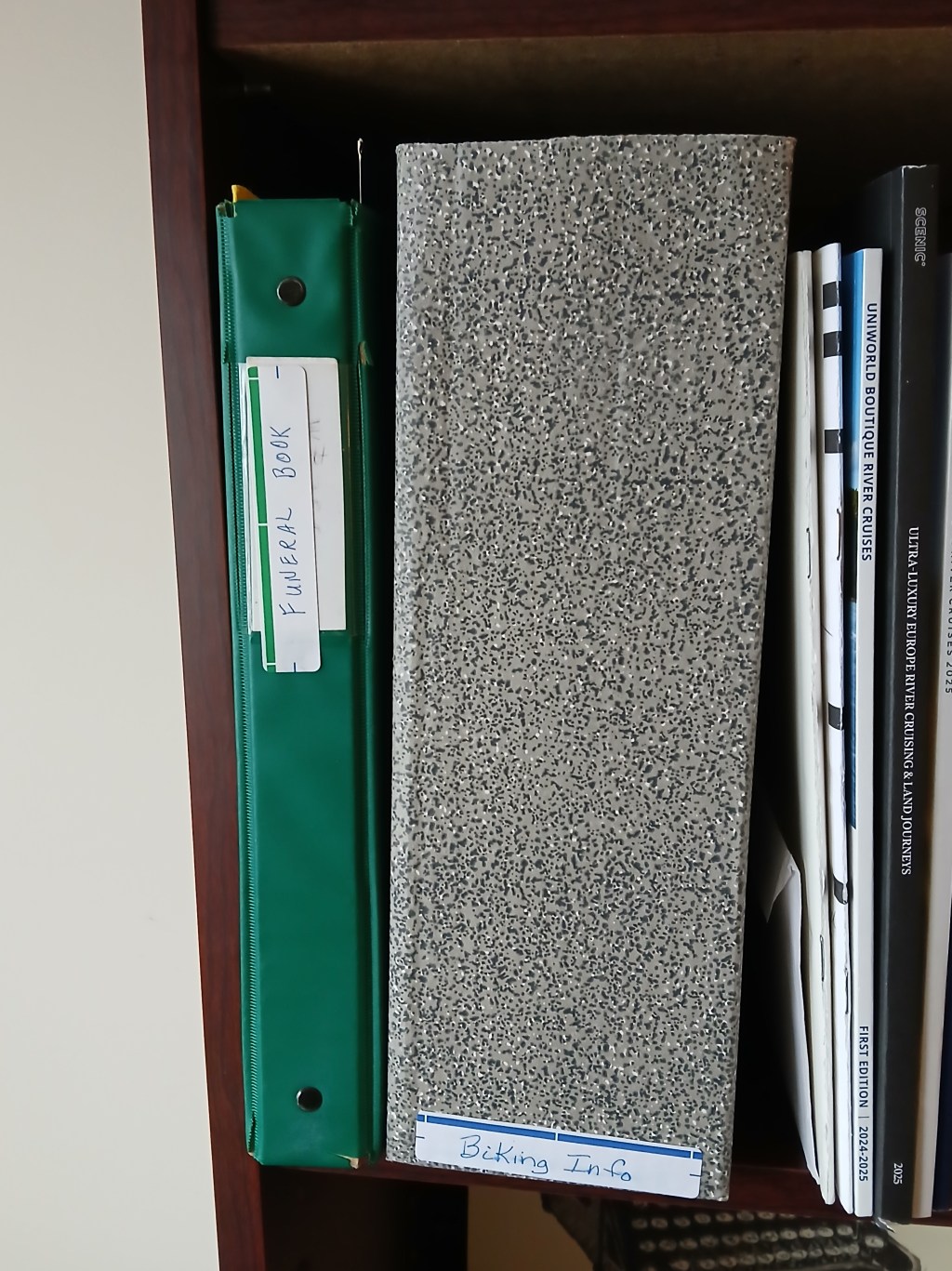
    I have created a funeral binder (thanks Marg for the advice on this!) and told my kids where to find it. It includes all of the documents they will require at the time, as well as some advice and suggestions for the “arrangements” as we call them.  I have seen something similar online with the title “F*&$ I’m Dead. Now What?” but you can create your own version and spend less! Just borrow the fancy name and give the kids a giggle after you are gone!

    There’s lots of online advice about what should or can be included, such as marriage certificate, birth certificate, will, insurance papers, banking instructions, burial plot or directions for ashes, music preferences, speaker preferences, – even the colour of your casket if that’s important to you! (Or as one movie recently depicted, the father requested that his sons actually dig the grave – yikes!)

    I have avoided a post on new year resolutions because they just get hijacked anyway, but perhaps this is something you would consider doing this year for your family. They will benefit from the directions.

    But, tongue firmly planted in cheek, why not leave them directions they’ll talk about for years to come?! 

    ***

    If you have a unique funeral story to share that demonstrates the importance of this ritual in our lives, please share by replying to this post. Scroll down to the bottom of the page to find the comment field. I suspect our stories will uplift each other! 

    Some readers have told me they have difficulties when trying to comment on a post.  I have been told that you should be able to leave a reply after typing in the comment field and clicking on PostComment. You will be asked for your name and email only. You do not require an account to make a comment (if you have a WordPress account, then it may kick in to ask you for those details. One of my readers, unbeknownst to her, did have an account. If this happens, try another email account to respond under.)

  • Is Windigo in your life?

    Is Windigo in your life?

    Ever feel like no matter what you’ve got, someone’s got more?

    So asked the bank commercial that played frequently throughout the World Series. 

    And then there’s someone with more more. 

    Is there more more? Or, is there a limit? 

    The bank says we’re richer than we think. I wonder if we really know that?

    As I unpack for the Christmas season of 2025, I am trying to sort multiple messages that are dancing in my head – not sugar plums this year. Bear with me as I sift through a few musings. Perhaps you will share these, or maybe it will be food for thought. 

    The Blue Jays theme was “I want it all and I want it now,” and this year’s series seemed to carry a special significance given the state of the world. I recall thinking at one point, Canada really needs this win.

    Of course, we know the outcome and all of the comments designed to rationalize the blow, but maybe there was a deeper, more meaningful take-away. The team’s hard work brought Canadians together at a time national camaraderie is sorely needed, but there’s more to it than that..

    Then, in another celebrity moment, I was wowed with the statement by American singer Billie Eilish at the Wall Street Journal Innovator Awards ceremony in New York city. 

    “There’s a few people in this room who have a lot more money than me,” she teased in a sing-song voice. Then, “If you’re a billionaire…why are you a billionaire? Give your money away shorties.” 

    This young (she’s only 23) singer recently donated about 22% of her net worth to support food security and climate change  – her donation was $11.5 million! Her audience was comprised of a few billionaires, including Facebook CEO Mark Zuckerberg.  (Who reportedly did not applaud the speech.)

    I wonder how many of them enjoyed a good sleep after that searing comment?  My fear is that they slept well. 

    While it’s great theatre to see wealthy people call each other out to do more, we don’t need to be a billionaire to fall victim to greed. 

    In Robin Wall Kimmerer’s  book, Braiding Sweetgrass Indigenous Wisdom, Scientific Knowledge, and the Teachings of Plants, the author describes the Indigenous monster Windigo. The short explanation is that Windigo is greed and over-consumption personified in a monster. He would be used as a threat particularly during times of hunger and great need, to keep people in check. When they might be tempted to act inappropriately. For Indigenous ancestors, that might be a winter where food was scarce.  When one might be tempted to not share.

    We can see Windigo, the monster of greed and over-consumption, in our world today. Perhaps it’s the threat of recession for us, or a world that is changing so fast we cling to false prophets.

    When the bank commercial asks us if we notice someone else who has more, that’s Windigo at work. When we envy our neighbour’s car, or house or pool that’s Windigo at work. When we purchase more than we need, that’s Windigo at work. The “I’ve too many to count boots and coats in my closet” is Windigo at work. 

    When children are starving while the rich party at their palatial estates, that’s Windigo at work. 

    When the comfortable question the support given to those with less, that’s Windigo at work.

    We should all fear this monster.

    I have always thought it was good when a business succeeds. I owned a small business for a few years, and it was satisfying to know I was generating revenue to cover incomes for at least four other people and not just myself. 

    But knowledge and time have opened my eyes to the negative repercussions of our economic system. Capitalism rewards business growth and with Windigo at the helm, we have supported a model of greed and over-consumption that has richly benefitted those at the very top echelon. Tesla just approved a $1 trillion pay package for Elon Musk and the crowd at the annual meeting burst into applause. Windigo on their shoulders.

    And the distance between the haves and have nots grows. 

    In recent news, grocery stores are now looking at digital pricing so they can immediately lower or increase the amount we pay for our groceries based on the principle of scarcity. Advertise a special, people flock to the store, and suddenly the price goes up because the demand is high. I don’t detect any sympathy in the grocery sector to suggest it won’t be used as a tool to increase their take. Where’s the concern about grocery profits?

    How do we defeat Windigo? As Kimmerer writes, we need more than a change in policy that ensures the wealthiest don’t take advantage. “It is not just changes in policies that we need, but also changes to the heart.”

    Kimmerer writes of early Indigenous teachings which emphasized the practice of taking no more than you need and always leaving some behind for others, whether that was another human, or in some cases, animal brothers and sisters. You didn’t chop down the first tree you come to and you would never chop down the last tree in the grove. Further, when you took from the earth or an animal’s life to feed your family, you gave thanks.

    You didn’t feel entitled, and your worth was not measured in possessions. And you were grateful.

    My settler ancestors certainly knew how to live frugally; they reused and didn’t buy new because they could not afford it.  But over the years in our quest to improve our standard of living, we have given way to Windigo. 

    Having more is how we have placed value on our lives. (You know the adage, the difference between men and boys is the size of their toys, designed to make us laugh as we accumulated more?)

    I remember my mother calling out this unending loop of behaviour – marketing tells us we “need” more, workers want more income to support those “needs”, business wants more for its products and services, workers want more pay, business wants…and so on. Where does it end?

    Can we fight Windigo on a personal level? 

    Kimmerer writes, “Scarcity and plenty are as much qualities of the mind and spirit as they are of the economy.” She goes on to say that a life of gratitude can be “a powerful antidote to Windigo psychosis.”

    Which brings me back to Christmas. A time of giving and of gratitude. The season that celebrates the birth of Jesus Christ who told us, among other things, we will either love God and hate money or love money and hate God. Why? Jesus would know people required money to live in the world’s economy. As Brian D. McLaren writes in his book Life After Doom, the Roman civilization in Jesus’ time oppressed the poor because “Money is the measure of value. Without money, to the empire, you’re nothing.” Those without, those with less, were considered unworthy.

    Sound familiar?

    The alternative offered by Jesus was to “run on a different currency altogether: love.”

    McLaren encourages us to read the Bible as Indigenous wisdom and to see Jesus as an Indigenous prophet, who came into the world to teach us to love one another. Part of loving another is ensuring they have enough and then expressing gratitude to Jesus, to God, to our Creator, that our needs have been met and that there is enough for everyone. We’ve lost the Indigenous knowledge of how the earth really does provide all we need, if we just take care of it.

    With all due respect to the Blue Jays, and the band Queen who made the song famous, maybe having it all isn’t what we need in more ways than one.

    ***

    Bank of Nova Scotia, YouTube, You’re richer than you think https://www.youtube.com/watch?v=C_j2FF8u_0I f, ret.November 6, 2025

    You Tube, I want it all, https://www.youtube.com/shorts/JtGdEB1fPXo, November 24, 2025

    ETalk, YouTube, Billie Eilish calls out billionaires during innovator awards speech, https://www.youtube.com/watch?v=xj2R_LuCLoU ret. November 6, 2025

    Kimmerer, Robin Wall, Braiding Sweetgrass, Indigenous Wisdom, Scientific Knowledge, and the Teachings of Plants, Milkweed Editions, Canada, 2013.

    CNN, ov, 6, 2025, Tesla shareholders approve $1 trillion pay package. for Musk, https://www.cnn.com/2025/11/06/business/musk-trillion-dollar-pay-package-vote, ret.November 24, 2025

    City News, Toronto, Shoppers are wary of digital shelf labels, but a study found they don’t lead to price surges, https://toronto.citynews.ca/2025/06/09/shoppers-are-wary-of-digital-shelf-labels-but-a-study-found-they-dont-lead-to-price-surges/ , ret. November 9, 2025

    Loblaw Companies Ltd., Media Release Nov. 12, 2025, Loblaw Reports Revenue Growth of 4.6% in the Third Quarter, https://www.loblaw.ca/en/loblaw-reports-revenue-growth-of-4-6-in-the-third-quarter/https://www.loblaw.ca/en/loblaw-reports-revenue-growth-of-4-6-in-the-third-quarter/, ret. November 18, 2025

    CNN Business, Tesla shareholders approve Elon Musk’s $1trillion pay package, https://www.cnn.com/2025/11/06/business/musk-trillion-dollar-pay-package-vote, ret. November 11, 2025

    Brian D. McLaren, Life After Doom, Wisdom and Courage for a World Falling Apart, St. Martin’s Publishing Group, New York, 2024